
Dental Implants in Washington, DC
Considering your first dental implant, replacing several missing teeth, or deciding whether a tooth can be saved? At Elite Prosthetic Dentistry in Friendship Heights, Washington, DC, Dr. Gerald Marlin plans treatment, surgically places implants and restores the replacement teeth. You can schedule an evaluation directly, without a referral or an existing treatment plan. Natural teeth are kept when they can be predictably maintained, and implants are used where they are the better long-term solution.
40+
Years in Practice
4,100+
Implants Placed
9
U.S. Patents
97%+
Success at 20+ Yrs

Gerald M. Marlin, DMD, MSD
Specialty-Trained Prosthodontist (DMD, MSD)
Washingtonian "Top Dentist" 2026 and Hall of Fame
Why Patients Choose a Specialist for Implants
- Specialty-trained prosthodontist with 4,100+ implants placed and 97%+ implant success at 20+ years
- Surgical placement and final restoration are planned together within one specialist practice, with no hand-off to a separate office between phases.
- In-house dental laboratory operating continuously since 1985. Master ceramist works directly with Dr. Marlin.
- CBCT scan generated surgical guides for all implant insertions
- 9 U.S. patents in dental implant restoration methodology
Or call now: (202) 244-2101
Start With Your Situation
Implant treatment is not one decision. Choose the question closest to yours.
- I am missing one tooth, or one needs to come out A first implant for one tooth, and whether a failing tooth can be saved first Start here →
- Several of my teeth are failing Which teeth can be kept and where implants fit Start here →
- I was told to replace all my teeth Which teeth can be kept, and what to verify before extractions Start here →
- I have a problem with an existing implant Restoration, component, tissue, bone or position problems, evaluated before treatment Start here →
Implant Solutions for Every Case Type
Implant therapy at Elite Prosthetic Dentistry spans the whole spectrum: a single missing tooth, several missing teeth, implant-supported bridges, implants placed as part of rebuilding aging dentistry, revision of existing implant work, and full-arch replacement when that is the right choice. Most implant patients here fall in the middle of that range, with one or several implants planned alongside crowns, bridges, and the bite. Many come for their first implant, often to replace a single tooth, and no referral, failed implant or treatment plan from another office is needed to be seen. Every case is planned around the patient's own anatomy, bite, and goals; each summary below links to the dedicated resource.
Single Tooth Implant
Replace one missing tooth without affecting the adjacent teeth. Custom in-house crown that blends indistinguishably with surrounding dentition. Learn more →
Multiple Implants & Implant Bridges
Several missing teeth replaced with individual implants or an implant-supported bridge, planned so the new teeth, the remaining teeth, and the bite work together. Implant-supported bridges →
Front Teeth and the Esthetic Zone
Implants where gum contour, tooth shape, and shade are visible with every smile. The crown is designed before the implant is placed, and bone and soft tissue are managed to support it. See a documented case →
Implants Within a Larger Reconstruction
Aging crowns, a failing bridge, or worn teeth often call for a plan that keeps the sound teeth, replaces the hopeless ones with implants, and rebuilds the bite as one coordinated case. Full mouth reconstruction →
Revising Existing Implant Work
Loose or failing implants, implant crowns that never looked right, and older implant restorations evaluated for why they are failing and whether they can be saved, then corrected. Repairing failing implants →
Full-Arch (All-on-X) When Appropriate
When an entire arch is no longer restorable, a complete set of fixed teeth supported by four, six, or more implants, planned from the final prosthesis backward. When a removable option fits better, implant-supported (snap-in) dentures are planned the same way. Explore All-on-X →
How Specialist Implant Treatment Works
Implant treatment is a multi-stage process. Setting clear expectations from the start is part of how a specialist practice approaches every case.
Consultation and CBCT 3D Imaging
Comprehensive clinical exam, three-dimensional CBCT scan of the implant site, and a discussion of goals. We plan every implant case, from a single implant through full-mouth reconstruction, on a CBCT scan. The scan shows bone volume and density, nerve and sinus anatomy, the space available for the restoration, and where the implant must sit to support the planned final tooth.
Treatment Planning
Digital treatment plan developed from the CBCT data to determine implant position, angle, depth, and the design of the final restoration. The plan is reviewed with the patient before any surgical step begins.
Precision Implant Placement
Surgical placement under local anesthesia with sedation options available. Every implant insertion uses a surgical guide generated from the CBCT scan, so the implant is placed where the planned final tooth needs it. A fixed temporary prosthesis is provided during the healing phase for full-arch cases.
Final In-House Restoration
After osseointegration, the custom crown, bridge, or full-arch prosthesis is designed and fabricated in the in-house lab, with the prosthodontist working directly with the master ceramist throughout.
What Sets a Specialist Practice Apart
Not all implant practices operate the same way. The structural differences below influence the long-term outcome of high-investment cases.
-
One Plan From Start to Finish
Every case is planned from the final restoration backward, with surgical placement, restorative design, and laboratory work coordinated inside the practice. No hand-offs between offices, no fragmented communication.
-
In-House Master Ceramist Since 1985
The dental laboratory has operated continuously on-site since 1985. The master ceramist works directly with the prosthodontist on every restoration.
-
Customized, Not Templated
Every case is planned around the patient's anatomy, bite, and aesthetic goals. No standardized corporate full-arch protocol applied to every patient.
-
97%+ Implant Success at 20+ Years
A documented in-practice implant success rate above 97% for implants placed more than 20 years ago. Long-term predictability is the result of accurate placement and well-designed restorations.
-
9 U.S. Patents in Implant Restoration
Dr. Marlin holds 9 U.S. patents in dental implant restoration methodology. A depth of research that is unusual in private practice.
Why Patients Seek Implant Care Here
Patients come to Elite Prosthetic Dentistry for different reasons. The most common are below. The right answer for any patient comes from a specialist evaluation, not a phone call.
Replacing Missing or Failing Teeth
Single tooth, multiple teeth, or full arch reconstruction with implant-supported restorations engineered for long-term predictability.
Correcting Prior Implant Work
An implant feels loose, food traps around it, or the result does not look or function as expected. Specialist diagnosis identifies the cause and develops a corrective plan.
Specialist Second Opinion
Comparing treatment plans from different practices or planning models. A specialist evaluation clarifies what is appropriate before committing to treatment.
Replacing Older Dental Work
Older bridges, dentures, or restorations that no longer meet expectations. Implant treatment can avoid repeated dentistry on compromised structures.
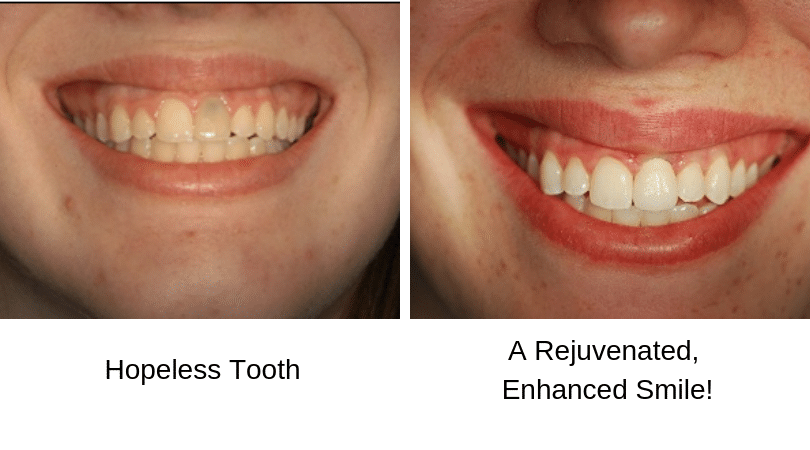
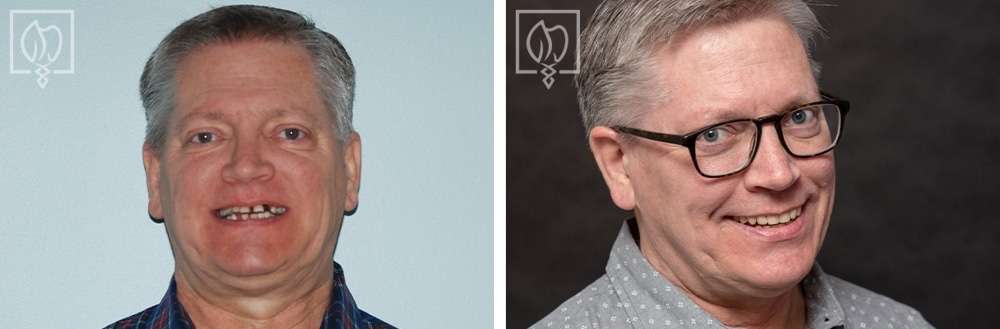
Replacing a Tooth for the First Time
Most people who ask about implants are not dealing with a failed implant or a second opinion. They have a tooth that is breaking down, a tooth their dentist says should come out, or a space where a tooth is already missing. These are among the most common reasons patients come to Elite Prosthetic Dentistry, and no referral or outside treatment plan is needed.
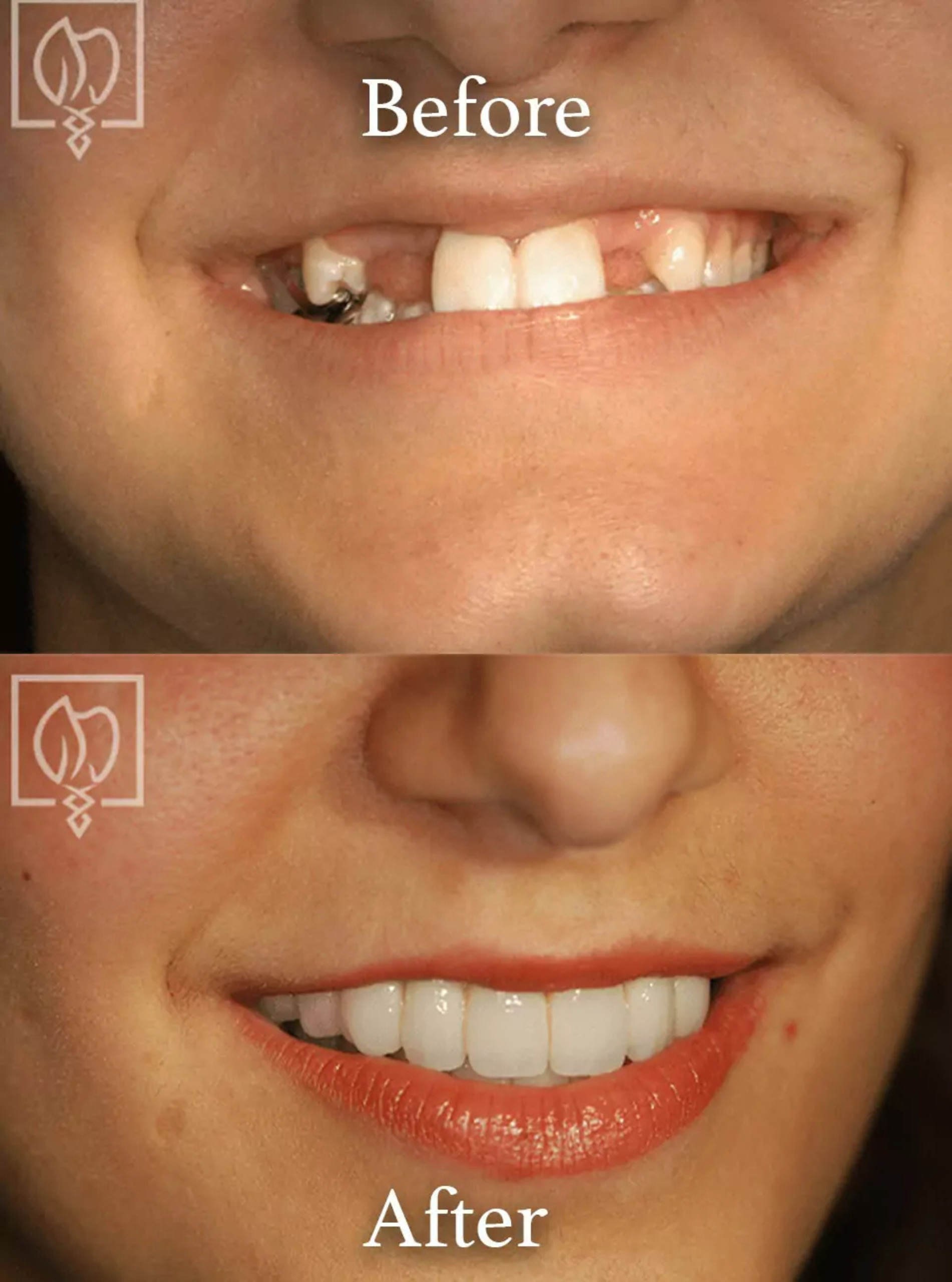
- One tooth needs to be replaced. A single tooth implant with a custom crown made in the on-site laboratory, planned so the neighboring teeth usually do not need to be prepared. A documented example: a front tooth lost to childhood trauma, rebuilt with bone grafting and a single implant.
- Several teeth are missing. They may be replaced with individual implant crowns or an implant-supported bridge; implants versus bridges compares implants with a bridge on natural teeth.
- Several teeth or an older bridge are failing. The evaluation sorts out which teeth can be kept and where implants, a bridge or new crowns fit best. See keep your teeth or replace them and failing bridge: new bridge or implants.
- You have been told a tooth must come out, or you are not sure what can be saved. Read save the tooth or replace it with an implant before anything irreversible is done.
The first visit includes an examination and a CBCT scan. It establishes whether the tooth can be kept, whether there is enough bone for an implant, what treatment would involve from start to finish, and what the alternatives are. Every implant insertion is then carried out with a surgical guide generated from that scan. Am I a candidate for dental implants? covers bone, gum health and medical history.
Schedule an Evaluation of Your Tooth-Replacement Options Call (202) 244-2101
We are a fee-for-service practice. We can help you use available out-of-network PPO benefits, and financing is available. Our team will explain what your first visit includes and the payment arrangements before you book. Insurance and financing.
Who Treats You, and How to Verify It
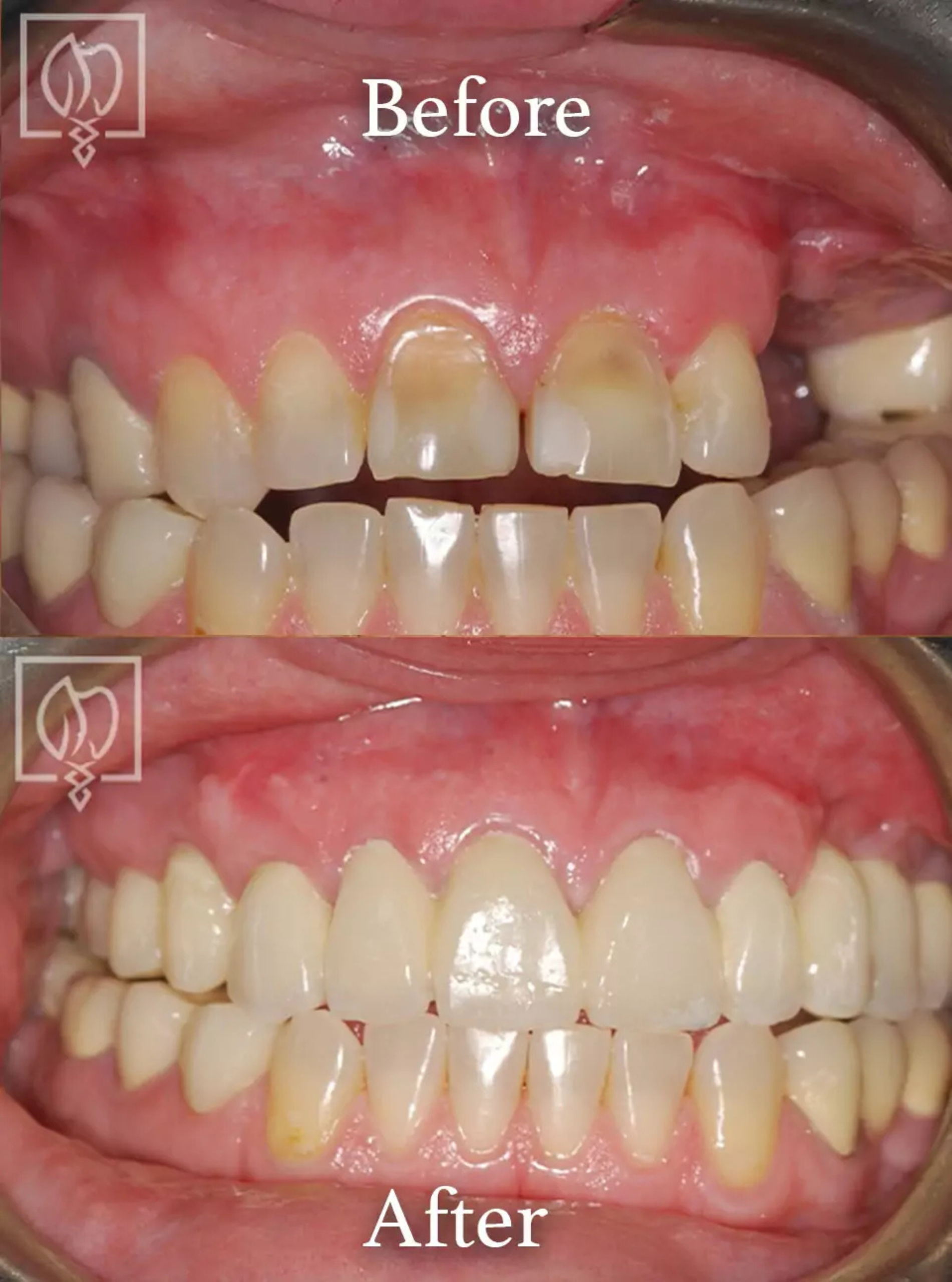
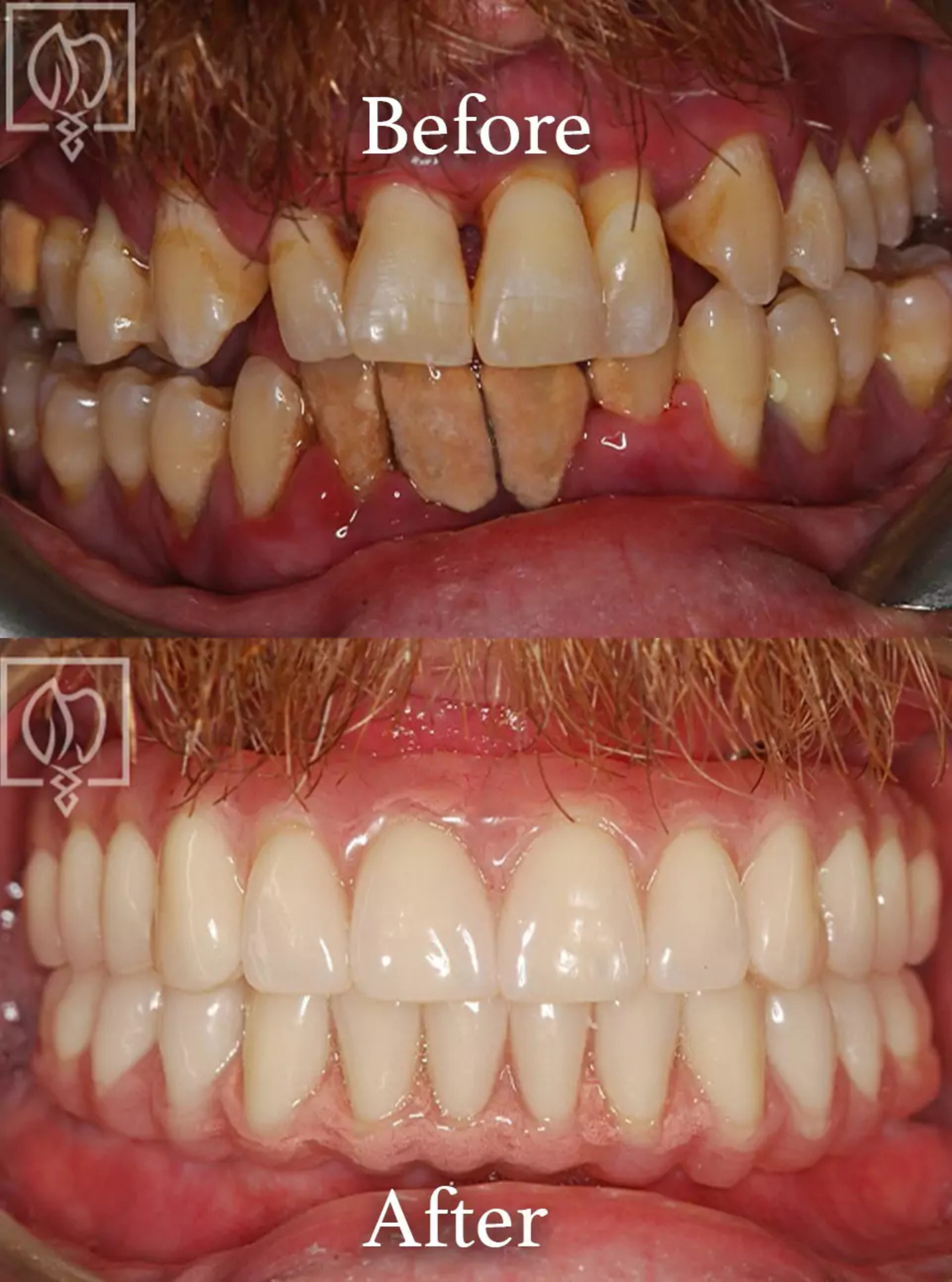
Dr. Gerald M. Marlin plans, surgically places and restores dental implants at Elite Prosthetic Dentistry in Friendship Heights, Washington, DC. The surgical position and the final restoration are planned together, with the practice’s on-site laboratory. He has placed more than 4,100 dental implants and holds 9 U.S. patents in dental implant restoration methodology. Three documented cases show how different situations lead to different plans: a single front tooth rebuilt with bone grafting and one implant, a loose upper bridge and aging crowns rebuilt with staged implants alongside the teeth that could be kept, and failing implants and severe bone loss rebuilt into a stable full-arch reconstruction.
Implant care in the Washington, DC area is offered by prosthodontic practices, oral surgeons, periodontists, implant centers and general dentists. Each model can serve the right patient well. Rather than a comparison of categories, here is what to verify about any provider, including this one:
The practice works with referring dentists across the DMV and also sees patients directly, including patients replacing a single tooth for the first time. For how to think about who should place an implant, see who should place your dental implant in Washington, DC.
What Are Dental Implants
Dental implants consist of a titanium post, abutment, and restoration. The post functions as a natural tooth root to anchor and stabilize the restoration. Once the implant post fuses with the jawbone, it stimulates new bone growth, providing a solid foundation for replacement teeth and significantly reducing the risk of facial changes that occur when teeth are missing for long periods.
Unlike removable dentures or bridges that rest on the gum surface, dental implants integrate directly into the bone structure, mimicking the way natural tooth roots work. This integration, called osseointegration, creates a foundation that is remarkably stable and durable. The titanium implant body biointegrates seamlessly with the surrounding bone over several months, becoming a permanent part of the jaw. This biocompatibility is why titanium has been the gold standard in implant dentistry for decades, although newer ceramic options are now available for select cases. The differences are reviewed on the zirconia vs. titanium dental implants page.
Implant Candidacy and Requirements
Most patients with missing or failing teeth can be candidates for dental implants. Adequate jawbone height and width are required to support an implant. If significant bone loss has occurred, bone grafting or ridge augmentation can rebuild the foundation. Gums should be healthy and free from untreated periodontal disease. Diabetes, smoking, and certain medications may require discussion, though they do not necessarily disqualify a patient from treatment.
Many patients who initially thought they were not candidates for implants have successfully received them after bone grafting, sinus augmentation, or other preparatory procedures.
Implant Success and Long-Term Predictability
When placed and restored by an experienced specialist, dental implants have well-documented long-term success rates. Some of Dr. Marlin’s earliest implants continue to function as designed, and the documented in-practice implant success rate is above 97% for implants placed more than 20 years ago. Long-term predictability reflects how the case was diagnosed, planned, executed, and maintained, not implant placement alone.
Implants do not develop decay, but the bone and soft tissue around them still require proper hygiene, periodic evaluation, and ongoing maintenance.
For Referring Dentists
A meaningful portion of patients at Elite Prosthetic Dentistry are referred by general and family dentists across the DMV who recognize when a case warrants prosthodontic specialty input. Dr. Marlin works collaboratively with referring providers, communicates throughout the planning and treatment phases, and supports the patient’s long-term relationship with their primary dentist. For dentists who want to discuss a specific case, the practice can be reached directly at (202) 244-2101.
Deciding About Implants: Guides That Answer the Common Questions
Most implant decisions come down to a few questions, and each has a guide written for it. If a tooth is failing, start with whether to save the tooth or replace it with an implant. If you have been told several teeth should go, read keep your teeth or replace them. For the visible front of the mouth, see replacing a missing front tooth. If you are weighing who should operate, read who should place your dental implant and what “dental implant specialist” means. Medical conditions and medications are covered in dental implants and your medical history, a history of gum disease in implants after gum disease, and the cost question, without figures, in what determines the cost of implants and how to compare two quotes. Every guide is collected on the decision guides page.
Dental Implants for Washington, DC Patients
Elite Prosthetic Dentistry is located at 4400 Jenifer Street NW, Suite 220, in Friendship Heights, one block from the Friendship Heights Metro station on the Red Line. Building parking is available. Patients come to the practice for implant care from across Northwest Washington, including Chevy Chase, Tenleytown, Spring Valley, Palisades, Cleveland Park, Woodley Park, Kalorama, Dupont Circle, and Georgetown, and from the Maryland and Virginia suburbs. Every implant case is evaluated, planned, placed, and restored at this one location, with the in-house dental laboratory on site.
For your first implant, start with our single-tooth implant guide. If several teeth or a previous implant treatment require more extensive planning, our guide to choosing a provider for a complex case explains what to compare. If an implant placed elsewhere is loose, uncomfortable, or not what you expected, see repairing failing implants. For directions and the communities we serve, see locations.
Patients traveling from the Maryland and Virginia suburbs can start with the community guides for Bethesda, Chevy Chase, Potomac, McLean, Arlington and Great Falls, which cover travel, scheduling and how to evaluate an implant provider from each community.
Ready to Discuss Your Treatment Options With a Specialist?
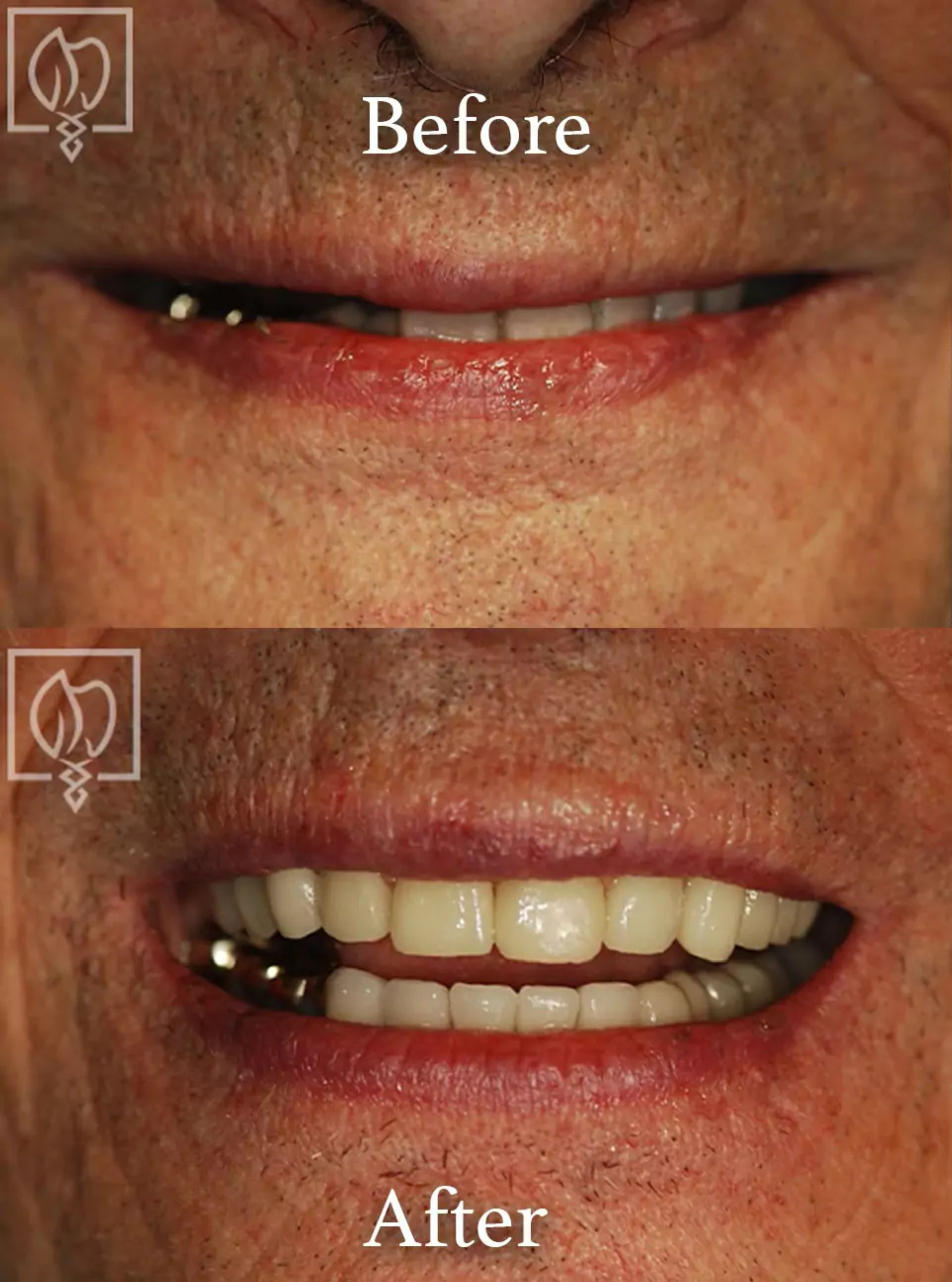
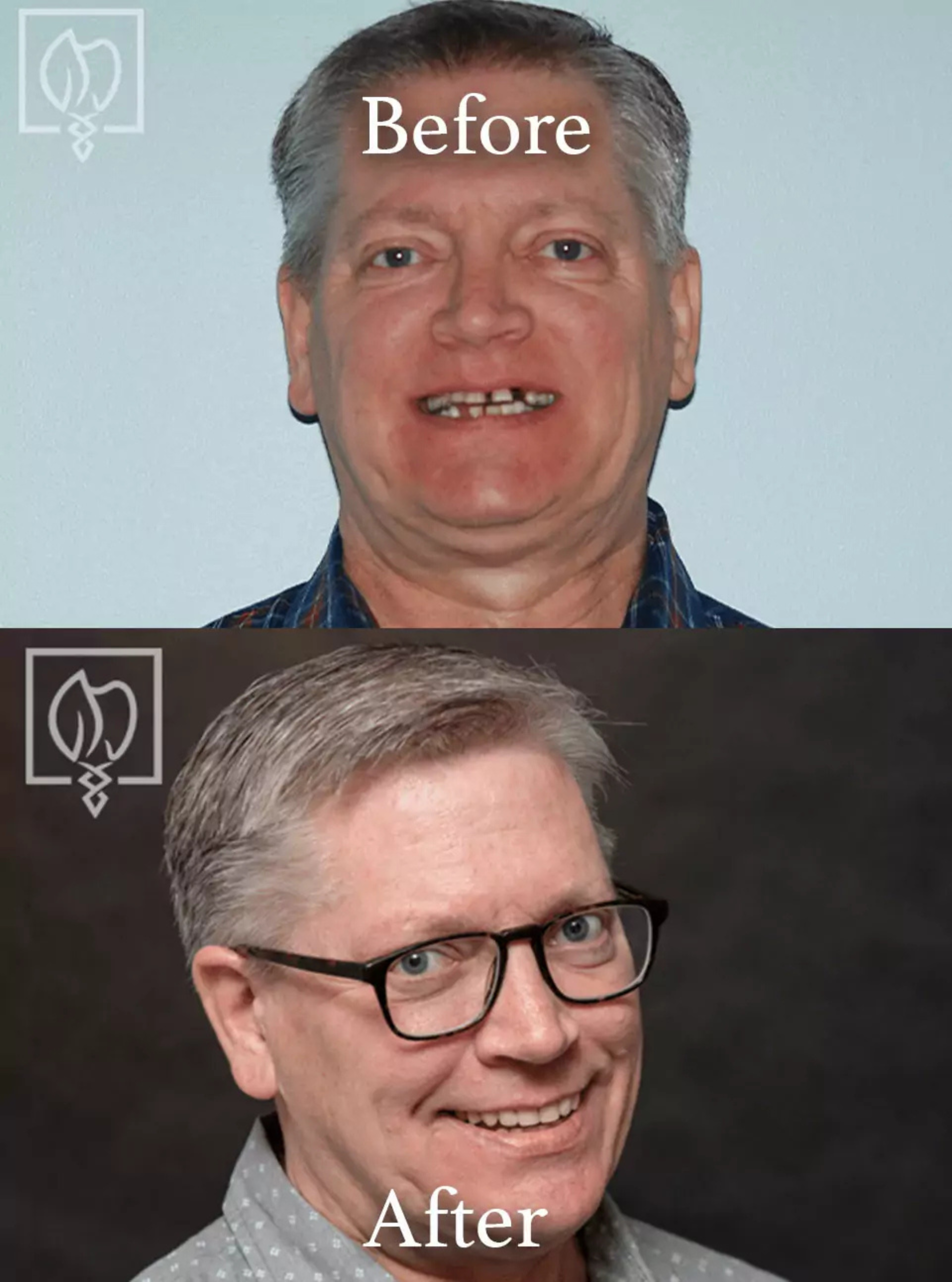
Real Patient Implant Results
Every case below was planned and treated at the Washington, DC practice under Dr. Marlin's direction.
When Elite Prosthetic Dentistry Is a Strong Fit
A strong fit if you are looking for
- A first implant to replace one tooth, including a tooth your dentist has said cannot be saved, with the crown designed before the implant is placed
- Implant treatment planned around the final crown, bridge, or prosthesis, not only the surgical site
- An implant in a visible area where gum contour and tooth shape must be designed before surgery
- Implants that must coordinate with existing crowns, bridges, or a bite that needs rebuilding
- Bone grafting or sinus augmentation evaluated as part of one plan rather than as a separate referral
- Integrated prosthodontic care from implant planning to final restoration, with the in-house laboratory
The honest boundary
Elite Prosthetic Dentistry may not be the right fit if you are primarily looking for routine insurance-based dentistry, the lowest-cost option, or a quick single-visit solution without a comprehensive evaluation.
For your first implant, start with our single-tooth implant guide. If several teeth or a previous implant treatment require more extensive planning, our guide to choosing a provider for a complex case explains what to compare.
Frequently Asked Questions
What are dental implants and how do they work?
Dental implants are titanium posts surgically placed into the jawbone to replace missing tooth roots. Through a process called osseointegration, the implant fuses with the bone over 3 to 6 months, creating a stable foundation. A custom-crafted crown, bridge, or full-arch prosthesis is then attached to restore the appearance and function of natural teeth.
How long do dental implants last?
When properly planned, placed, and restored, dental implants are designed to last for decades. Dr. Marlin has placed more than 4,100 dental implants, with a documented in-practice implant success rate above 97% for implants placed more than 20 years ago. Long-term predictability depends on accurate placement, restoration design, bite stability, and ongoing maintenance, not implant placement alone.
Why should I choose a prosthodontist for dental implants instead of a general dentist?
A prosthodontist completes three additional years of specialty training beyond dental school, focused entirely on the replacement and restoration of teeth. That training shapes how an implant is planned, whether it replaces one tooth or a full arch: the final tooth is designed first, and the implant is placed where that tooth needs it. It matters most where surgical and restorative decisions have to be coordinated, which is why many general dentists refer their more complex implant cases to a prosthodontist.
Who places the implant at Elite Prosthetic Dentistry?
Dr. Gerald M. Marlin plans, surgically places and restores dental implants in the practice. The implant position is decided from the final crown, bridge or prosthesis, planned on a CBCT scan, and the restoration is made in the in-house laboratory. Before any treatment, ask any practice who will place the implant, who will restore it and how the two decisions are connected.
Do I need full-mouth treatment for one missing tooth?
No. The examination determines whether a localized replacement is sufficient and whether the adjacent teeth or the bite affect its design. A comprehensive assessment does not automatically mean comprehensive treatment; most implant patients here are treated for one tooth or a few teeth.
Can I come to Elite Prosthetic Dentistry for my first dental implant?
Yes. Many patients come for a first implant to replace one tooth, often a tooth their dentist has said cannot be saved. You do not need a referral, a failed implant or a treatment plan from another office. The first visit, with an examination and a CBCT scan, establishes whether the tooth can be kept, what replacing it with an implant would involve, and the alternatives.
Do I need a referral or a second opinion first?
No. You can contact the practice directly if a tooth is missing, may need extraction, or has been recommended for replacement. The evaluation can begin before you have a treatment plan from another office.
Is every implant placed with a surgical guide?
Yes. Every implant insertion at Elite Prosthetic Dentistry uses a surgical guide generated from the patient's CBCT scan. The guide carries the planned position and angle from the digital plan to the surgery, so the implant is placed where the final crown, bridge or prosthesis needs it.
Can my existing crowns stay when an implant is placed nearby?
Sometimes. Their condition, support, position and relationship to the new restoration determine whether retaining them is sensible. Their age alone is not a reason to replace them. The evaluation says which existing work can stay and which cannot, and why.
What happens after the final tooth is delivered?
The plan identifies cleaning access, professional maintenance intervals, monitoring of the implant and its restoration, and whom to contact if a component loosens or symptoms develop. Delivery of the final tooth is a stage of care, not the end of responsibility.
What is the dental implant process and how long does it take?
The process begins with a comprehensive consultation including CBCT 3D imaging, followed by surgical implant placement. After three to six months of osseointegration, a custom crown is fabricated in the in-house lab and placed on the implant. Total treatment time varies based on individual needs, bone health, and whether preparatory procedures like bone grafting are required.
What is the advantage of an in-house dental lab for implant restorations?
An in-house lab allows the prosthodontist to work directly with the master ceramist on every restoration. That direct collaboration produces faster turnaround, real-time adjustments during fabrication, and closer control over bite, fit, contour, and shade. The Elite Prosthetic Dentistry in-house lab has operated continuously since 1985.
Do you accept referrals from general dentists?
Yes. Many of our patients are referred by general and family dentists across the DMV who recognize when a case requires prosthodontic specialty input. Dr. Marlin works collaboratively with referring dentists, communicates throughout treatment, and supports the long-term relationship between the patient and their primary dentist.
What does a dental implant cost in Washington, DC?
Cost varies based on the number of implants, the type of restoration (single crown, bridge, or full-arch), whether bone grafting or sinus augmentation is required, the prosthetic materials selected, and the complexity of the case. You receive a written treatment plan with itemized fees before treatment begins. Elite Prosthetic Dentistry is a fee-for-service practice; the team can submit out-of-network PPO claims for you, and financing is available.
Related Patient Success Stories
Explore similar patient success stories demonstrating our expertise in advanced prosthetic dentistry.
 Before
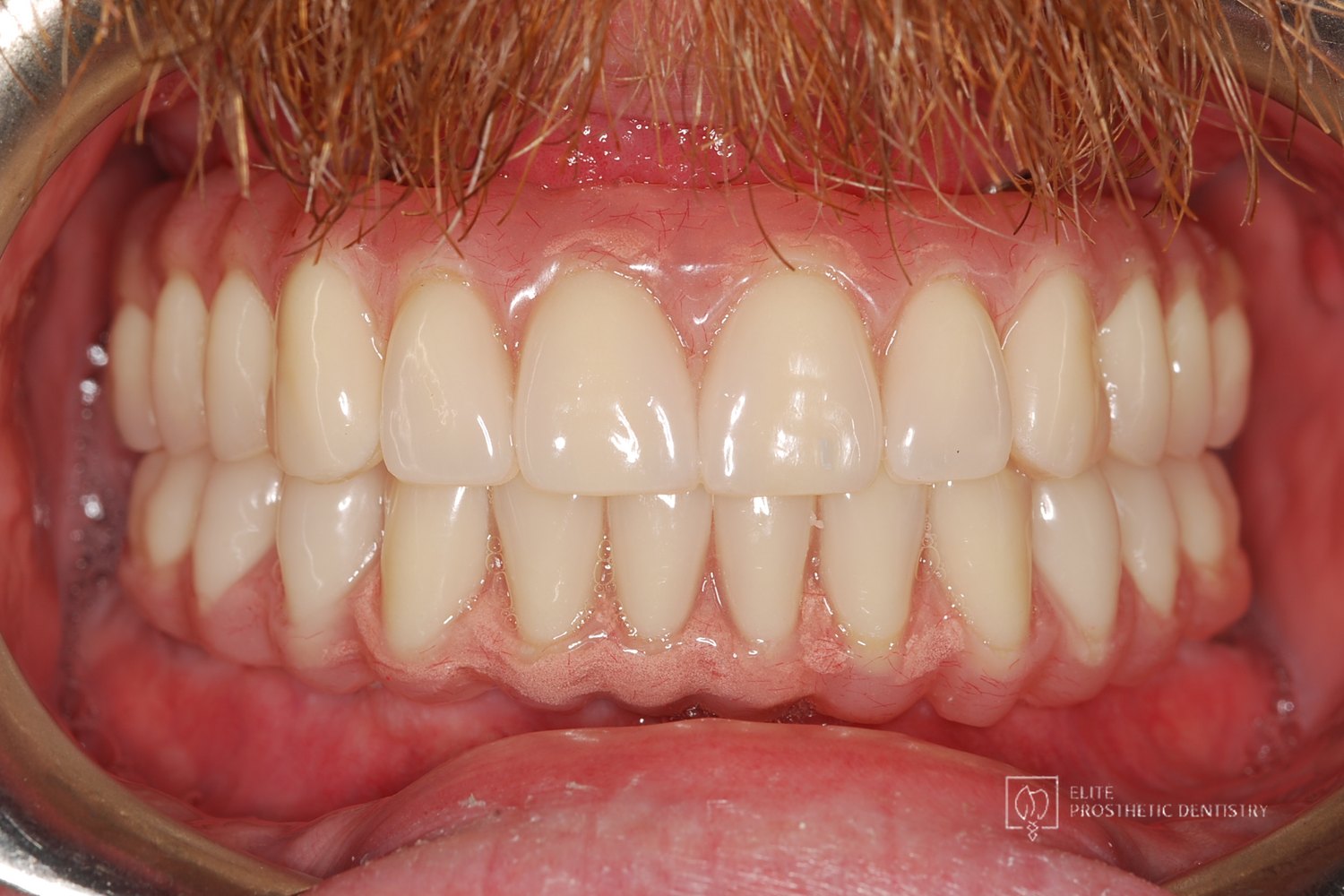 After
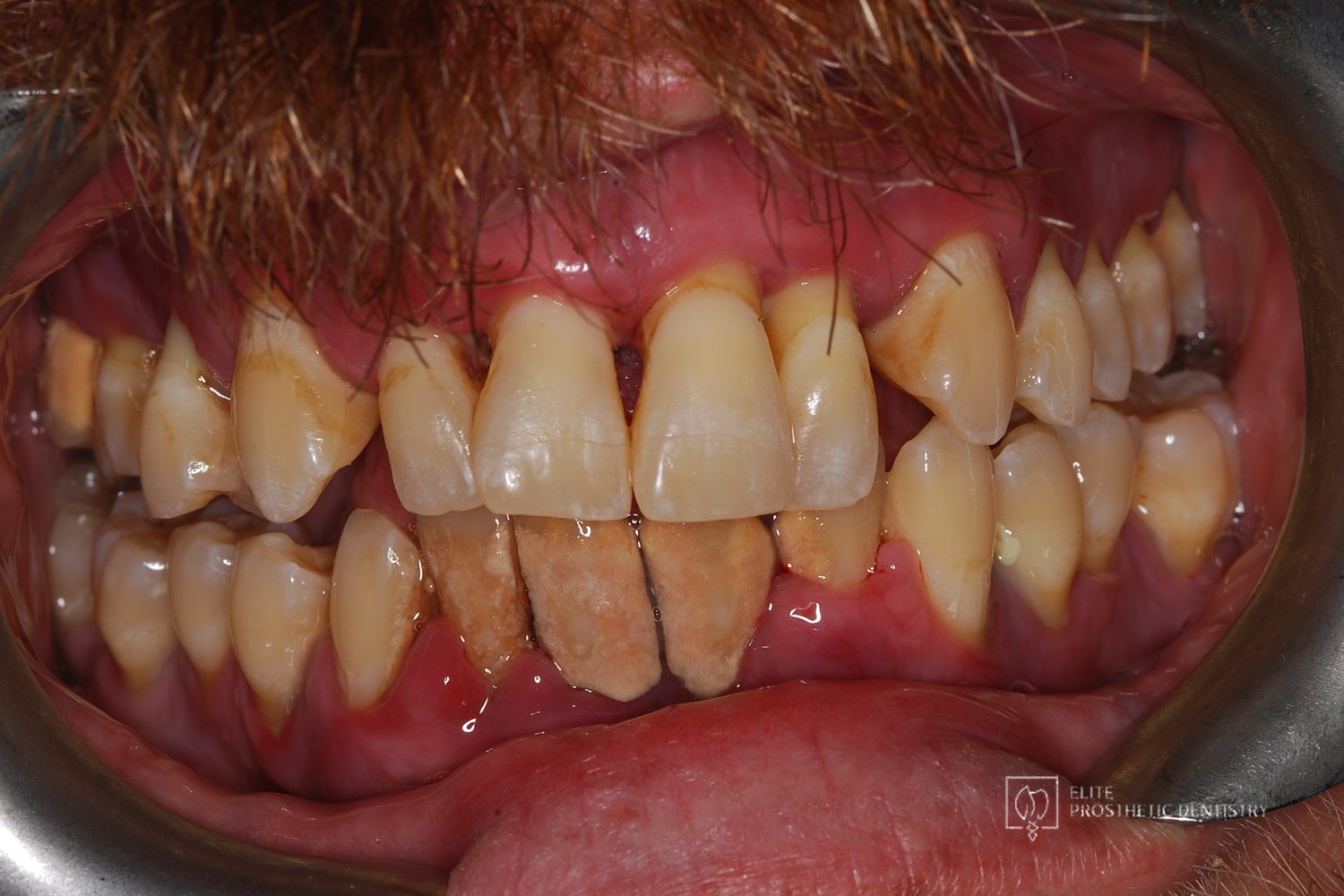
Both Arches Rebuilt After Advanced Periodontal Disease: Twelve Guided Implants and a Signature Hybrid Prosthesis
Advanced periodontal disease had destroyed the support around the remaining teeth in both arches. None could be kept, and the bone that would carry implants had been lost along with them.
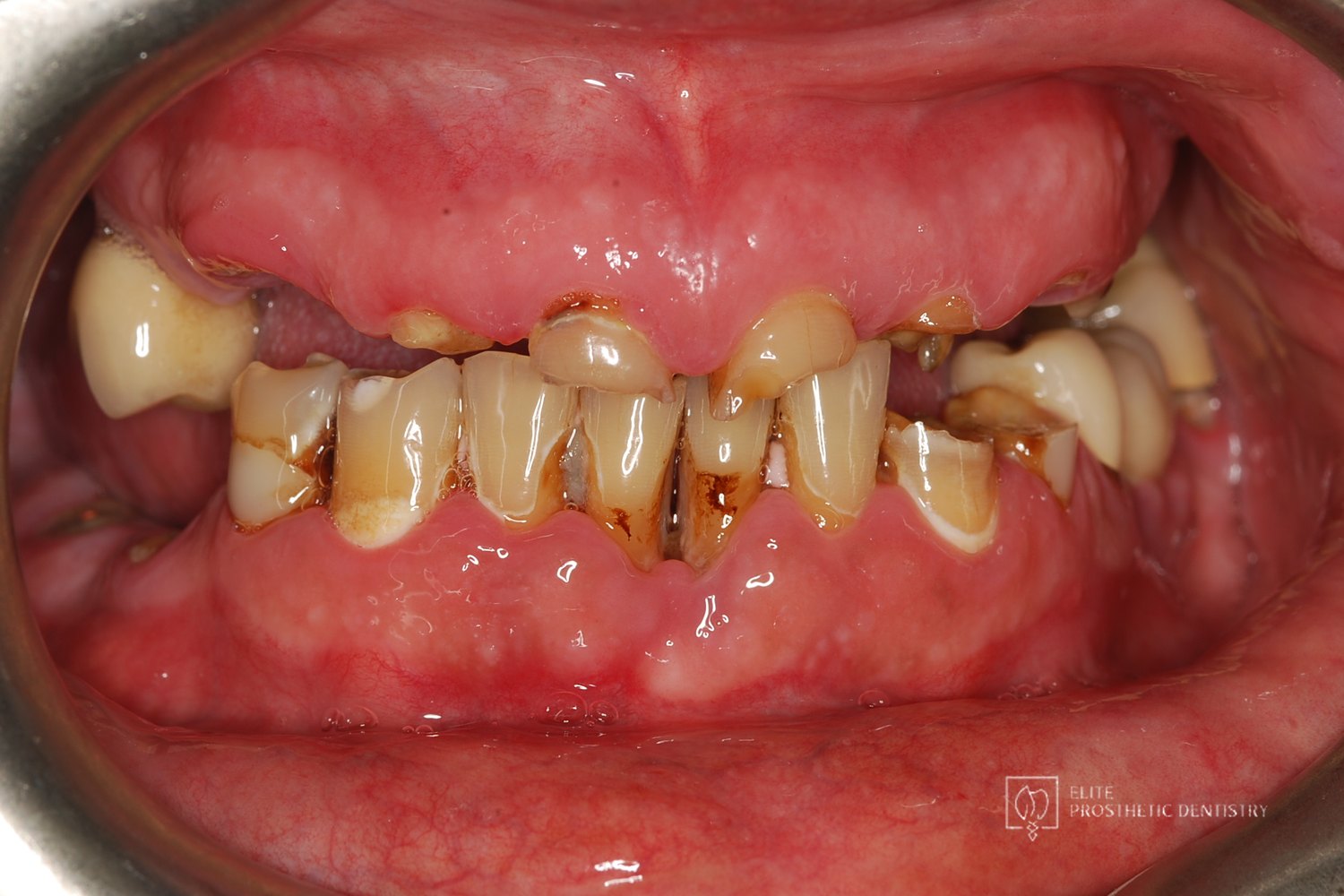 Before
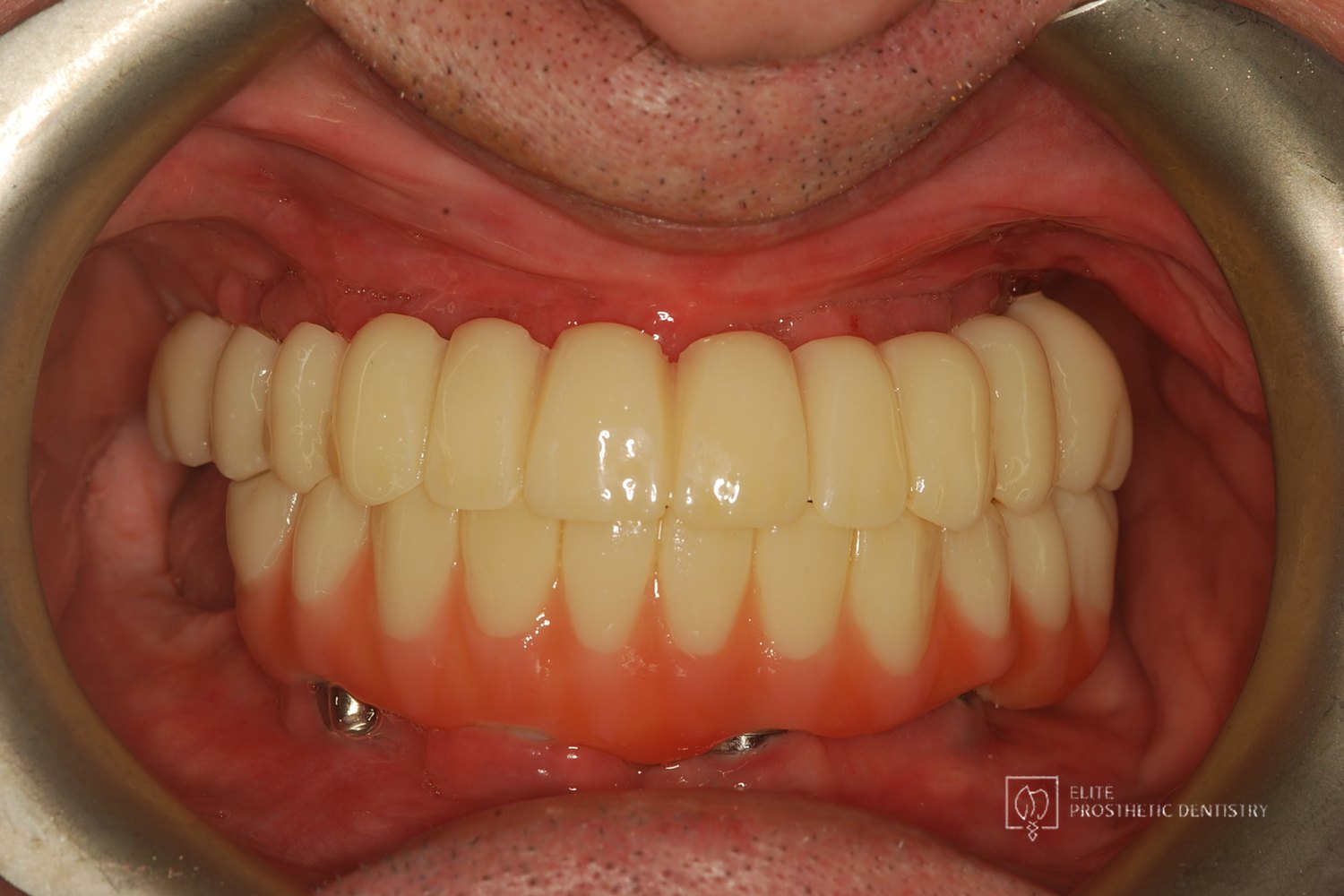 After
Both Arches Rebuilt After Years Without Dental Care and Heavy Grinding: Eight Guided Implants and an Elite Hybrid Prosthesis
Years without dental care combined with heavy grinding had destroyed the teeth in both arches. None were salvageable, and the bone needed rebuilding before implants could carry a new bite.
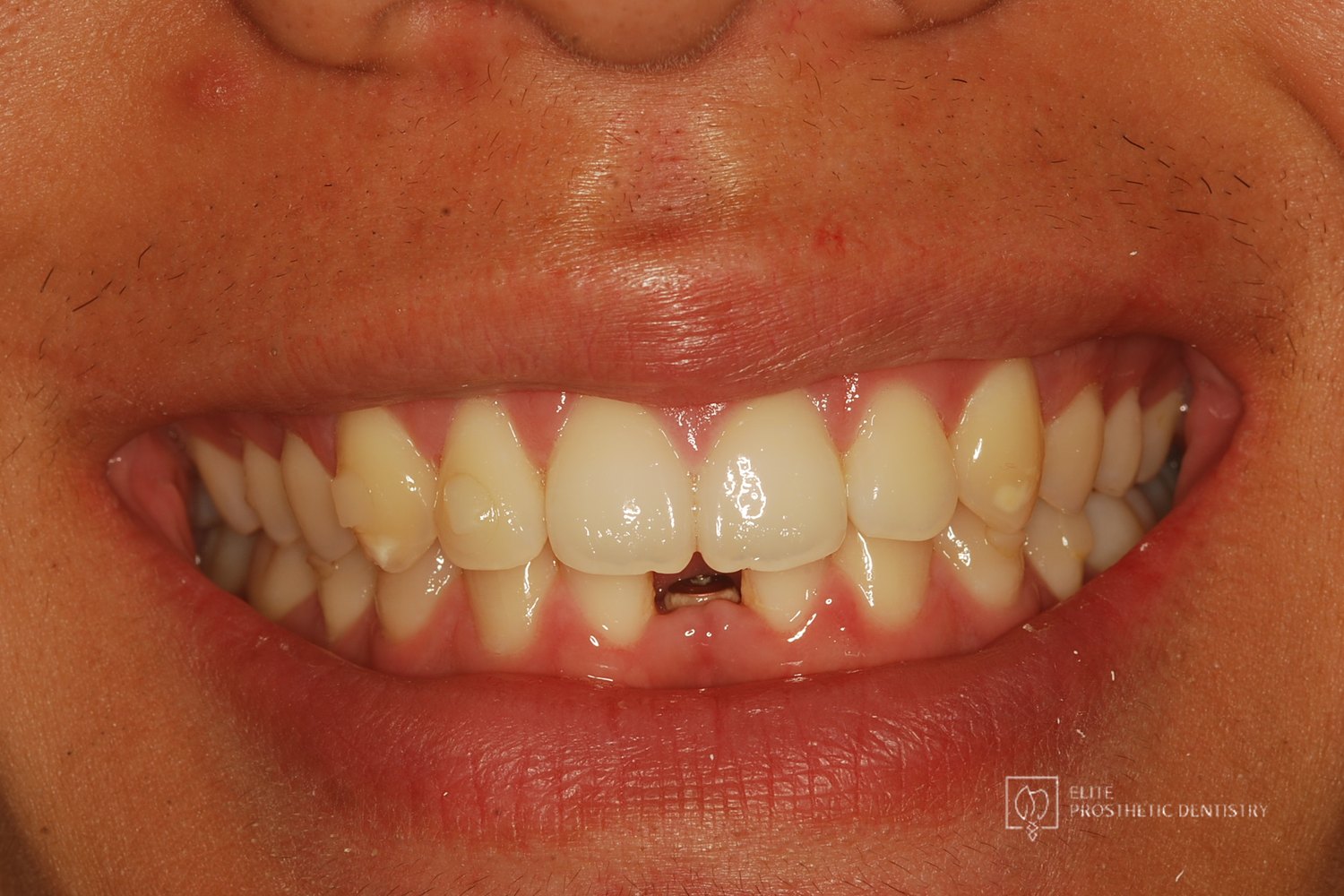 Before
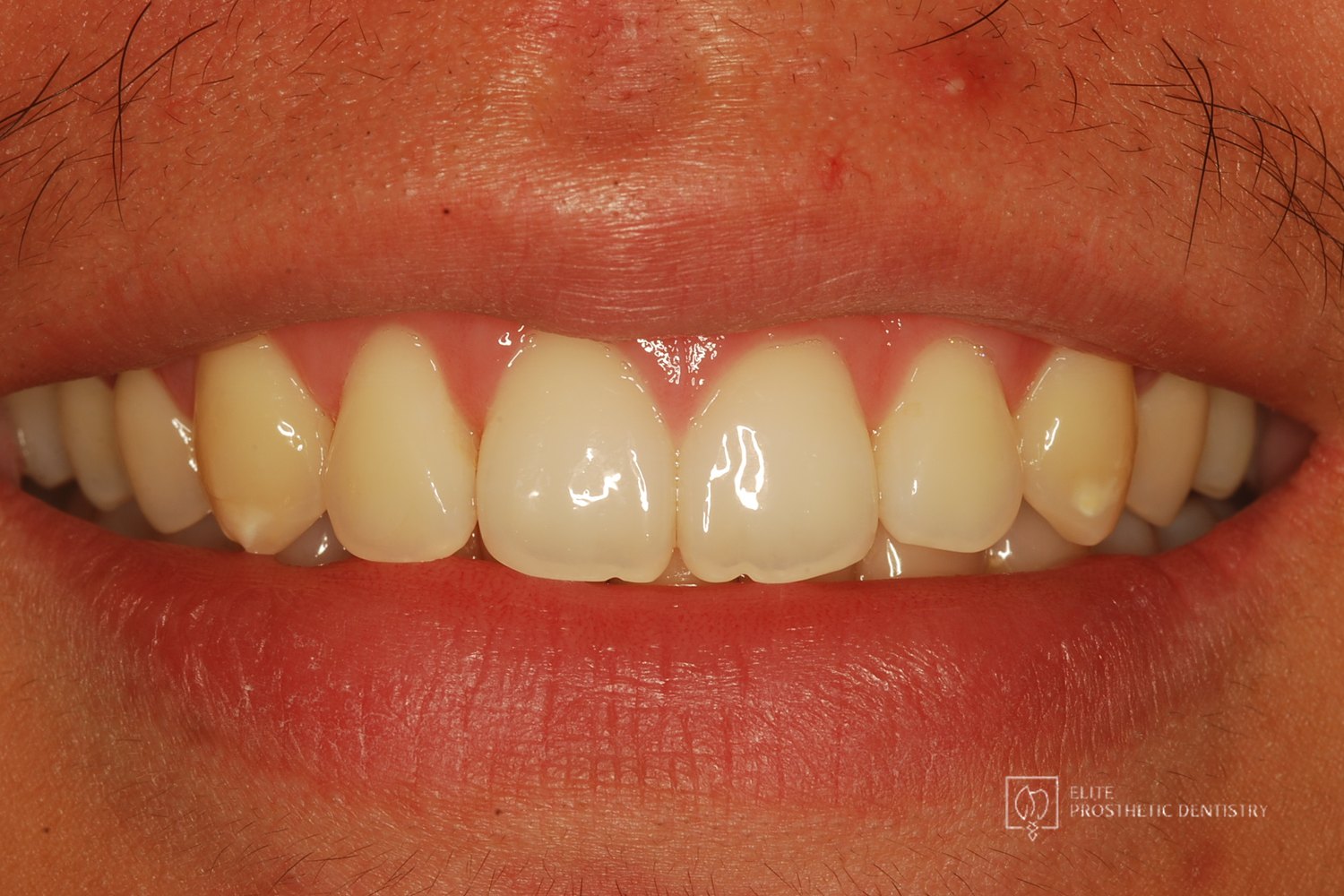 After
Bone Loss Around a New Dental Implant: Removed Early, the Ridge Rebuilt, and a Guided Replacement Implant Restored
A 26-year-old patient referred for a crown on a recently placed lower front implant arrived with 5 mm pocketing, bone loss, and exposed implant threads around it; a CBCT scan showed a ridge too narrow to hold the implant fully in bone. A crown could have been made, but the foundation would not have lasted.
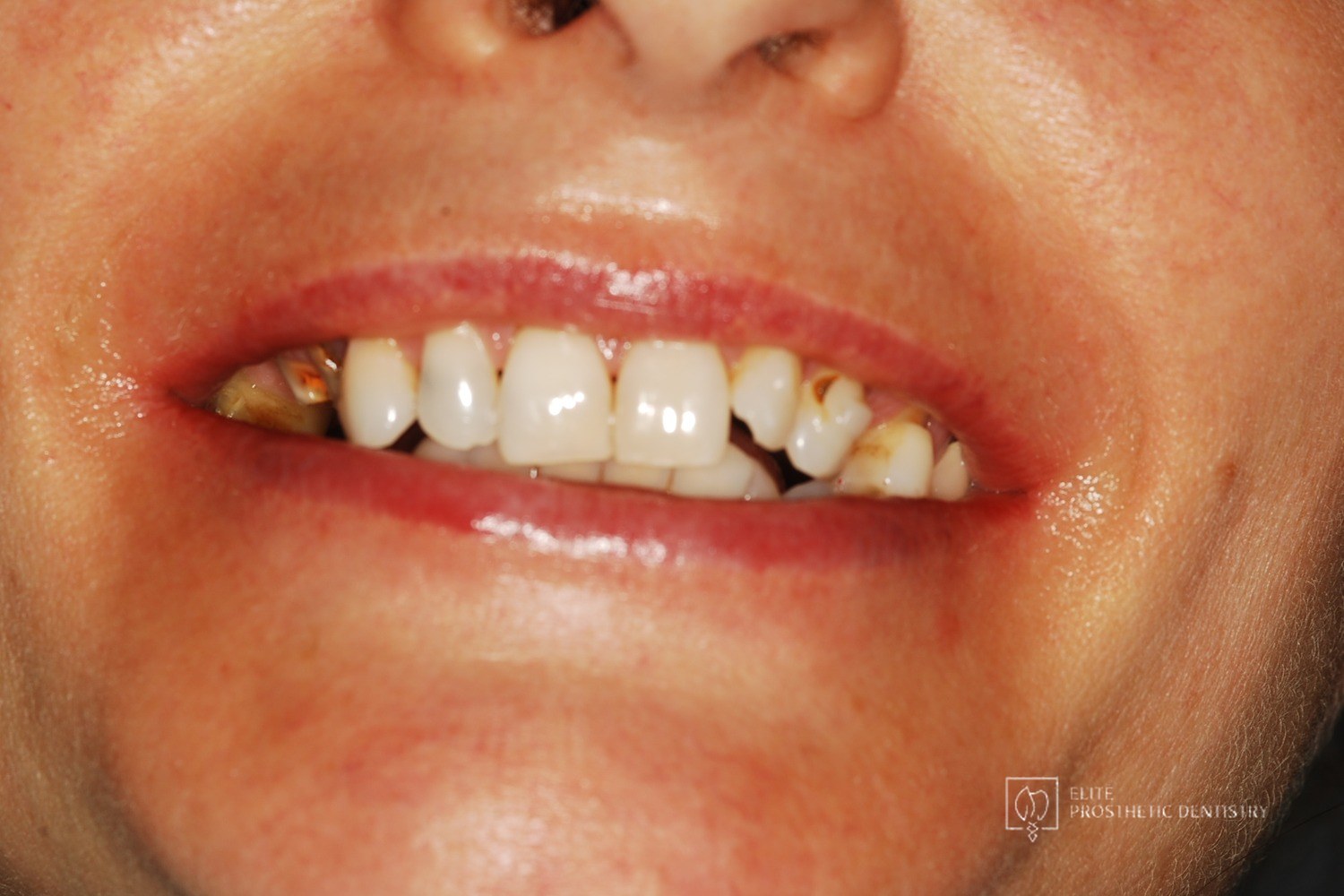 Before
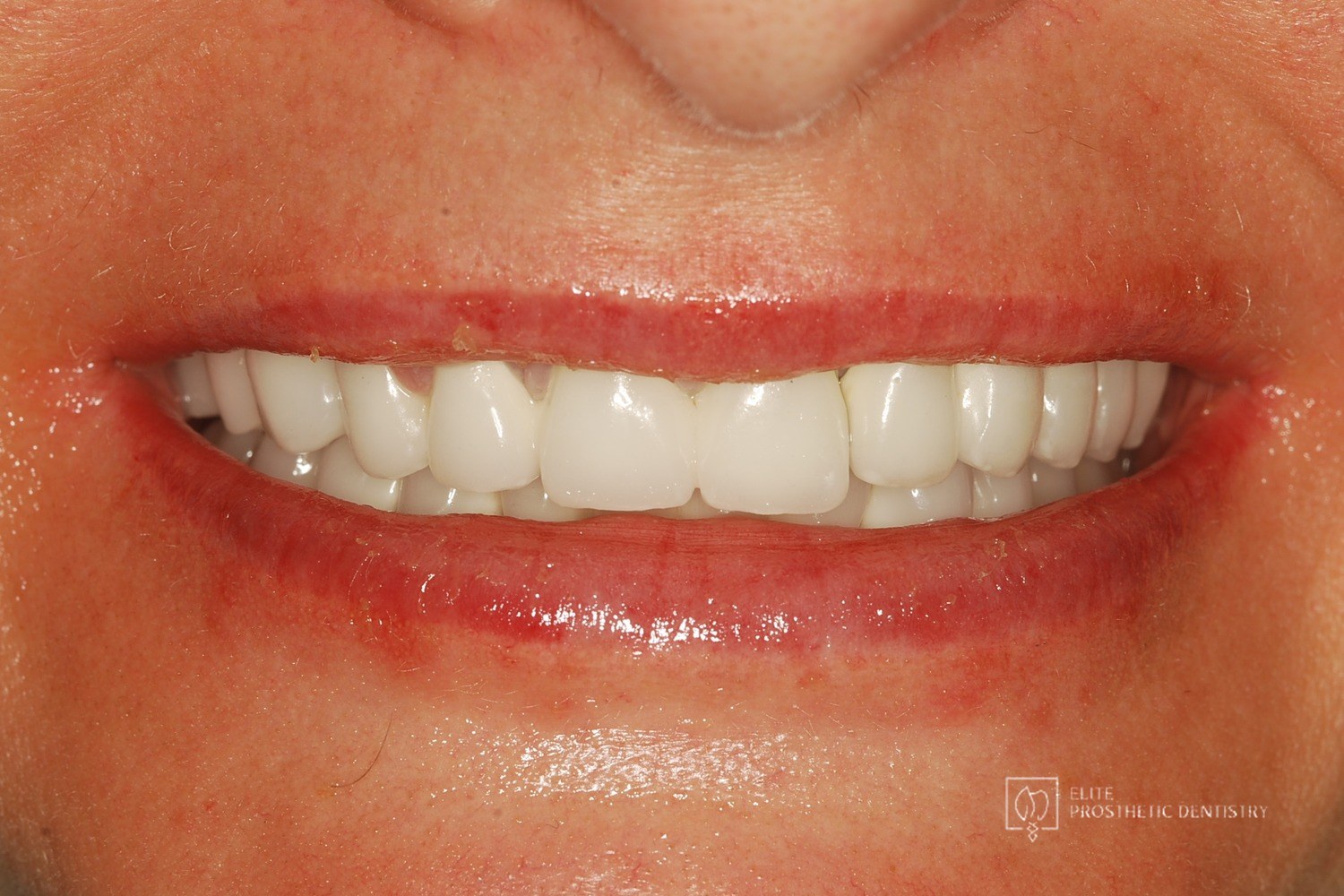 After
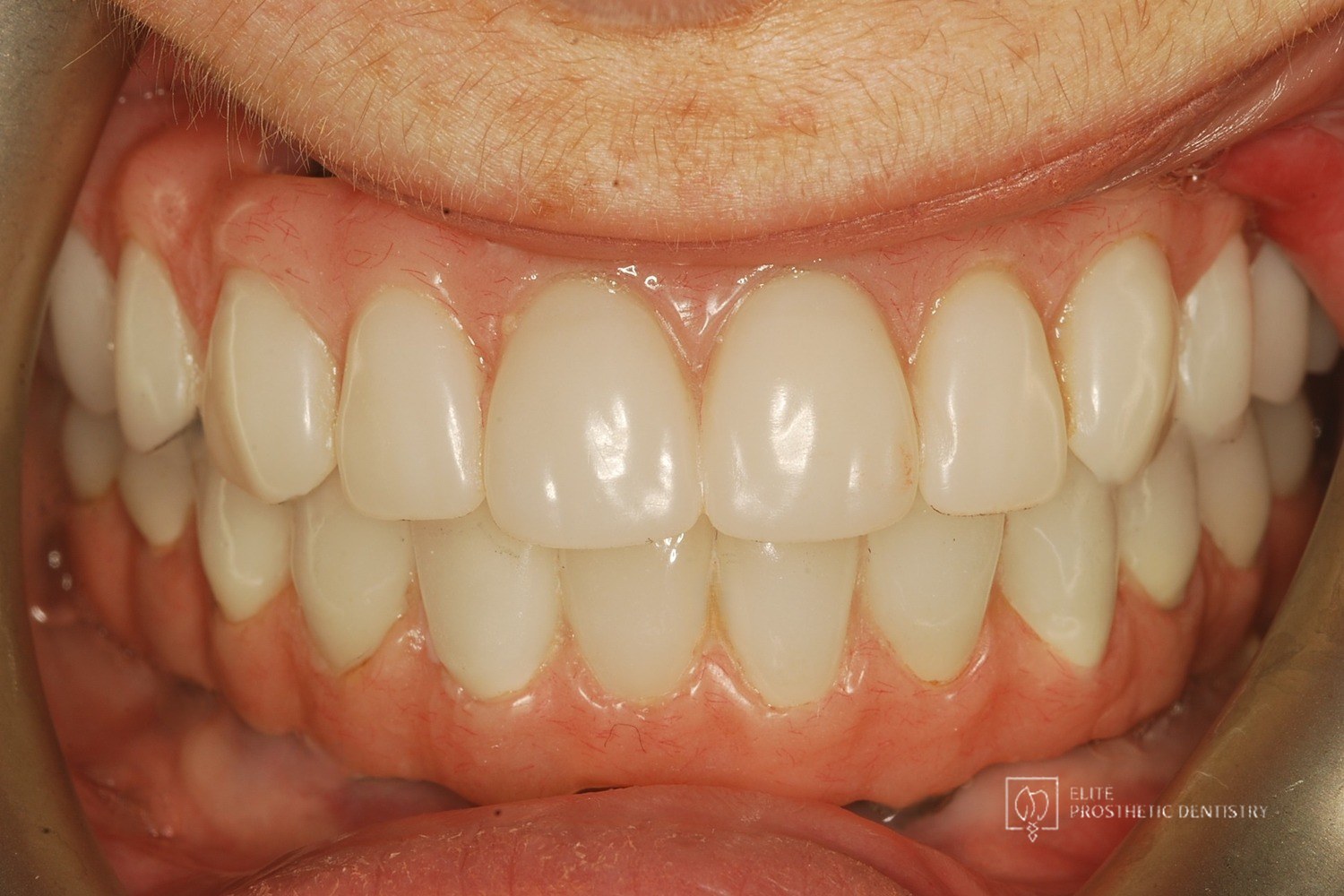
How Aging, Failing Dentistry Was Replaced with a Coordinated Full-Mouth Implant and Crown Reconstruction
The patient presented with throbbing upper-molar pain, long-standing infections, multiple root canals and unfinished prior treatment, generalized sensitivity, and several hopeless teeth.
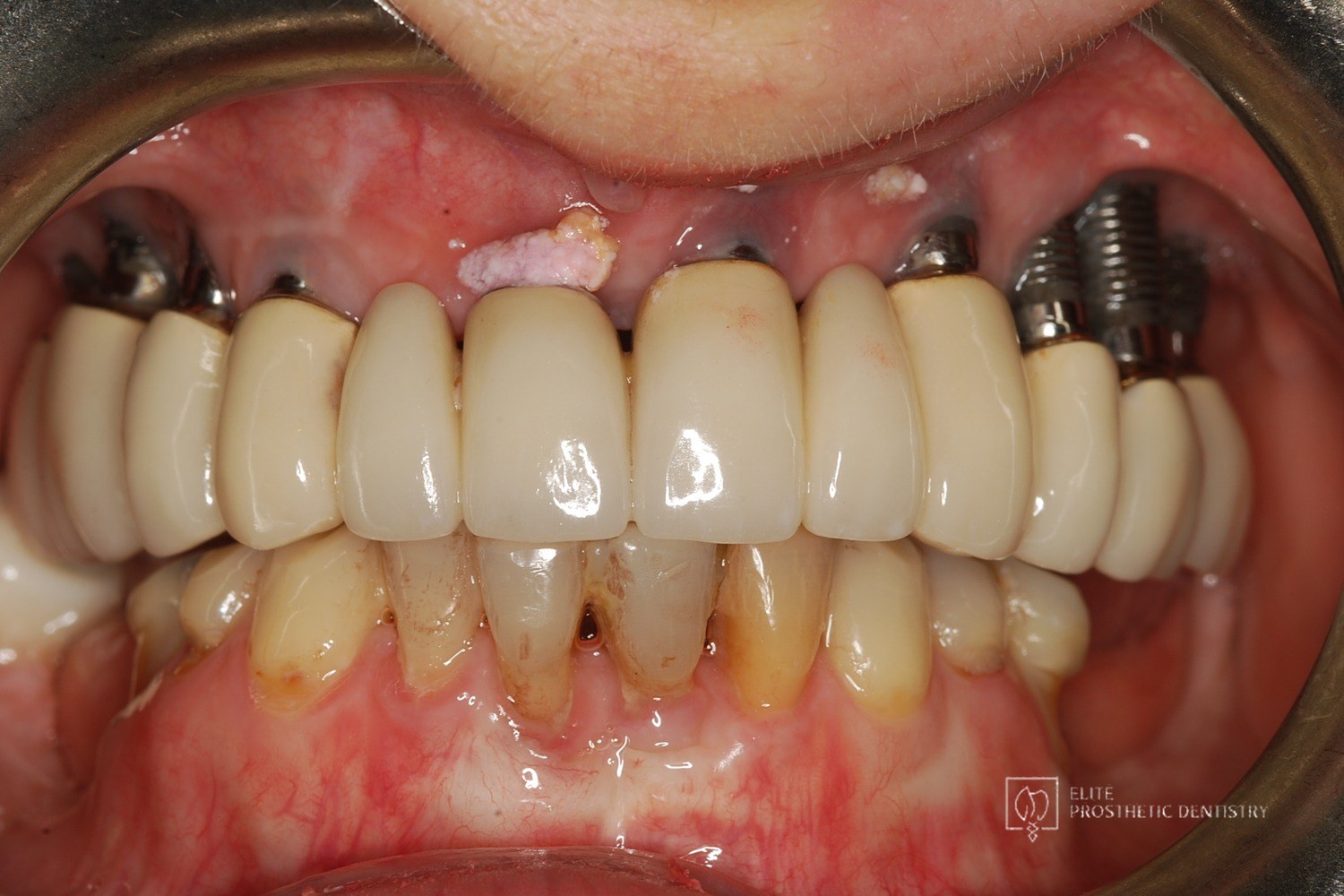 Before
 After
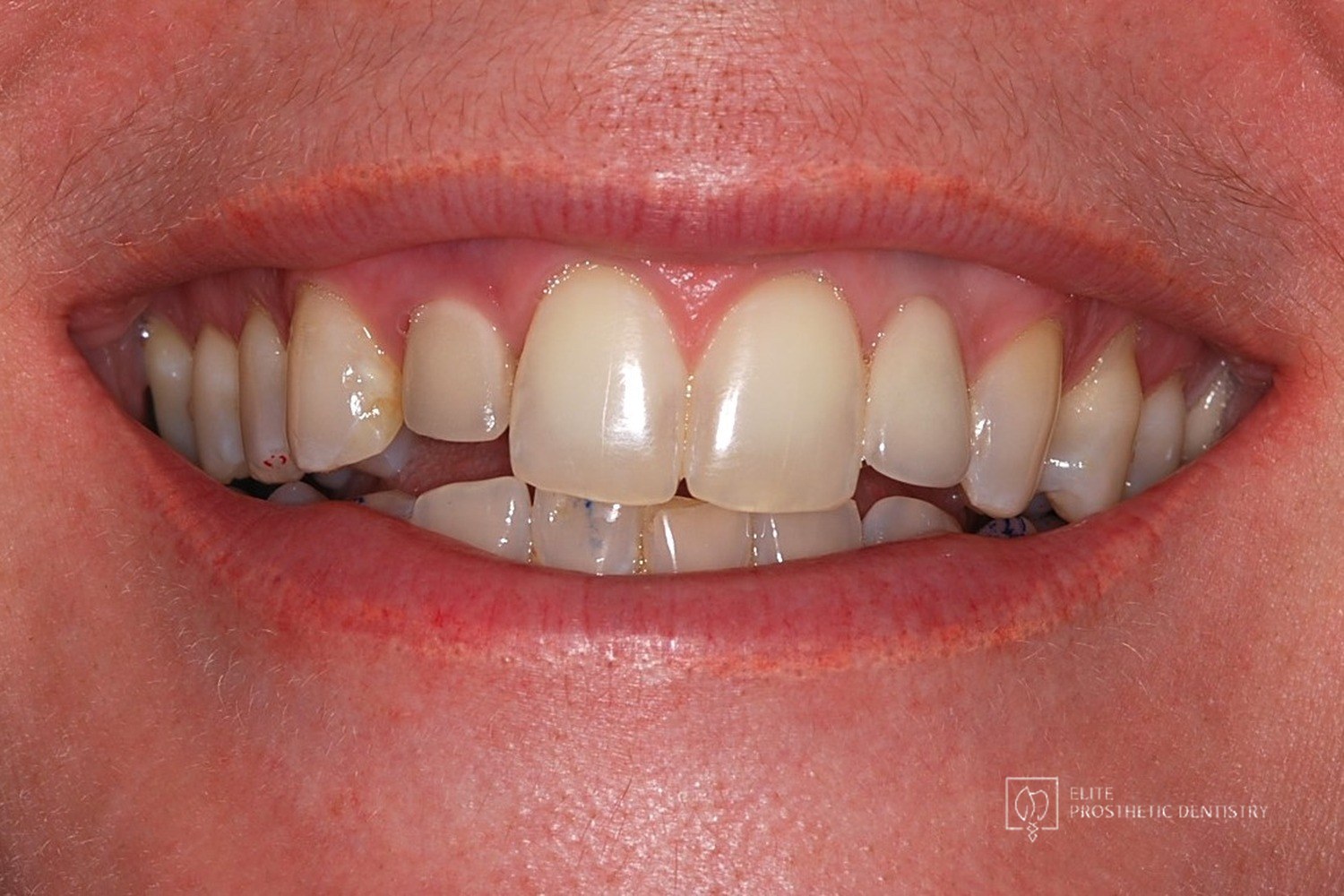
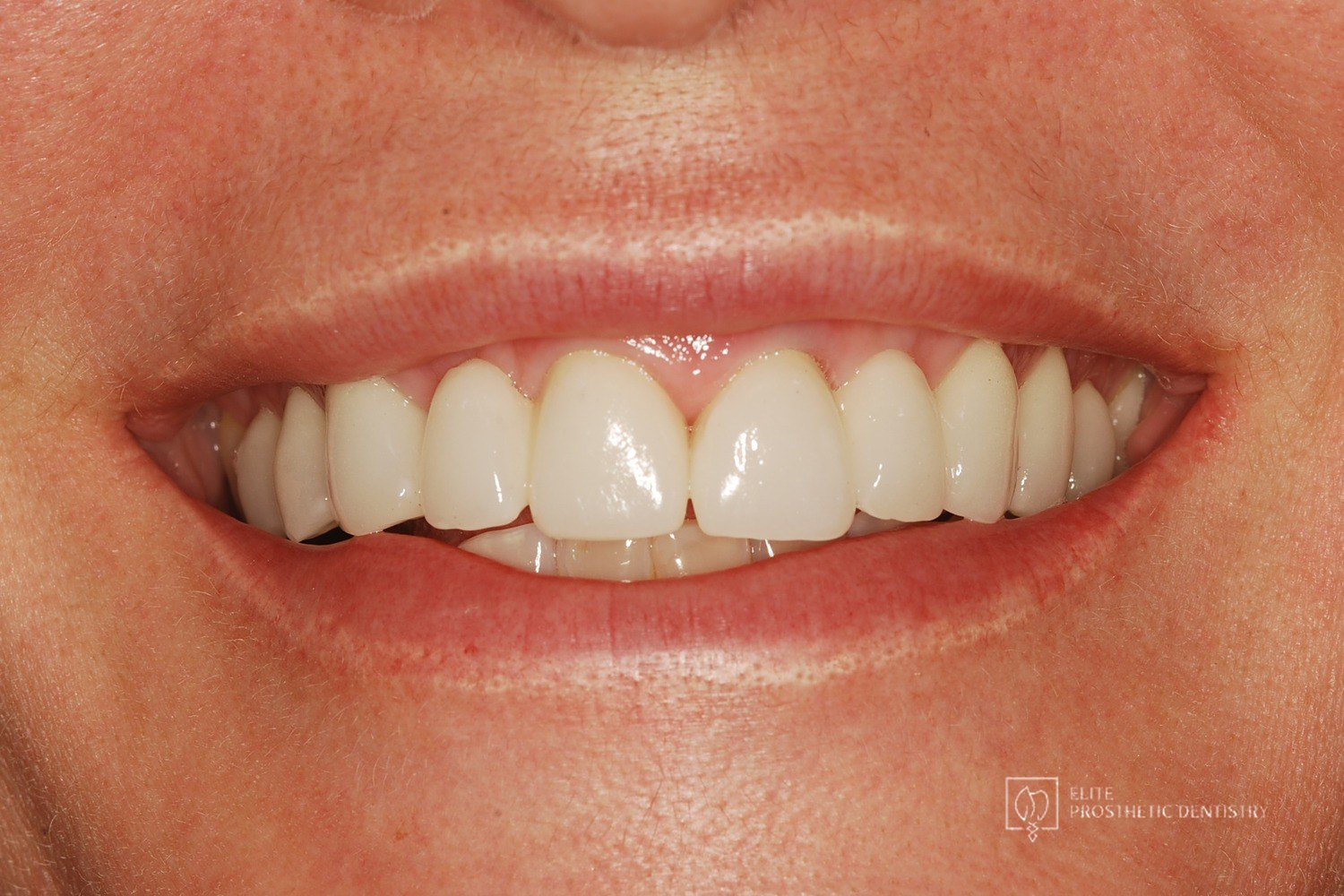
How Failing Implants and Severe Bone Loss Were Rebuilt Into a Stable Full-Arch Implant Reconstruction
The patient presented with significant complications from previously placed implants, severe bone loss, failing posterior implants, and an unesthetic full-arch bridge. Both arches required full reconstruction, with the upper arch showing the most advanced bone loss and instability.
 Before
 After
How Failing Lateral Incisor Implants Were Replaced with Custom Zirconia Bridges After Severe Bone Loss Made Replacement Implants Impossible
Comprehensive examination including CBCT imaging revealed significant bone loss surrounding implants that were placed outside the buccal plate, most likely due to placement without a CBCT-generated surgical guide. The implants were determined non-salvageable, and the alveolar ridge was too narrow to support replacement implants without extensive reconstruction.
Patient Success Stories
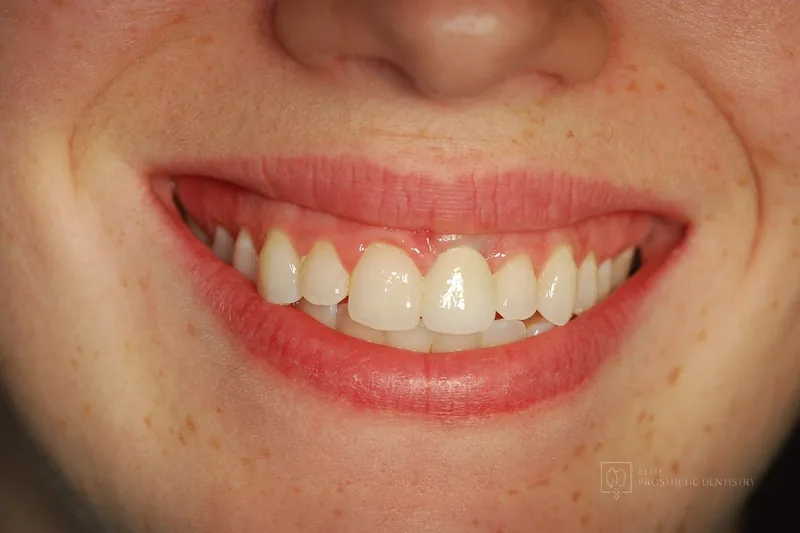
Single Front Tooth Implant
A front tooth lost to childhood trauma rebuilt with socket bone grafting and a single implant, with the crown designed for a natural result.
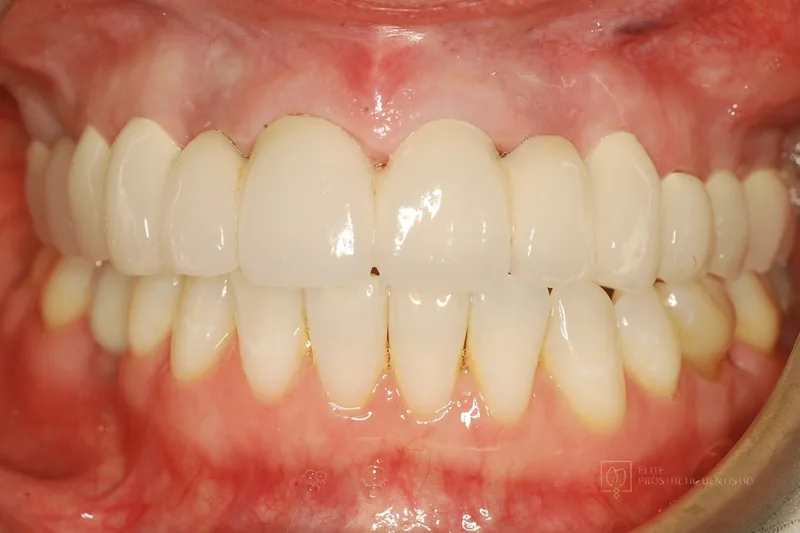
Older Implants Left Undisturbed While the Upper Teeth Were Rebuilt
Malpositioned implants were left undisturbed in the bone and not used to support the new restoration; the upper teeth and bite were rebuilt around them.
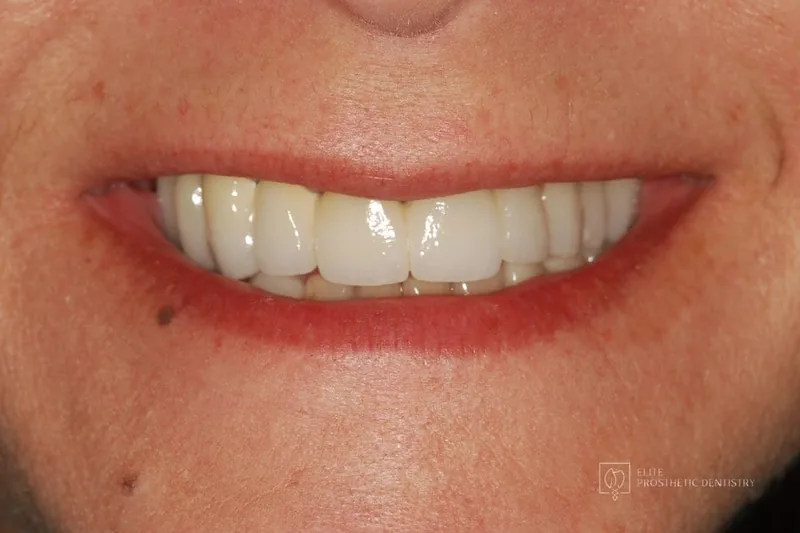
Implants Within a Reconstruction
Failing bridgework and missing back teeth rebuilt with implants alongside the natural teeth that could be kept.
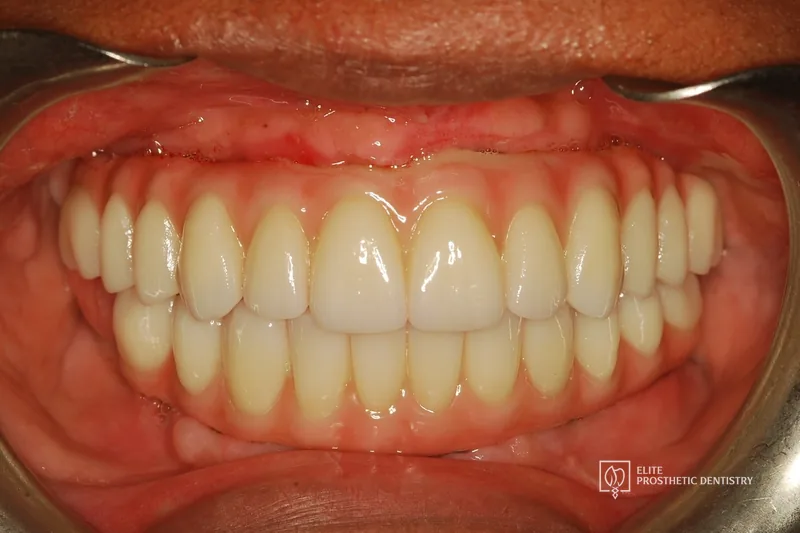
Full Arch When Appropriate
Severe bone loss and bite dysfunction, where an entire arch was no longer restorable, rebuilt with six implants and a zirconia hybrid.
Related Articles
Deepen your knowledge with additional insights on this topic.
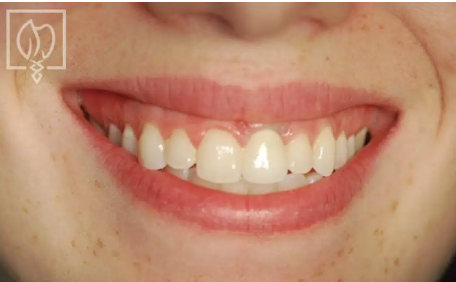 Dental Implants
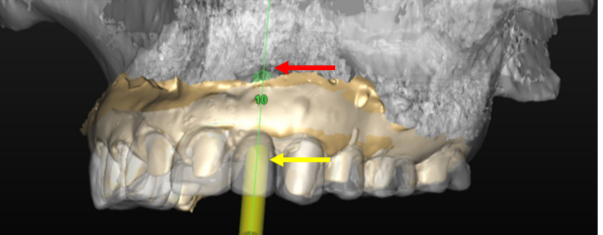
If a Single Front Tooth Is Replaced with an Implant, Can It Look Natural?
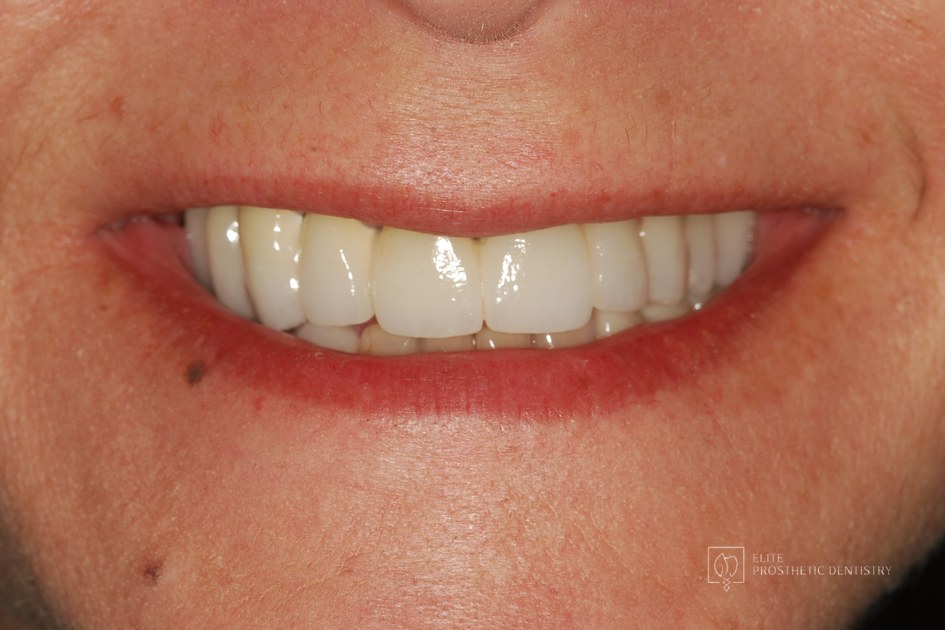
Yes. See the four steps, with real case photos, that make a single front tooth implant indistinguishable from the natural tooth beside it. Washington, DC.
 Dental Implants
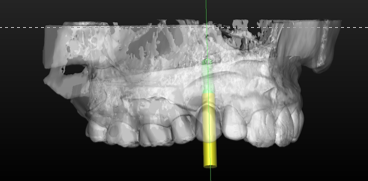
What Is Precision Implant Placement (PIP)?
Precision Implant Placement plans each implant virtually on a CBCT scan, then delivers it with a custom surgical guide. See the three steps with real images.
 Dental Implants
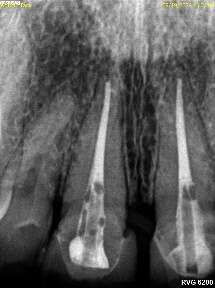
What Is the Ideal Surgical Guide for Precision Implant Placement?
Not all surgical guides are equal. The gold standard is CBCT-based: planned virtually in 3D, 3D printed, and seated on your teeth. A DC prosthodontist explains.
 Dental Implants
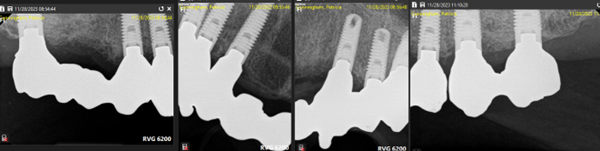
When Should an Implant Not Be Done?
Healthy roots, thin bone, steep bony angles: a DC prosthodontist shows a real case where refusing implants was the right call, and what was done instead.
 Dental Implants
What Is Staged Implant Therapy?
Staged implant therapy replaces failing teeth in phases while you keep fixed teeth the entire time. A DC prosthodontist walks through a real case in stages.
 Dental Implants
The Four Types of Dental Implants: Which One Is Right for You?
Endosteal, subperiosteal, zygomatic, and mini implants each solve a different problem. A DC prosthodontist explains the four types and who each one fits.
Implant Resources
Replacing a Missing Front Tooth
Implant, bridge or saving the tooth: what decides, and what makes the result look natural.
Single Tooth Implant
Replace one missing tooth without altering adjacent teeth.
Implant-Supported Bridge
Replace several missing teeth in a row with a fixed bridge held by implants.
Implants vs. Bridges
Direct comparison of dental implants and traditional fixed bridges.
Recovery Timeline
Day-by-day, week-by-week recovery after implant surgery.
Zirconia vs. Titanium
Material comparison for the implant body.
Insurance & Financing
What insurance covers and financing options.
All-on-X Full-Arch
Complete arch reconstruction with four, six, or more implants.
Implant-Supported Dentures
Snap-in dentures anchored to implants for a denture that stays in place.
Precision Implant Placement
CBCT-based planning and guided surgical technique for accuracy.
Repairing Failing Implants
Diagnosis and revision of implants from other practices.
Who Should Place Your Implant?
Oral surgeon, periodontist or prosthodontist: how to decide, and what to ask the person who will operate.
What "Implant Specialist" Means
How to verify training, certification and implant experience, with Dr. Marlin's record in full.
Specialist Alternative to ClearChoice
For patients comparing the corporate chain model.
Related Services
Dental Implants and Your Medical History
Learn more →What Determines the Cost, and How to Compare Two Quotes
Learn more →Save the Tooth or Replace It With an Implant?
Learn more →Keep Your Teeth or Replace Them?
Learn more →All-on-X Full-Arch Implants
Learn more →Full Mouth Dental Implants
Learn more →Precision Implant Placement
Learn more →Repairing Failing Implants
Learn more →Bone Grafting
Learn more →Custom Crowns
Learn more →Choosing an Implant Provider: A Decision Guide
Learn more →Who Should Place Your Dental Implant?
Learn more →What Does Dental Implant Specialist Mean?
Learn more →Sedation for Implant Surgery
Learn more →Dental Implants in Washington, DC Near You
Dr. Marlin provides specialty care to patients throughout the Washington, DC metropolitan area. Select your community to learn more.
Conveniently Located in Friendship Heights
Serving Washington DC, Bethesda, Chevy Chase, McLean, Great Falls, Potomac, and surrounding communities. One block from the Friendship Heights Metro on the Red Line.
Request Your Specialist Consultation
Personally reviewed by Dr. Marlin or his team.
Hours
- Monday — Thursday8:00 AM — 5:00 PM
- Friday8:00 AM — 2:00 PM
- Saturday — SundayClosed
Have a patient with complex restorative, implant, bite, or esthetic needs?
Elite Prosthetic Dentistry provides specialist prosthodontic evaluation, treatment planning, and collaborative care while preserving the patient's relationship with the referring office. How referrals work here.