
Dental Implants for Great Falls, VA Patients
Great Falls residents choose prosthodontist Dr. Gerald Marlin for dental implants. 4,100+ implants placed with precision.
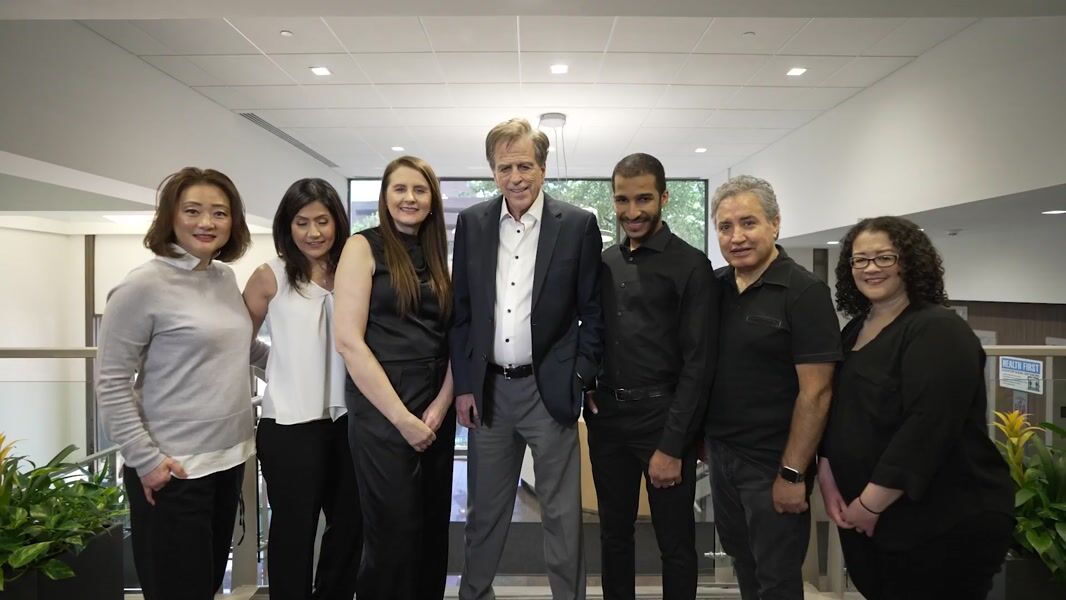
Great Falls patients travel for specialist implant care, and the practical questions are the same ones any patient should ask: who plans the case, who places the implant, who makes the final teeth, and how visits and follow-up are arranged around the drive. The prosthodontist who plans and restores the case here also places the implant, across the Potomac in Friendship Heights.
Dr. Gerald Marlin has treated patients from Great Falls throughout his career of more than 40 years at Elite Prosthetic Dentistry. Our office at 4400 Jenifer Street NW in the Friendship Heights neighborhood of Washington, DC is reached from Great Falls via Georgetown Pike and Chain Bridge, on surface streets. Allow for traffic when planning your visit. Dr. Marlin has placed more than 4,100 dental implants, and his work includes complex full-arch reconstructions, single-tooth replacements in the esthetic zone, and revisions of failed implant work from other practices.
Dental Implants for Great Falls Patients Receiving Care in Friendship Heights
The practice is in Friendship Heights, Washington, DC, not in Great Falls; patients make the drive because placement, restoration and the laboratory are in one place. Sedation is available for longer appointments (nitrous oxide, oral sedation and IV sedation by a certified registered nurse anesthetist; no general anesthesia), and a sedated patient needs an escort for the drive home, which the office confirms when the appointment is planned. Our office is in Friendship Heights, Washington, DC, at 4400 Jenifer Street NW, one block from the Friendship Heights Metro, with parking in the building. From Great Falls the usual route is Georgetown Pike to Chain Bridge; allow for traffic at your appointment time.
Why Great Falls Patients Seek Specialist-Led Implant Care
Great Falls is largely residential, and many patients already travel for specialty care.
For Great Falls patients, the decision to travel for implant care should reflect the treatment needed and the value of coordinated planning, placement and restoration. We explain the expected visits at our Friendship Heights office before treatment begins.
What Distinguishes Our Approach
Dr. Marlin is a prosthodontist whose career has been devoted to replacing and restoring teeth. Here is how implant care is organized at Elite Prosthetic Dentistry:
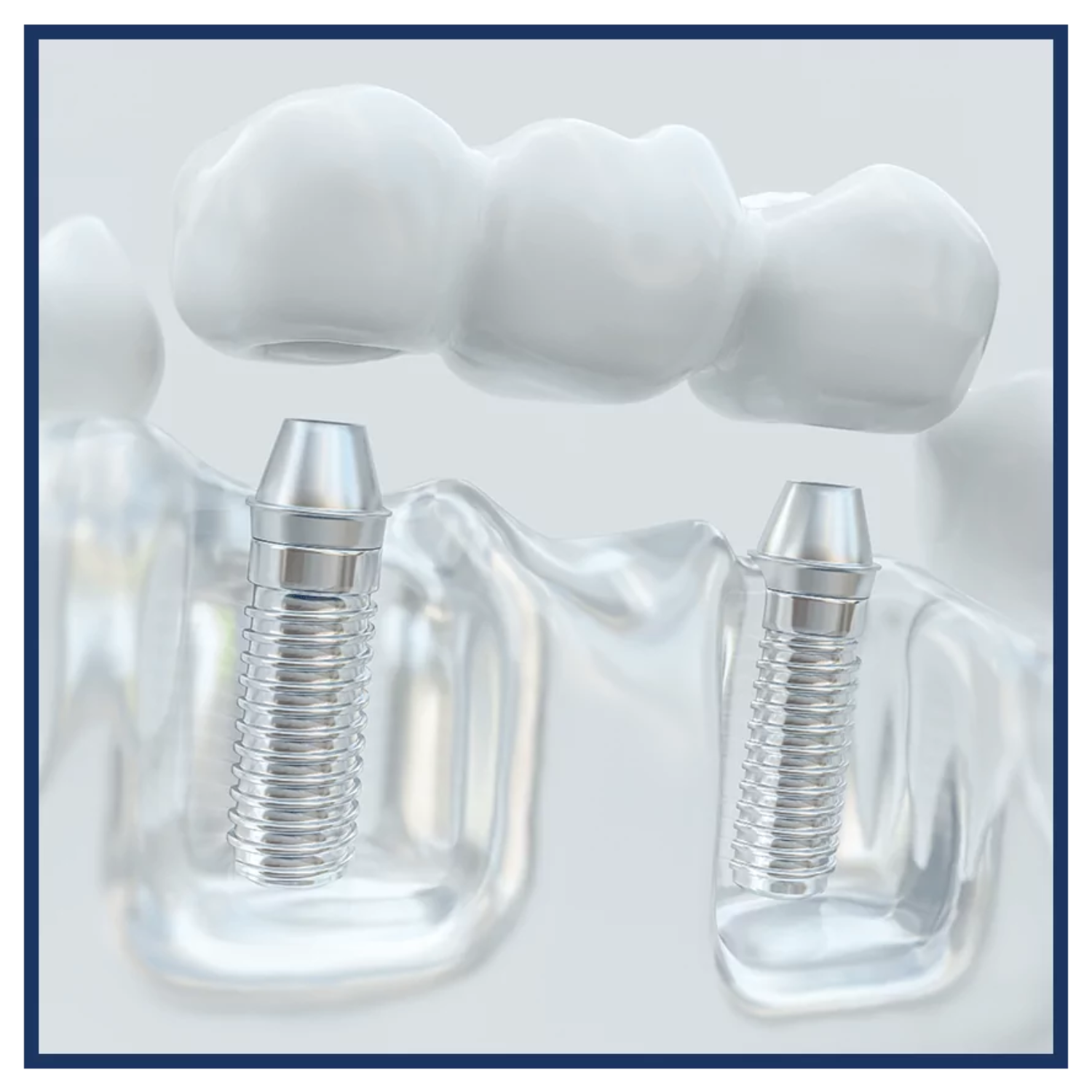
- The restoration drives the surgery. Before any implant is placed, our team at Elite Prosthetic Dentistry designs the final tooth or teeth. Dr. Marlin then places the implant in the position needed to support that restoration, using a CBCT scan generated surgical guide.
- Every restoration is built on-site. Our in-house dental laboratory allows Elite Prosthetic Dentistry to oversee every stage of crown, bridge, and full-arch fabrication. Shade matching is done in person under controlled lighting. Adjustments happen in real time, rather than traveling back and forth to an outside laboratory.
- From a first implant to complex cases. Great Falls patients come to us to replace a single tooth for the first time, and also with more challenging situations: long-term bone loss from missing teeth, prior implant failures, old bridgework that has compromised neighboring teeth, or medical conditions that complicate healing.
Common Implant Scenarios for Great Falls Patients
Replacing Older Dental Work
Dental work placed decades ago eventually wears out. Crowns from the 1980s and 1990s fracture, bridges loosen, and root canal treated teeth can split. For some patients the most practical solution is a comprehensive plan that keeps the sound teeth, replaces failing ones with implants and restores the bite; for others, limited treatment is enough. The evaluation decides which.
Full-arch implant restorations, sometimes called All-on-4 or hybrid dentures, use four to six implants per arch to support a complete set of fixed teeth. The result is fixed and stable, without the daily removal of a denture.
A First Implant for One Tooth or a Few Teeth
Patients who lose a tooth to trauma, a failed root canal or a crack need a replacement that restores function and appearance. A single dental implant with a custom crown usually does this without preparing the neighboring teeth, which a bridge requires. You can be evaluated before an extraction or before committing to a replacement option.
Patients Dissatisfied with Previous Implant Work
Not every implant case done elsewhere meets the patient’s expectations. Some Great Falls patients come to us with crowns on implants that are the wrong shade, implants that were placed at angles preventing an esthetic restoration, or implants that have simply failed. Dr. Marlin evaluates the situation, identifies the root cause, and develops a plan to correct the problem, whether that means a new restoration on the existing implant or removal and replacement.
The Treatment Pathway
Step 1: Comprehensive Evaluation. Your first appointment includes a detailed oral examination, 3D cone beam CT imaging, medical history review, and a candid conversation about your goals and concerns. We plan every implant case, from a single implant through full-mouth reconstruction, on a CBCT scan. Our specialty-trained team evaluates your bone volume, gum tissue health, occlusion, and overall dental status.
Step 2: Prosthetic Design. Before any surgery, our practice creates a detailed plan for the final restoration. Digital models are produced, and every implant is placed with guided surgery based on the scan, so Dr. Marlin places each implant in the position the restoration plan calls for.
Step 3: Implant Surgery. The implant is placed in the practice, in the position the restoration plan calls for. The procedure typically takes place under local anesthesia with sedation options available.
Step 4: Healing and Integration. The implant bonds with the jawbone over three to six months. A temporary tooth or other interim option is discussed before treatment; the choice depends on the tooth position, available support and healing.
Step 5: Final Restoration. The permanent restoration is made in our on-site lab and seated by Dr. Marlin. Whether a single crown, multi-tooth bridge, or full-arch prosthesis, every piece is customized to your anatomy and esthetic preferences.
Bone Grafting and Site Preparation
Great Falls patients who have been missing teeth for extended periods, or who have worn dentures that have caused progressive bone loss, often require preparatory procedures before implants can be placed:
- Bone grafting rebuilds volume where the jaw has resorbed
- Sinus augmentation creates adequate bone height beneath the maxillary sinuses
- Ridge augmentation widens a jaw ridge that has narrowed over time
- Socket preservation at the time of tooth extraction maintains bone for future implant placement
These steps extend the treatment timeline but make implants feasible for patients who might otherwise have no option beyond removable dentures.
Financial Transparency
Dental implant treatment is a significant investment, and Great Falls patients expect clear, upfront information about costs. We provide detailed, itemized estimates before any treatment begins. The total depends on the number of implants, the type of restoration, any preparatory procedures, and the complexity of the case.
Our position is straightforward: implant work planned and carried out carefully at the start is usually the most cost-effective approach over time. Crowns from our in-house laboratory have lasted 35 years and longer with proper care.
Elite Prosthetic Dentistry is a fee-for-service practice and is not in-network with insurance plans. The team can submit out-of-network PPO claims for you, and financing is available.
Comparing a Nearby Implant Practice With a Specialist in the City
A Great Falls patient weighing a practice close to home against Elite Prosthetic Dentistry in Washington DC should ask both the same questions: who plans the implant position, and from what (a CBCT scan and the final restorative design, or the available bone); who places, who restores and who maintains the result, and whether that is one accountable plan; what the operating clinician’s training and experience are for a case like yours, verified rather than implied by a title; where the restoration is made and whether it can be adjusted with you present; and what happens if an implant does not integrate. Sometimes the nearby practice is the right answer. A case in the visible front of the mouth, a full arch, a grafting question or implants that must coordinate with existing dentistry is where the travel more often earns its place. At Elite Prosthetic Dentistry, Gerald M. Marlin, DMD, MSD, plans, surgically places and restores implants in one office with an on-site laboratory. Three guides give the detail: who should place your dental implant, what “dental implant specialist” means and how to compare implant providers for a complex case.
Directions from Great Falls
From the Great Falls Village Centre, take Georgetown Pike east toward McLean. Continue to Chain Bridge Road, cross Chain Bridge over the Potomac, and enter DC on Arizona Avenue NW. Turn north and continue to Jenifer Street NW. Allow for traffic at your appointment time.
The route is entirely surface streets and passes through some of the most attractive neighborhoods in Northern Virginia and Northwest DC. Parking is available on Jenifer Street and in a public garage near our building.
Start with a Consultation
Great Falls residents considering dental implants should begin with a specialist evaluation. Dr. Marlin will provide an honest assessment of your situation and a clear plan for the best possible outcome. Call (202) 244-2101 or schedule online.
Related Resources
Frequently Asked Questions
Is the drive from Great Falls to your DC office difficult?
Not at all. Most Great Falls patients take Georgetown Pike east to Chain Bridge Road, cross the Potomac on Chain Bridge, and continue into DC on Arizona Avenue NW. The drive is entirely on surface streets through scenic neighborhoods. There is no need to use the Beltway or any highway.
Why do Great Falls residents come to DC for dental implants?
Patients from Great Falls come when they want one prosthodontist to plan, surgically place and restore the implant, with the final teeth made in the on-site laboratory. That applies to a first single implant as well as to full-arch treatment. For Great Falls patients, the decision to travel for implant care should reflect the treatment needed and the value of coordinated planning, placement and restoration.
What makes a prosthodontist different from a cosmetic dentist?
A prosthodontist is a recognized dental specialist who completes three additional years of hospital-based residency training in tooth replacement and restoration. Cosmetic dentistry describes a focus rather than a recognized specialty. For implants, ask any provider about their training and their experience with cases like yours.
Can you replace all my teeth with implants?
Often, yes. For patients who have lost all their teeth or whose remaining teeth are failing, a full-arch implant restoration replaces an entire arch of teeth with a fixed prosthesis. The number of implants is set by the bone and the bite, commonly four to six per arch. The evaluation first establishes which teeth, if any, can be kept.
How long is the recovery after dental implant surgery?
Many patients return to normal activities within a few days after implant placement, depending on the procedure. Some swelling and mild discomfort are expected. The implant then needs three to six months to integrate with the jawbone before the final restoration is placed. A temporary tooth or other interim option is discussed before treatment.
Related Patient Success Stories
Explore similar patient success stories demonstrating our expertise in advanced prosthetic dentistry.
 Before
 After
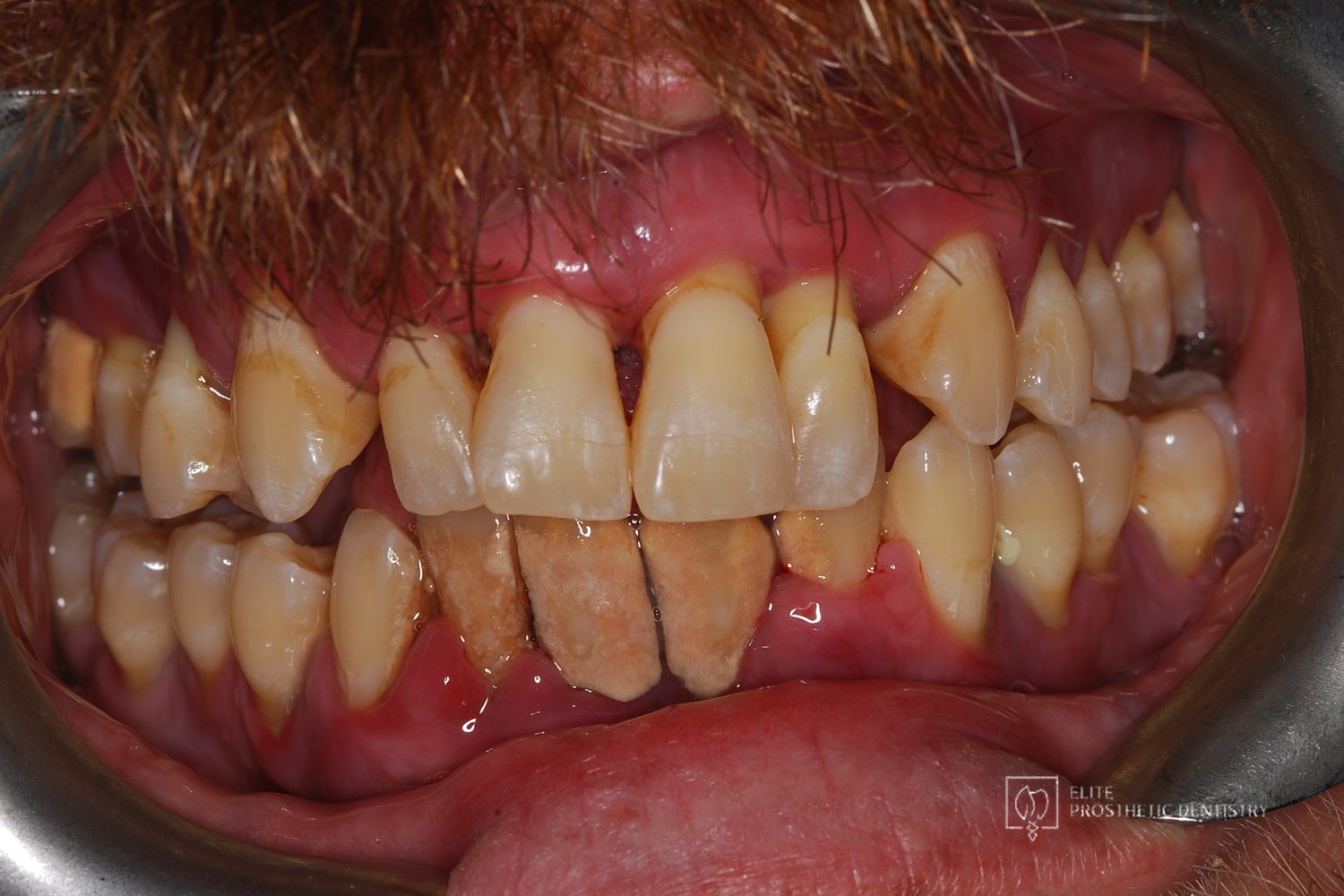
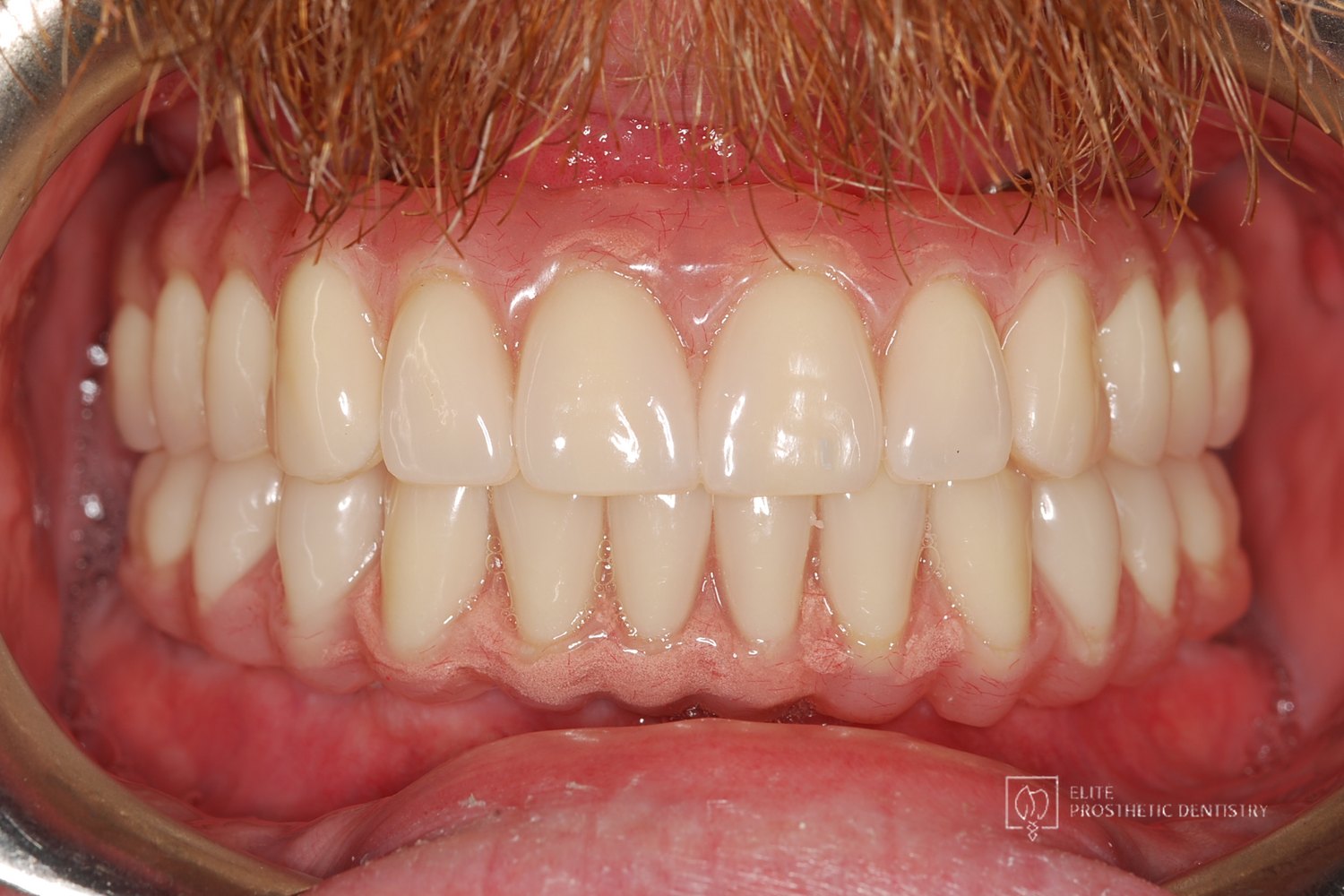
Both Arches Rebuilt After Advanced Periodontal Disease: Twelve Guided Implants and a Signature Hybrid Prosthesis
Advanced periodontal disease had destroyed the support around the remaining teeth in both arches. None could be kept, and the bone that would carry implants had been lost along with them.
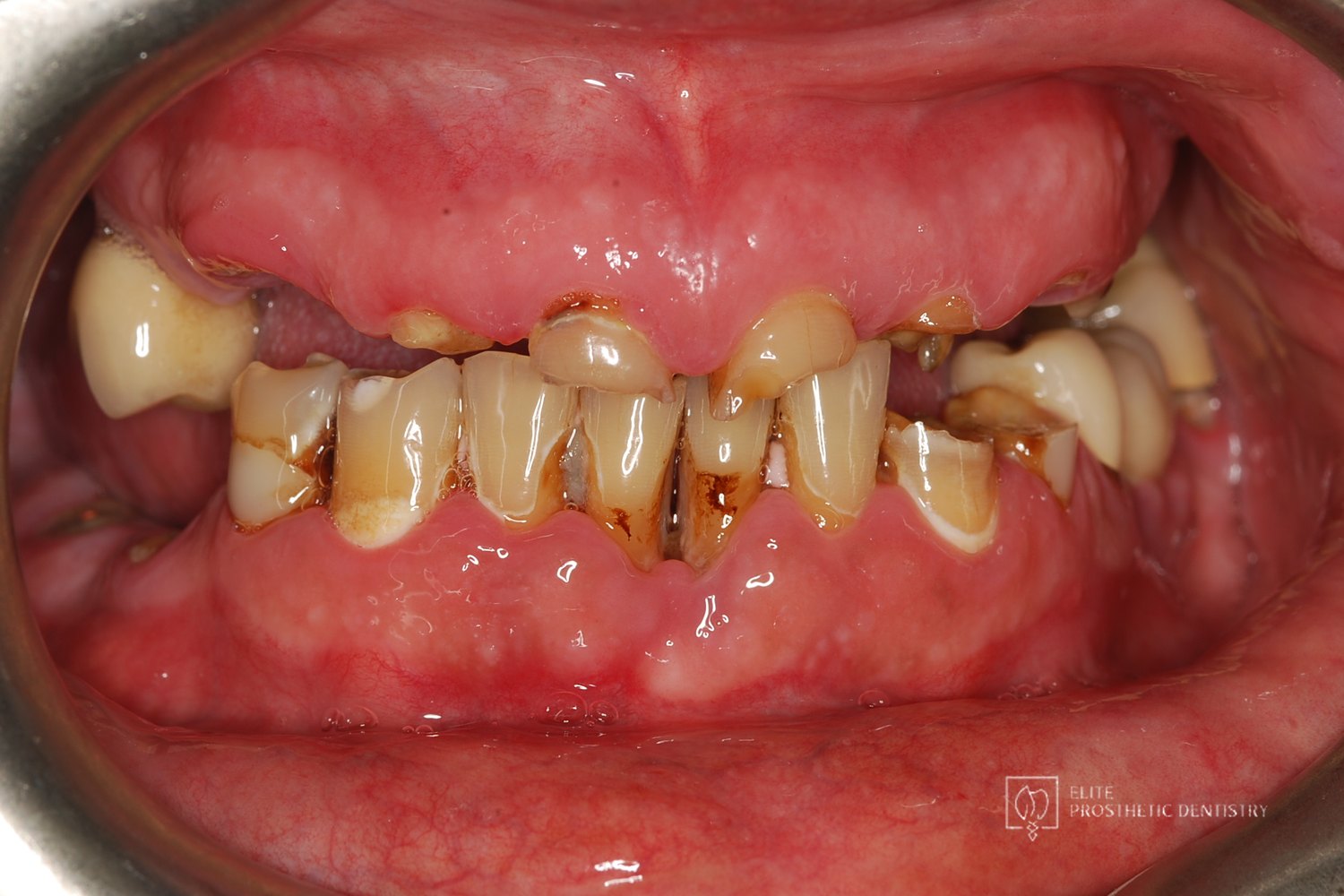 Before
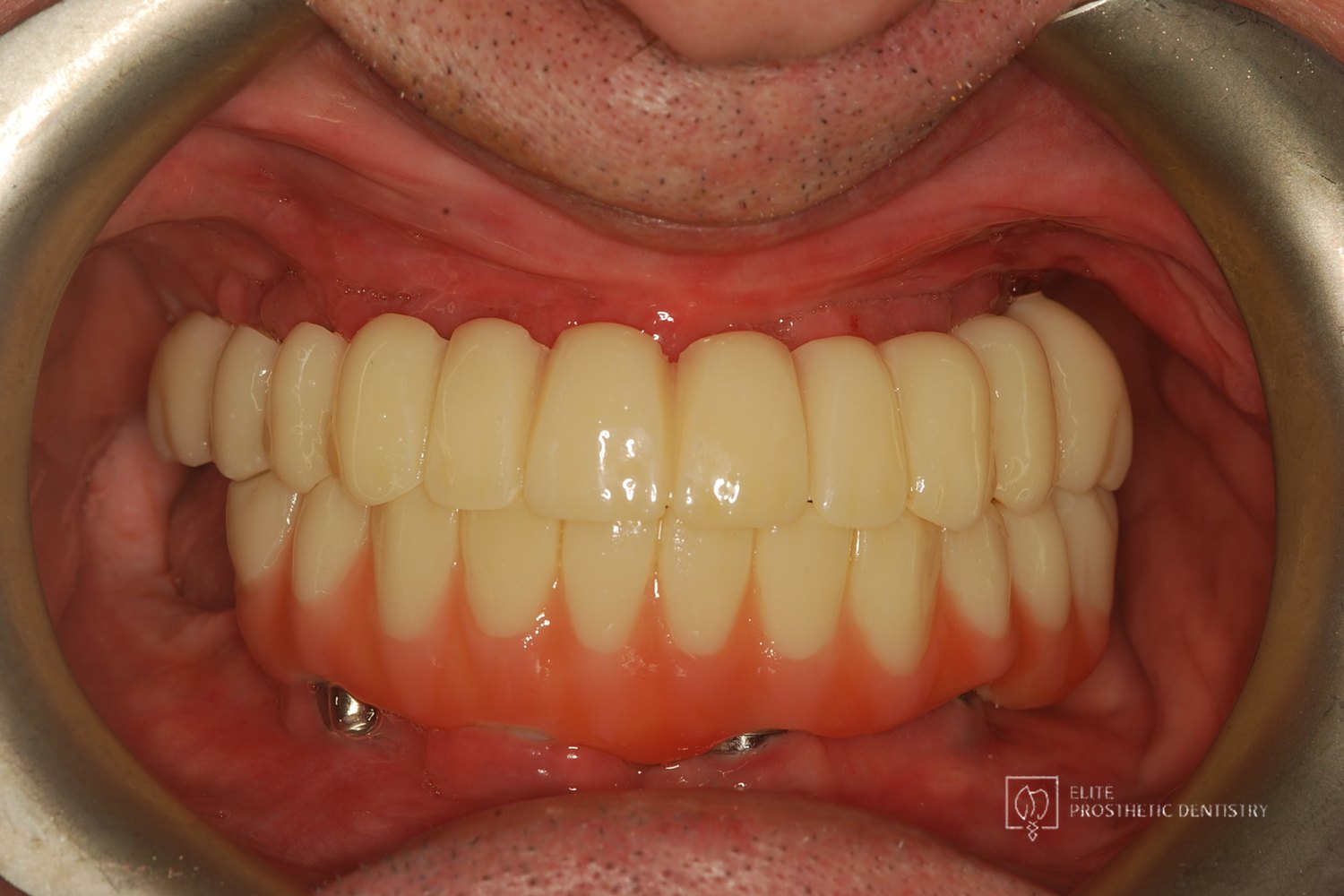 After
Both Arches Rebuilt After Years Without Dental Care and Heavy Grinding: Eight Guided Implants and an Elite Hybrid Prosthesis
Years without dental care combined with heavy grinding had destroyed the teeth in both arches. None were salvageable, and the bone needed rebuilding before implants could carry a new bite.
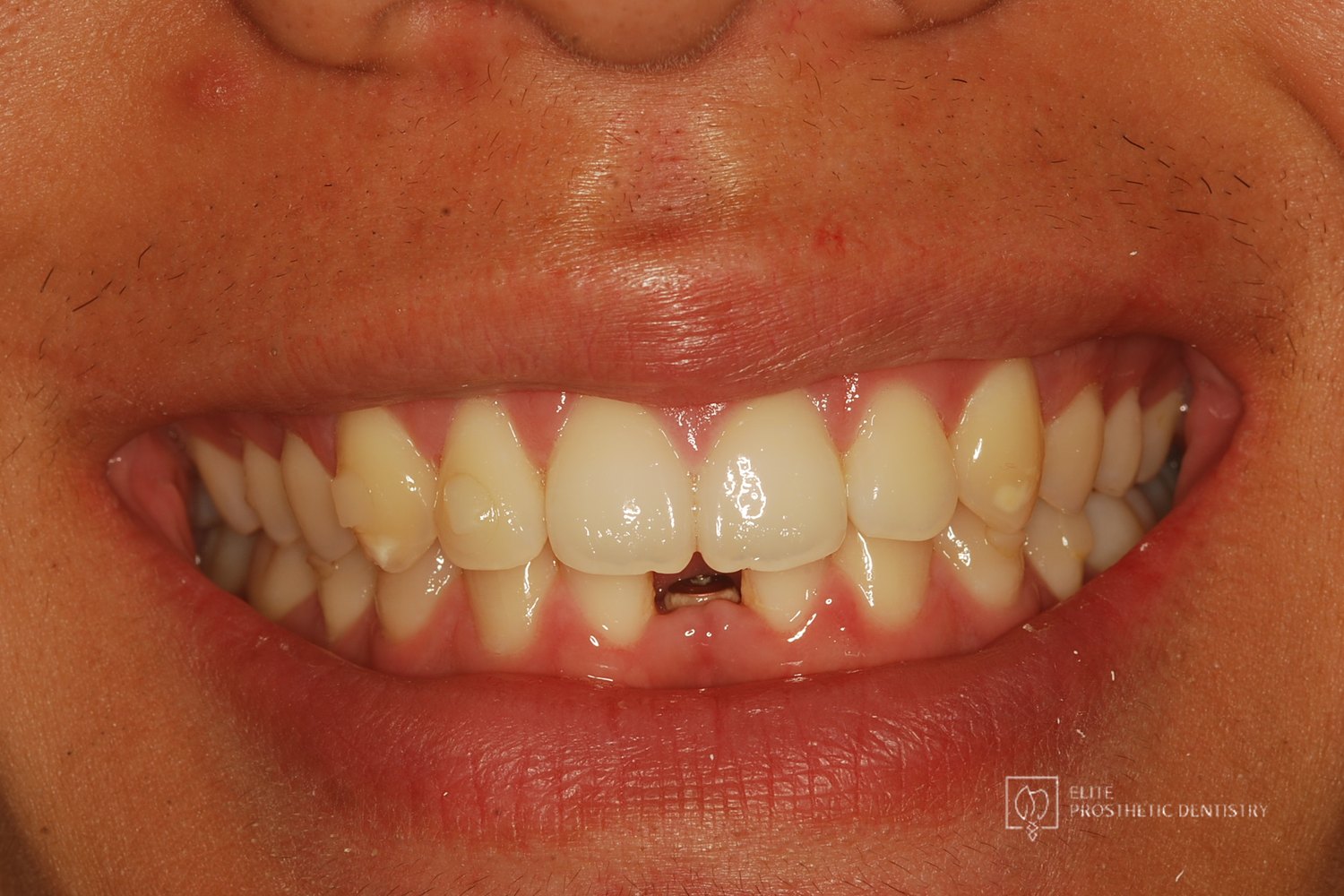 Before
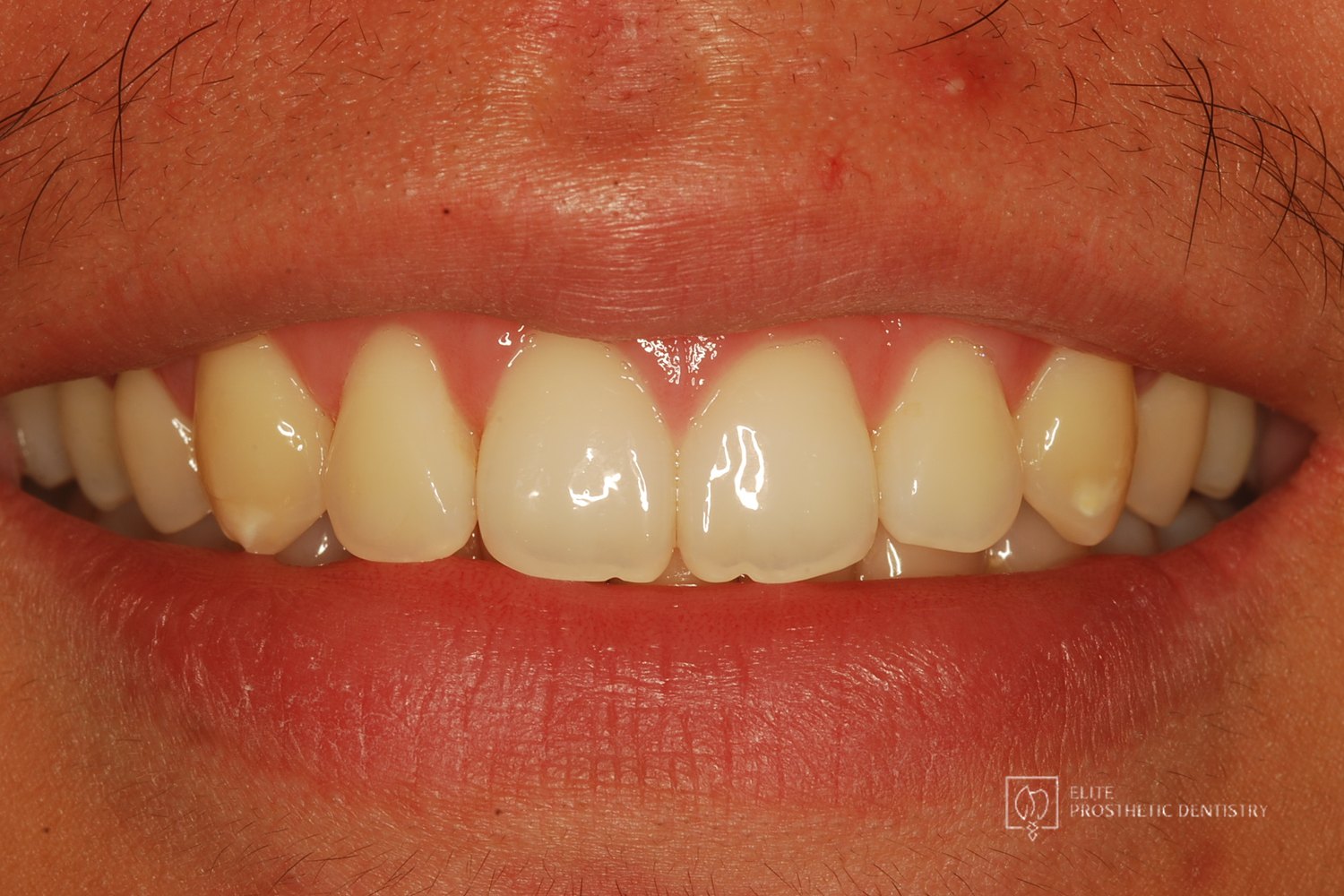 After
Bone Loss Around a New Dental Implant: Removed Early, the Ridge Rebuilt, and a Guided Replacement Implant Restored
A 26-year-old patient referred for a crown on a recently placed lower front implant arrived with 5 mm pocketing, bone loss, and exposed implant threads around it; a CBCT scan showed a ridge too narrow to hold the implant fully in bone. A crown could have been made, but the foundation would not have lasted.
 Before
 After
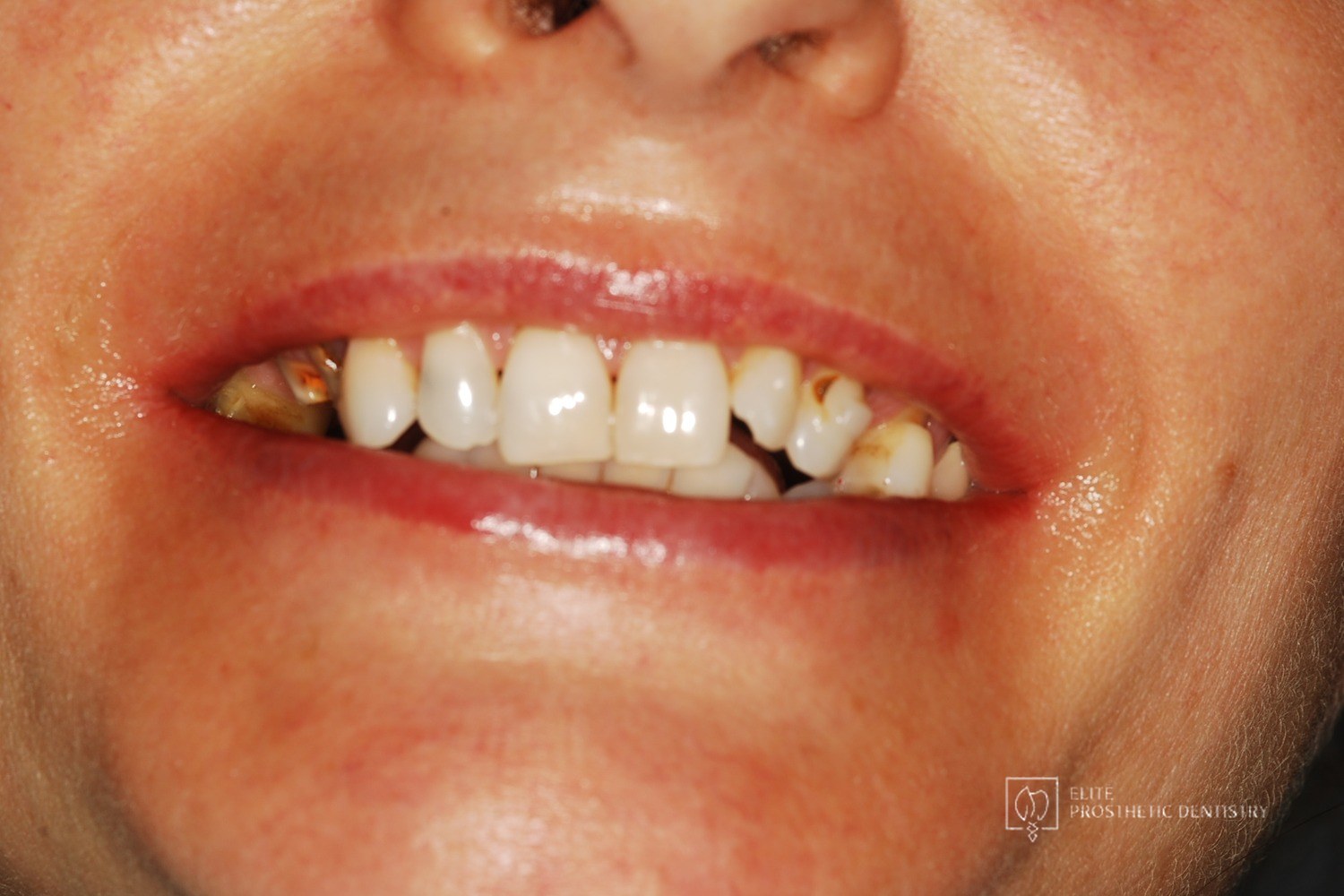
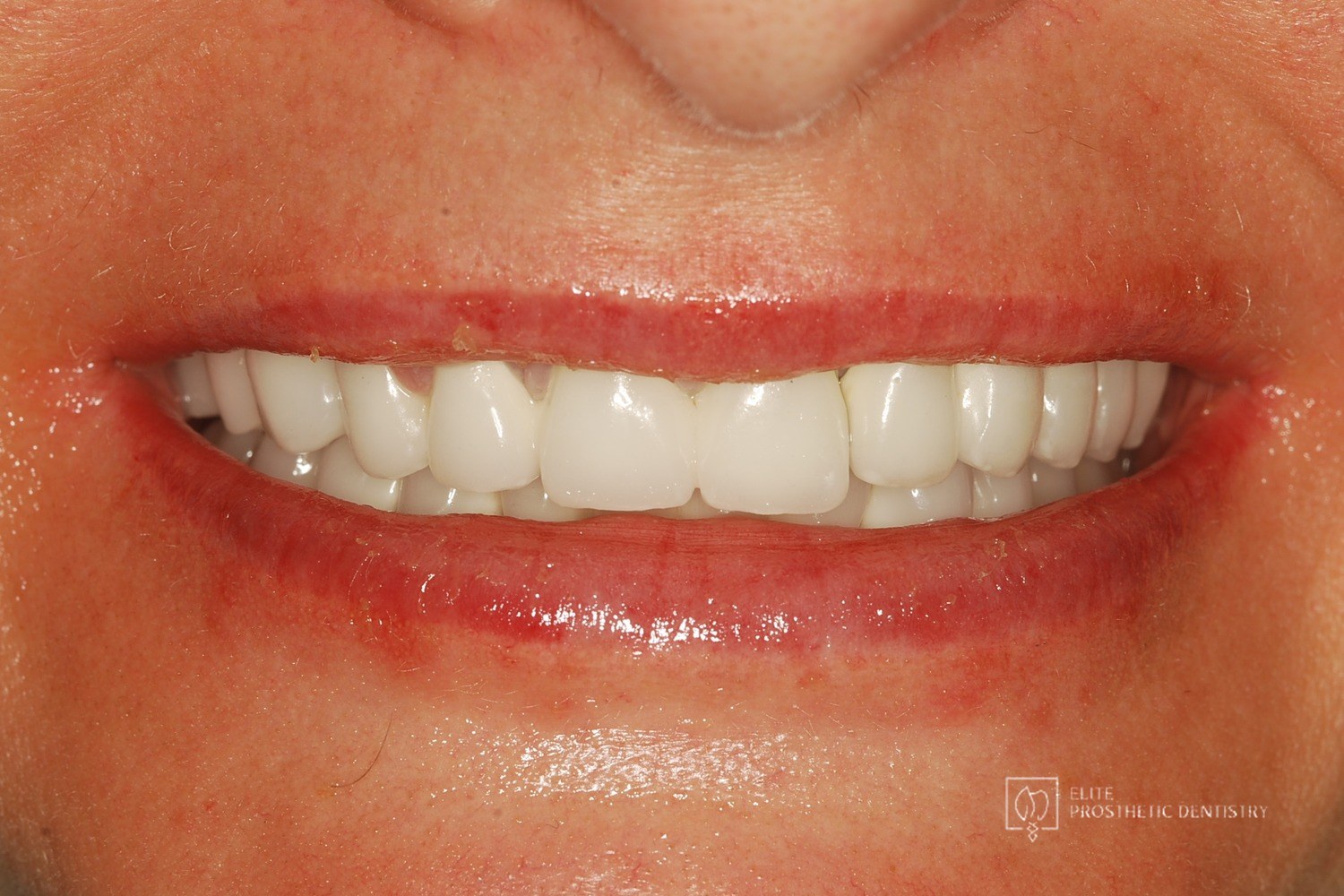
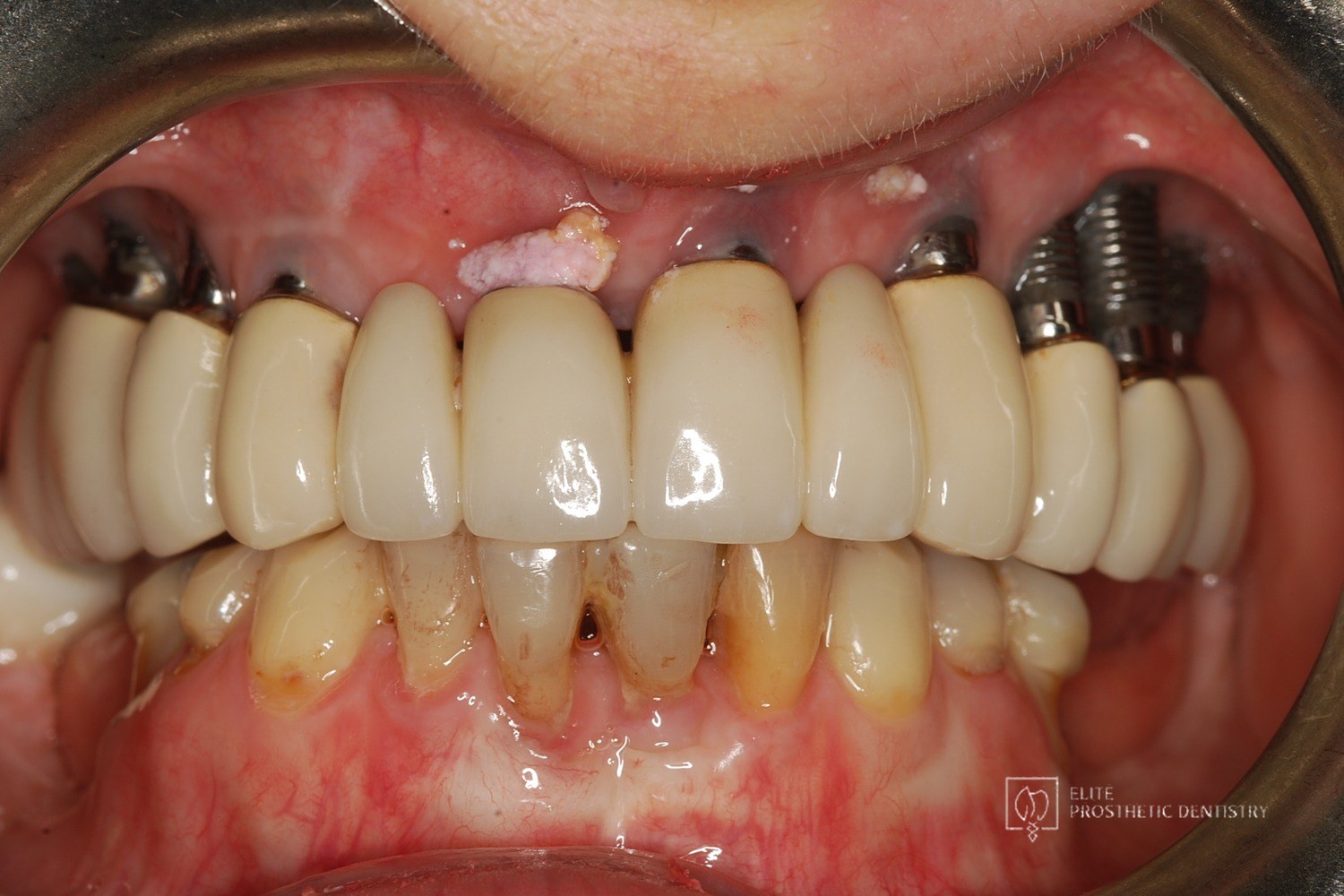
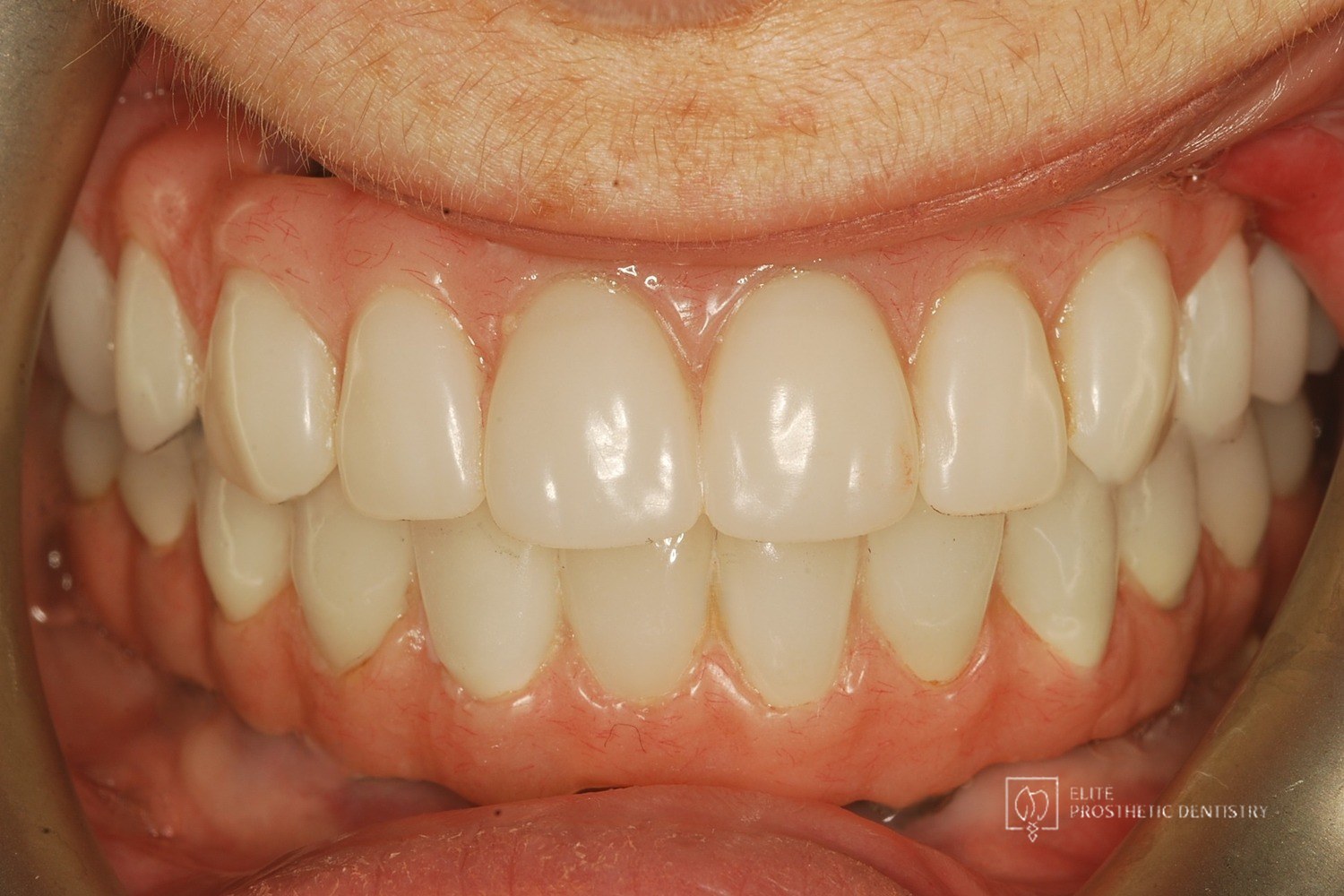
How Aging, Failing Dentistry Was Replaced with a Coordinated Full-Mouth Implant and Crown Reconstruction
The patient presented with throbbing upper-molar pain, long-standing infections, multiple root canals and unfinished prior treatment, generalized sensitivity, and several hopeless teeth.
 Before
 After
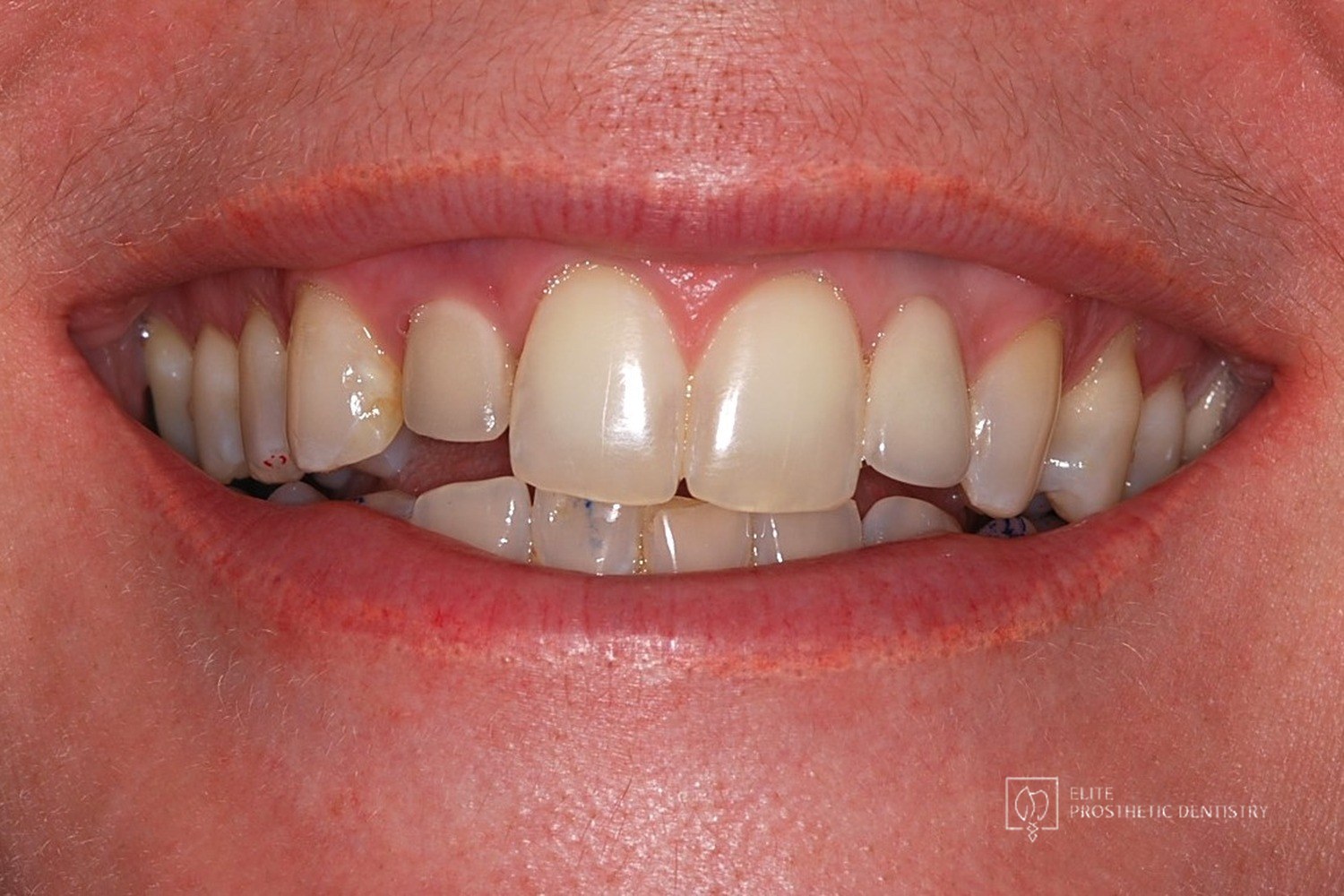
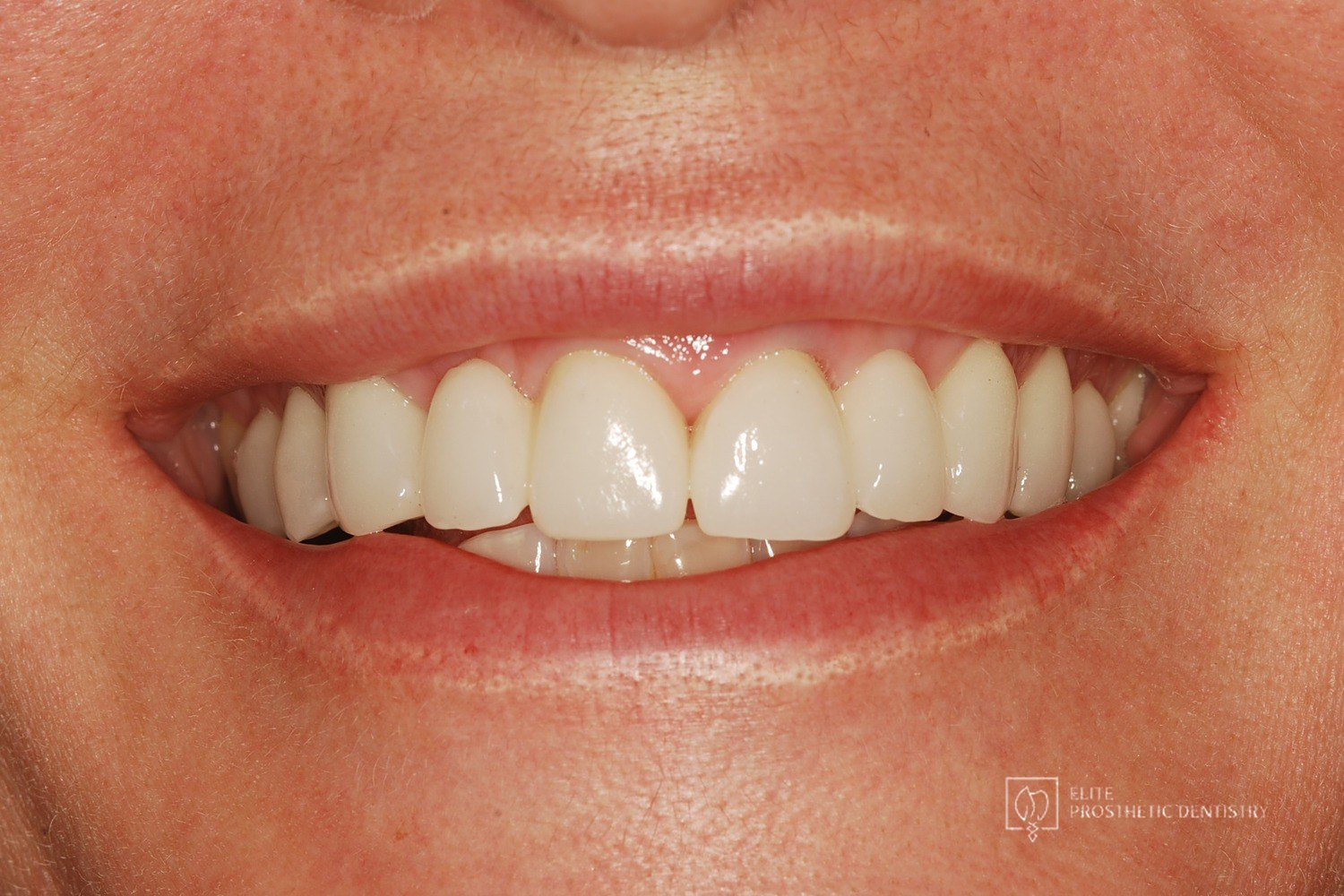
How Failing Implants and Severe Bone Loss Were Rebuilt Into a Stable Full-Arch Implant Reconstruction
The patient presented with significant complications from previously placed implants, severe bone loss, failing posterior implants, and an unesthetic full-arch bridge. Both arches required full reconstruction, with the upper arch showing the most advanced bone loss and instability.
 Before
 After
How Failing Lateral Incisor Implants Were Replaced with Custom Zirconia Bridges After Severe Bone Loss Made Replacement Implants Impossible
Comprehensive examination including CBCT imaging revealed significant bone loss surrounding implants that were placed outside the buccal plate, most likely due to placement without a CBCT-generated surgical guide. The implants were determined non-salvageable, and the alveolar ridge was too narrow to support replacement implants without extensive reconstruction.
Related Articles
Deepen your knowledge with additional insights on this topic.
 Dental Implants
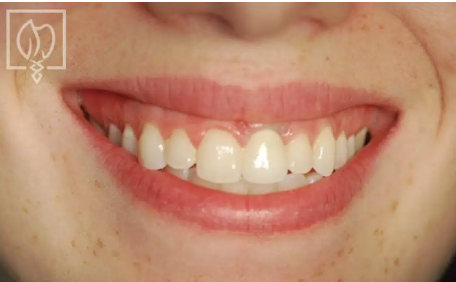
If a Single Front Tooth Is Replaced with an Implant, Can It Look Natural?
Yes. See the four steps, with real case photos, that make a single front tooth implant indistinguishable from the natural tooth beside it. Washington, DC.
 Dental Implants
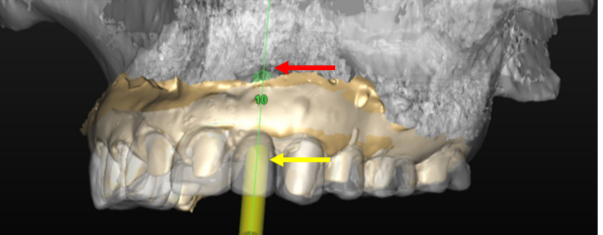
What Is Precision Implant Placement (PIP)?
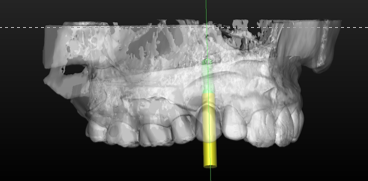
Precision Implant Placement plans each implant virtually on a CBCT scan, then delivers it with a custom surgical guide. See the three steps with real images.
 Dental Implants
What Is the Ideal Surgical Guide for Precision Implant Placement?
Not all surgical guides are equal. The gold standard is CBCT-based: planned virtually in 3D, 3D printed, and seated on your teeth. A DC prosthodontist explains.
 Dental Implants
When Should an Implant Not Be Done?
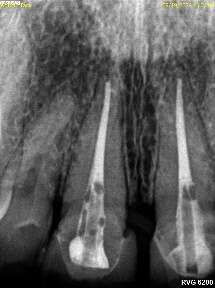
Healthy roots, thin bone, steep bony angles: a DC prosthodontist shows a real case where refusing implants was the right call, and what was done instead.
 Dental Implants
What Is Staged Implant Therapy?
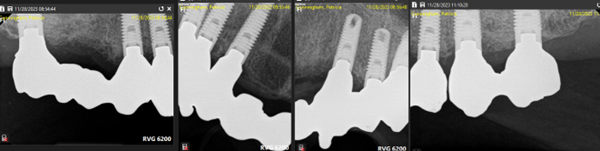
Staged implant therapy replaces failing teeth in phases while you keep fixed teeth the entire time. A DC prosthodontist walks through a real case in stages.
 Dental Implants
The Four Types of Dental Implants: Which One Is Right for You?
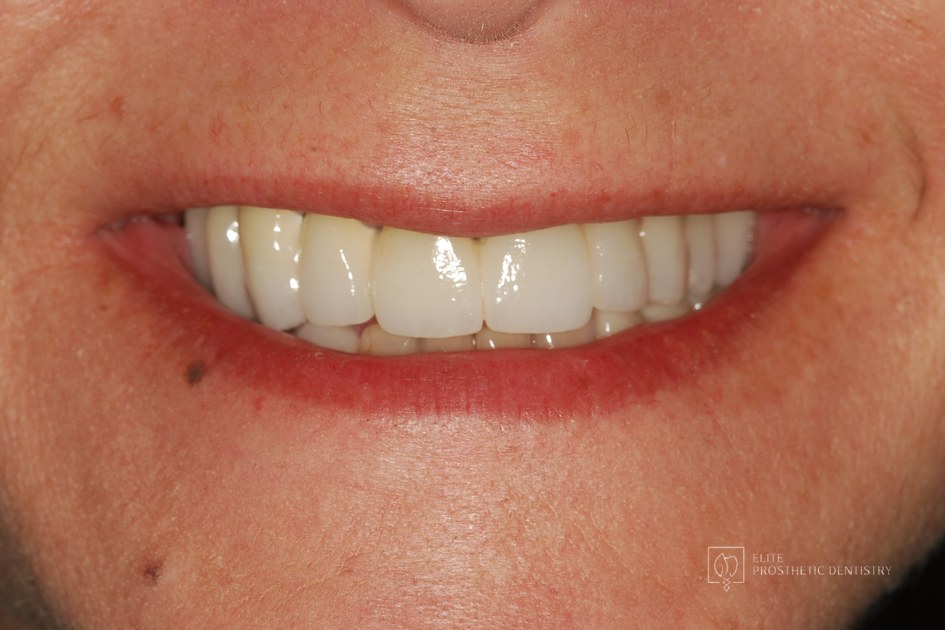
Endosteal, subperiosteal, zygomatic, and mini implants each solve a different problem. A DC prosthodontist explains the four types and who each one fits.
Deciding Who Should Treat You?
Our decision guide for Great Falls patients covers a first missing tooth, a tooth that may need extraction, several missing teeth, full mouth reconstruction and aging crowns and bridges, and when another setting may serve you better.
Read the Great Falls decision guide →Our Services in Great Falls
Beyond Dental Implants, Great Falls patients rely on Dr. Marlin for a full range of advanced dental care.
More services available in Great Falls:
Dental Implants Near Great Falls
Dr. Marlin also provides dental implants services for patients in these neighboring communities.
Getting Here from Great Falls
Elite Prosthetic Dentistry is conveniently located near Great Falls, VA.
Take Georgetown Pike east to Chain Bridge Road, cross Chain Bridge into DC, then north on Arizona Avenue to Jenifer Street NW.
Address:
4400 Jenifer Street NW, Suite 220
Washington, DC 20015
Phone: (202) 244-2101
Request a ConsultationRequest a Specialist Consultation from Great Falls
Great Falls patients come to Dr. Marlin for care that ranges from a first single implant to full-arch and complex reconstruction. With 4,100+ implants placed over 40+ years, planning, surgical placement and restoration are handled in one practice. No referral is needed.