
What Factors Impact the Cost of Dental Implant Treatment? Here Are Some Answers
Dental implants are the most realistic and secure restoration for missing teeth, and the only one that replaces the tooth’s root, which is what protects the jawbone from the slow collapse that follows tooth loss. They can cost more up front than other treatments, and, performed correctly, they routinely become the best long-term investment in your mouth, lasting well over 20 years. Patient satisfaction studies bear this out even a decade after treatment [1].
But what actually goes into the cost of implant treatment? Rather than quote numbers that would be meaningless without your scan, here are the five factors that genuinely move the total, so you can read any treatment plan intelligently.
Factor 1: Whether You Need a Bone Graft
If a tooth has been missing longer than a year, your body has likely resorbed some of the jawbone around the site; without a root to stimulate it, bone quietly disappears. Implants require good bone quality and density, so lost bone usually means a bone graft before or during placement.
Grafting is the established gold standard for rebuilding ridge bone ahead of implant placement [2], and it improves both the implant’s success odds and the natural appearance of your smile line. It also adds cost and healing time, which is worth knowing early: it is a legitimate part of doing the job correctly, not an upsell. We explain the process in bone grafting for dental implants.
Factor 2: How Many Implants You Need
Implant count scales cost, but not one-to-one with missing teeth. Depending on your dentition, multiple missing teeth can be restored with a full-arch implant prosthesis, an implant-supported fixed bridge, or a full-arch crown-and-bridge splint, each using strategically placed implants rather than an implant per tooth.
If you are missing all of your teeth, full-arch (All-on-X type) therapy places four to six implants to support a fixed restoration that looks like a natural smile [3]. Where bone allows, the choice between four- and six-implant configurations affects load distribution and long-term planning; see All-on-6 and our comparison of the two protocols. Replacing many teeth is sophisticated work, and design decisions like these are exactly why it belongs with a specialist.
Factor 3: Your Oral Health Before the Procedure
Implants require a healthy launching pad. Cavities must be filled, periodontal disease treated, and unsalvageable teeth managed before implant surgery, and each preparatory step adds to the total for patients who need it.
A history of gum disease also raises complication risk, so Dr. Marlin evaluates those patients individually and plans treatment meticulously to minimize it [4]. Think of this factor as the one most within your control: the healthier your mouth arrives, the simpler the plan.
Factor 4: Whether You Choose Sedation
Sedation dentistry is available for patients with dental anxiety who want extra support staying comfortable, with options including conscious and intravenous sedation [5]. Sedation is not required for implant placement, and choosing it adds to the cost of treatment. Many patients find the calm well worth it; either way, it is your choice rather than a default charge.
Factor 5: What Your Dental Insurance Covers
Insurance coverage for implants varies widely: some plans cover a meaningful portion of treatment, others very little. After your consultation and estimate, our office helps you determine exactly what your insurance covers and what remains your responsibility, and we go to considerable lengths to advocate for patients with coverage. Financing options can also be discussed at your consultation.
The Number That Matters Most Is the Denominator
Here is the honest way to think about implant economics: divide the cost by the years of service. Peri-implant inflammation and bone loss are common enough to take seriously, as we detail in what causes implant failure and how frequent it is, and failed work is the most expensive kind. In our practice, precision planning, CBCT scan generated surgical guides for all implant insertions, and crowns from our in-house laboratory support a documented in-practice implant success rate above 97% for implants placed more than 20 years ago. Spread across decades of eating, speaking, and smiling, well-executed implants are among the best values in dentistry.
Every mouth is different, so the only estimate worth having is one built on your own imaging. Call 202-244-2101 or schedule a consultation with Dr. Gerald Marlin at Elite Prosthetic Dentistry in Friendship Heights, Washington, DC, and get a clear picture of what your treatment would involve and cost.
Sources:
- https://bmcoralhealth.biomedcentral.com/articles/10.1186/s12903-020-01381-3
- https://journalimplantdent.springeropen.com/articles/10.1186/s40729-017-0084-4
- https://www.aaid-implant.org/what-are-dental-implants/types-of-implants-and-techniques/
- https://www.researchgate.net/publication/347899858_Dental_Implant_Considerations_in_Patients_with_Periodontal_Disease
- https://www.ncbi.nlm.nih.gov/pmc/articles/PMC6327823/
See How We Resolve These Problems
Our patient success stories show real cases and real results. Browse outcomes from a specialist prosthodontist with decades of experience and 4,100+ implants placed.
Key Takeaways
- ✓ Implant cost is not one number; it is the sum of identifiable factors, and understanding them lets you compare treatment plans intelligently.
- ✓ The biggest variables are whether you need bone grafting, how many implants your plan requires, and the state of your oral health going in.
- ✓ Sedation choices and your dental insurance coverage adjust the total further; our office helps you determine what your plan covers.
- ✓ Fewer, strategically placed implants can restore many missing teeth; you do not pay for one implant per tooth.
- ✓ Judged over decades rather than at checkout, precisely performed implants are among the best values in dentistry.
Frequently Asked Questions
Why does dental implant cost vary so much between patients?
Because the treatment varies. One patient needs a single implant in healthy bone; another needs grafting, gum therapy, extractions, and a full-arch prosthesis. The main cost drivers are bone grafting, the number of implants, preparatory dental work, sedation choices, and insurance coverage. A treatment plan built from your 3D scan is the only honest way to know your number.
Does needing a bone graft always add cost?
Grafting is an additional procedure, so it adds to treatment cost and timeline, and it is often indispensable: implants placed into inadequate bone are far more likely to fail. Skipping a needed graft to save money is the most expensive shortcut in implant dentistry, because redoing a failed implant costs more than building the foundation correctly once.
Do I need one implant for every missing tooth?
No. Implant-supported bridges, full-arch prostheses on four to six implants, and crown-and-bridge splints all restore multiple teeth with strategic implant counts. The design depends on your bone and bite. This is one of the most misunderstood parts of implant economics, and it often makes comprehensive treatment more attainable than patients assume.
Does dental insurance cover implants?
Some plans cover a portion of implant treatment and others cover little or none; the range is wide. Our office reviews your benefits with you after your consultation and estimate, and we work as advocates for patients with coverage. Financing options can also be discussed at your consultation.
Are dental implants worth the cost?
Judged over decades, usually yes, provided the work is done precisely. Implants are the only restoration that replaces the tooth root and protects the jawbone, and studies show patient satisfaction remains high even ten years on. A well-planned implant that serves for 20+ years costs far less per year than cheaper work that must be redone.
Related Patient Success Stories
Explore similar patient success stories demonstrating our expertise in advanced prosthetic dentistry.
 Before
 After
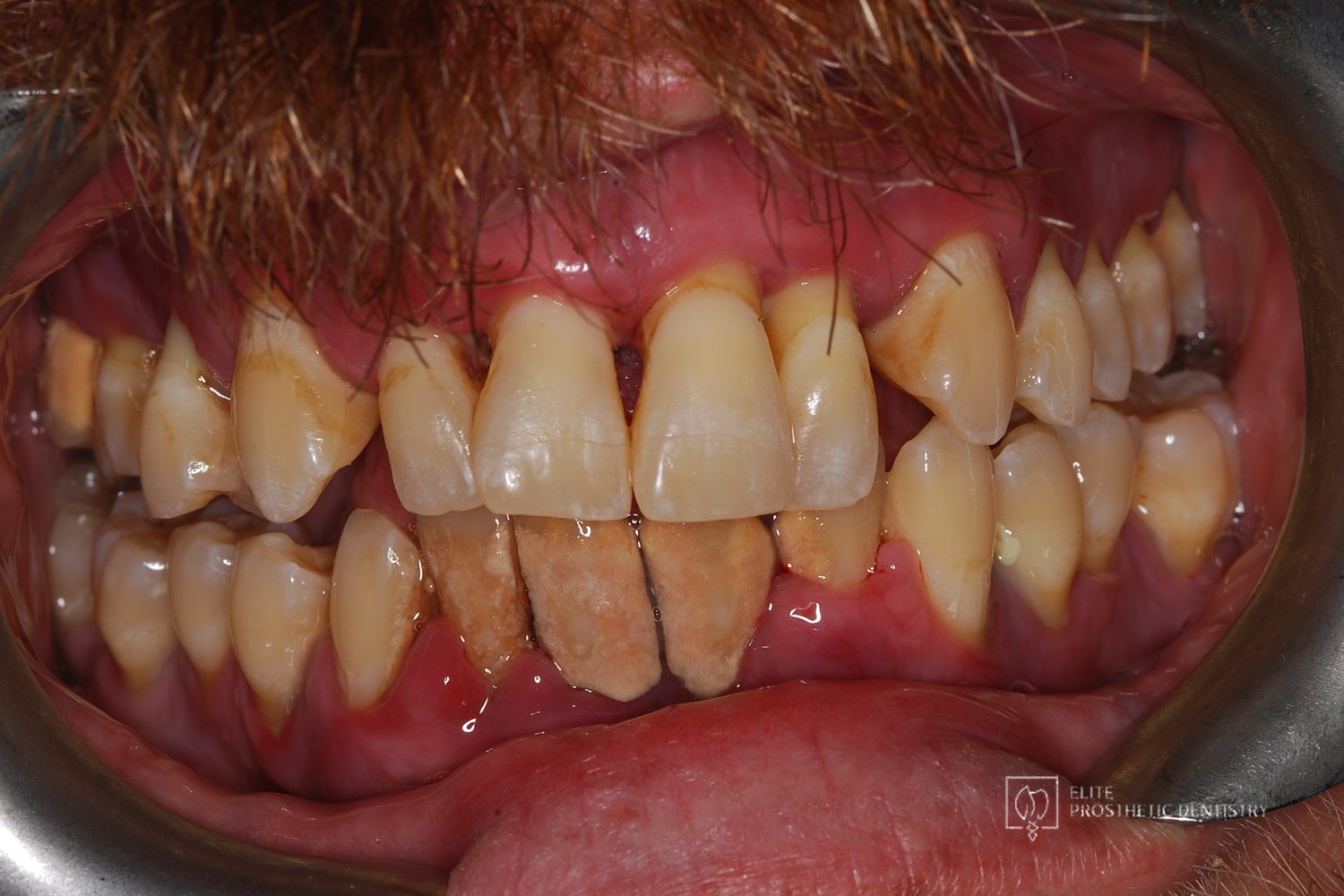
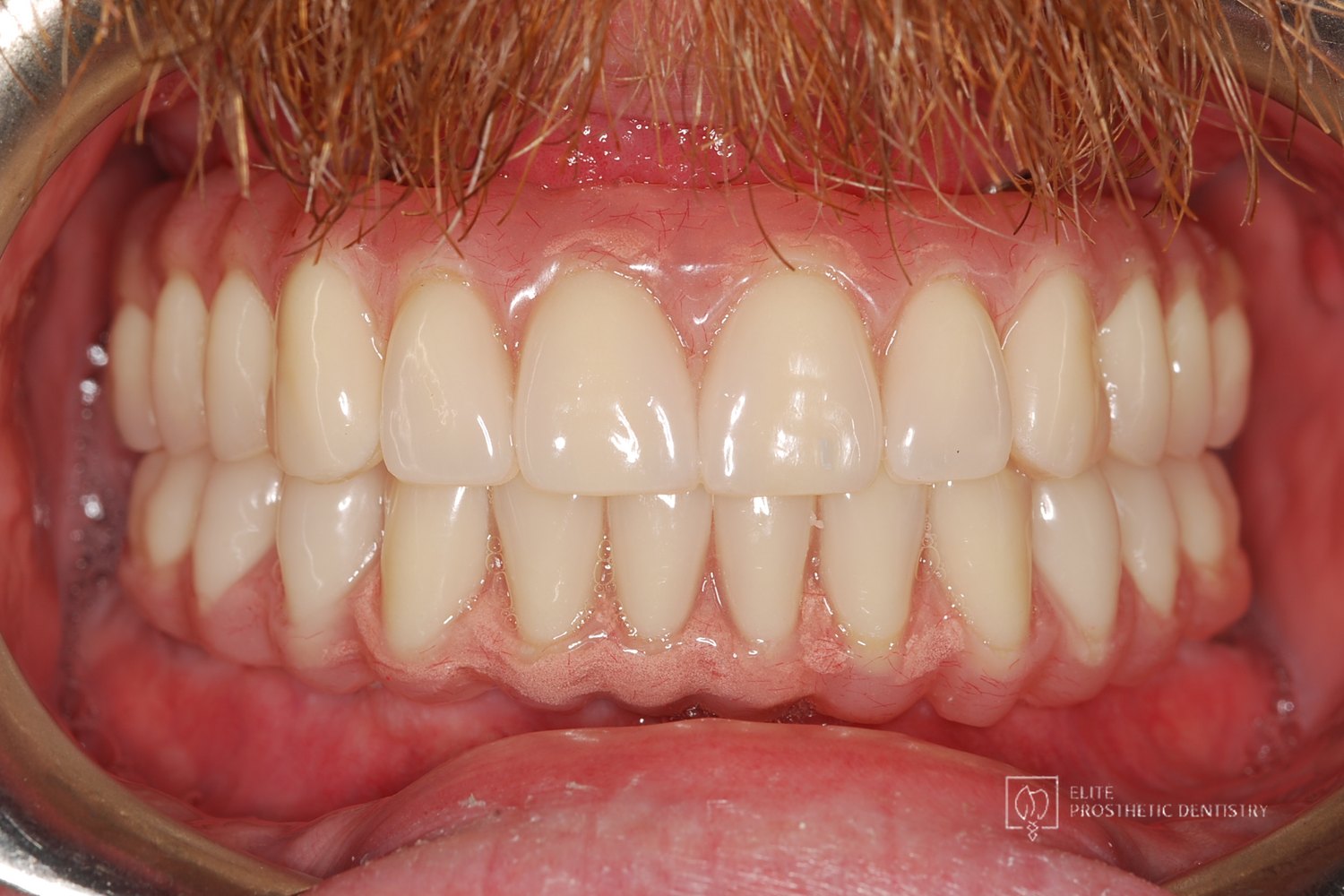
Both Arches Rebuilt After Advanced Periodontal Disease: Twelve Guided Implants and a Signature Hybrid Prosthesis
Advanced periodontal disease had destroyed the support around the remaining teeth in both arches. None could be kept, and the bone that would carry implants had been lost along with them.
 Before
 After
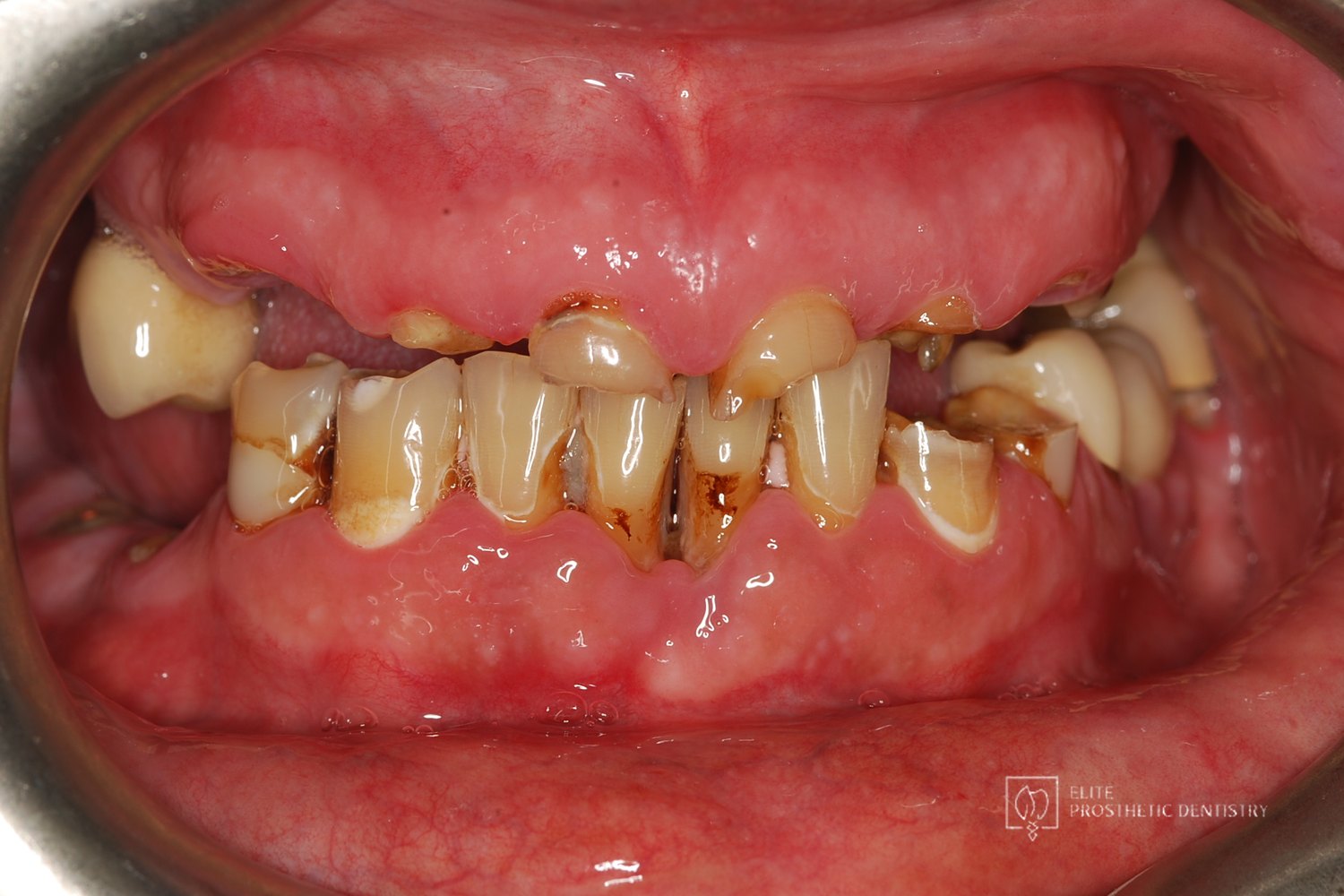
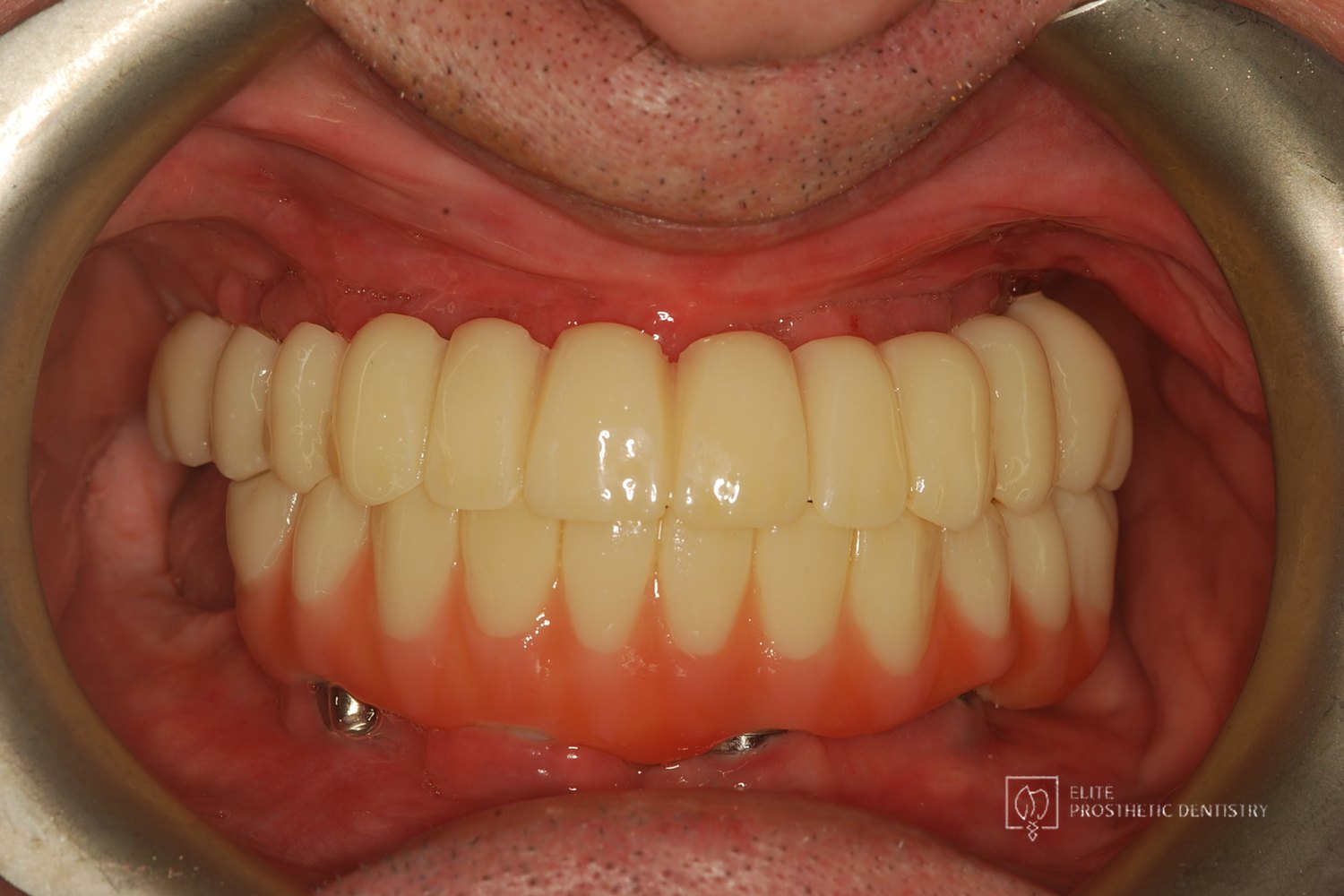
Both Arches Rebuilt After Years Without Dental Care and Heavy Grinding: Eight Guided Implants and an Elite Hybrid Prosthesis
Years without dental care combined with heavy grinding had destroyed the teeth in both arches. None were salvageable, and the bone needed rebuilding before implants could carry a new bite.
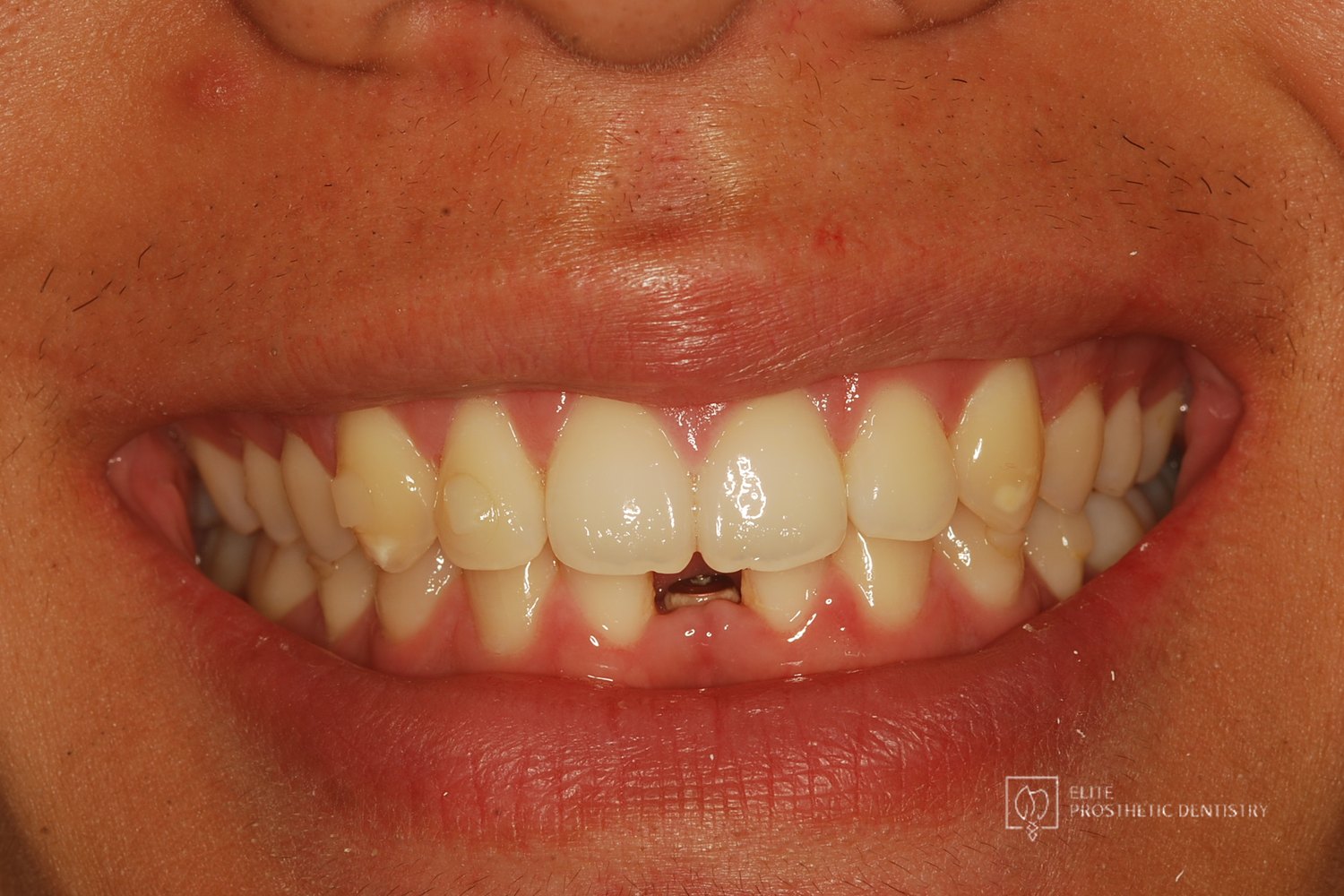 Before
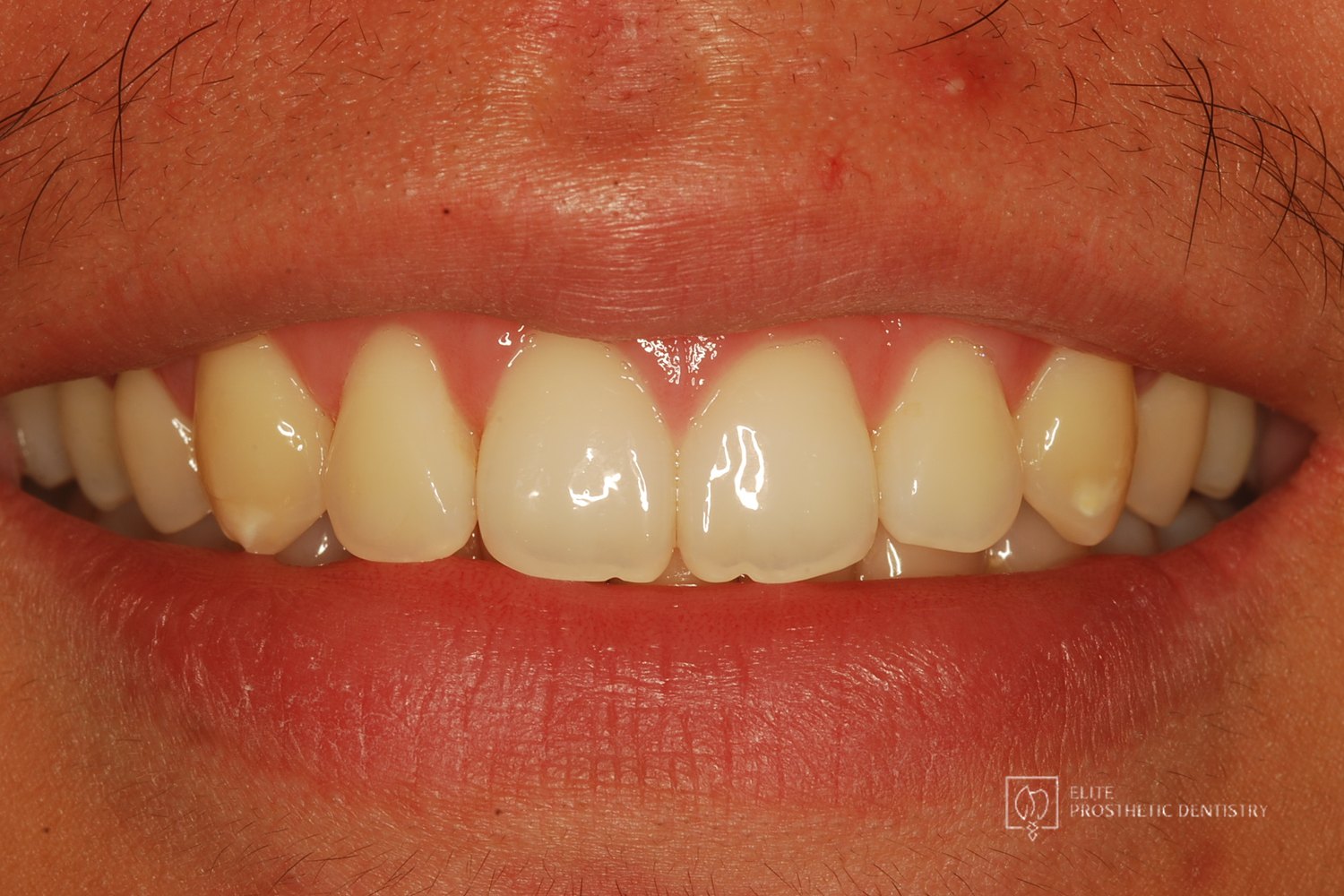 After
Bone Loss Around a New Dental Implant: Removed Early, the Ridge Rebuilt, and a Guided Replacement Implant Restored
A 26-year-old patient referred for a crown on a recently placed lower front implant arrived with 5 mm pocketing, bone loss, and exposed implant threads around it; a CBCT scan showed a ridge too narrow to hold the implant fully in bone. A crown could have been made, but the foundation would not have lasted.
Related Articles
Deepen your knowledge with additional insights on this topic.
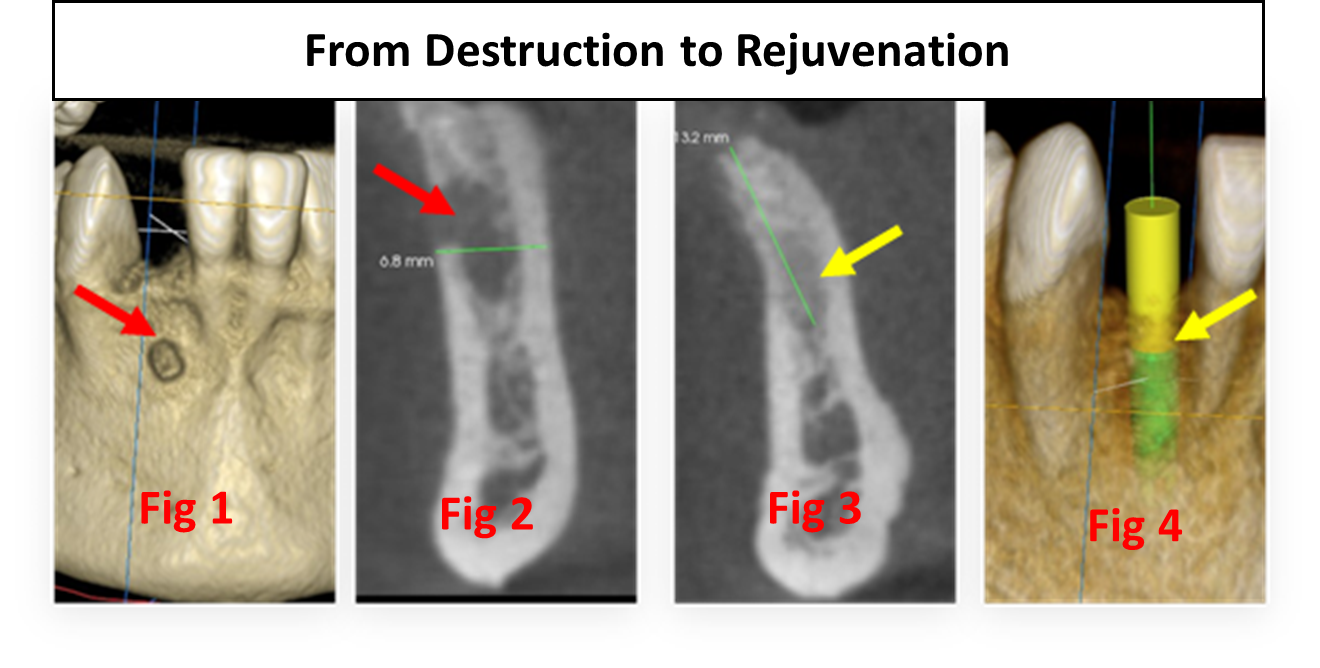 Bone Grafting & Surgical
Rebuilding a Ruined Implant Site with Severely Damaged Bone: The Three-Stage Protocol
Debridement, growth-factor grafting, CBCT-guided planning: the step-by-step protocol that turns a severely damaged implant site into a healthy ridge.
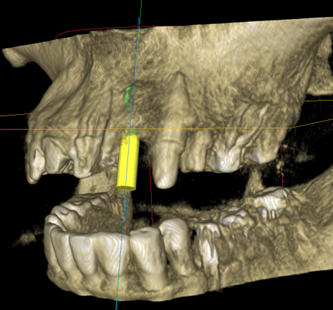 Bone Grafting & Surgical
What Is Ridge Augmentation Bone Grafting?
Ridge augmentation rebuilds a jaw ridge too narrow or angled for an implant. See real measurements from planning to precise placement. Washington DC.
 Bone Grafting & Surgical
What Is a Partial (Internal) Sinus Lift?
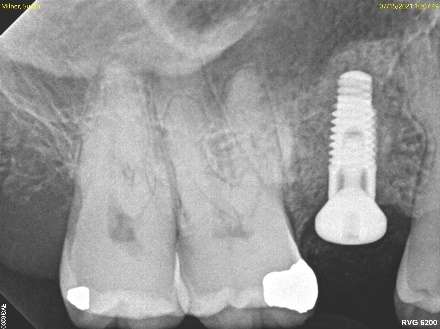
A partial (internal) sinus lift adds bone at a single implant site through the implant preparation itself, often with the implant placed the same visit.