
What Is a Sinus Lift Procedure, and How Is It Used with Dental Implants?
A sinus lift, also called sinus augmentation, is a bone grafting procedure that rebuilds lost bone in the upper back jaw so dental implants have something solid to anchor into. The maxillary sinuses are air spaces that sit directly above the roots of your upper molars and premolars. When teeth are lost back there, the bone beneath the sinus shrinks, and often too little height remains to place an implant safely. A sinus lift raises the sinus membrane and adds bone graft material beneath it, converting a site that cannot receive an implant into one that can. Our sinus lift page explains how the procedure is planned and performed at our Washington, DC office.
It is one of the most common grafting procedures in implant dentistry, and one of the most predictable when it is planned well. Here is how it works.
Why Bone Disappears Under the Sinus
Bone exists to support teeth. Once a tooth is gone, the bone that held it no longer has a job, and it begins to recede. The loss can be rapid, often most pronounced in the first three months after an extraction, and a substantial portion of the ridge can be lost within the first year. Periodontal disease, extractions done without a graft in the socket, and each person’s individual anatomy all contribute.
In the upper back jaw this shrinkage has a second dimension: the sinus floor above the site effectively moves closer to the ridge as bone is lost, squeezing the available implant zone from both directions. That is the specific problem a sinus lift solves. If you want to understand whether your situation calls for one, we cover the indications in detail in when a sinus lift is necessary for implant treatment.
What a Sinus Lift Actually Does
During the procedure, the delicate membrane lining the floor of the sinus is gently elevated, and bone graft material is placed into the space created beneath it. The membrane stays intact; the graft sits below it, outside the sinus airspace. Over the following months the graft matures into dense, living bone capable of receiving and supporting an implant. In short, the procedure recreates an operable implant site where one no longer existed.
The Two Types of Sinus Lifts
The internal sinus lift is the conservative version, used when some bone remains but not quite enough. Working through the implant preparation itself, we use a specialized instrument called an osteotome to elevate the sinus membrane a few millimeters and introduce graft material, usually placing the implant at the same visit. It is typically used for one or two implant sites. You can see the full sequence in our closer look at the partial (internal) sinus lift.
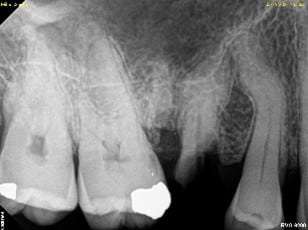
Stage 1: Hopelessly Fractured Tooth
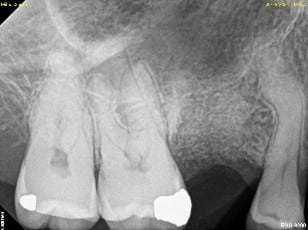
Stage 2: Tooth Extracted, Bone Graft Placed
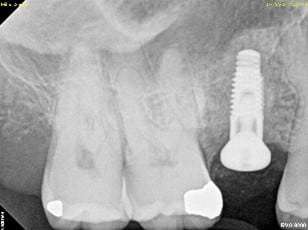
Stage 3: Implant Placed with a Sinus Lift at the Top
The external sinus lift is used when very little or no bone remains beneath the sinus. It is performed as its own procedure, months before implant placement, and rebuilds the entire sinus floor on that side beneath the protective membrane. Once the graft has matured, implants are placed into the new bone. We walk through that technique step by step in what a full (external) sinus lift involves.
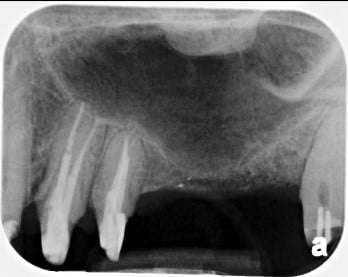
Stage 1: No Bone Available to Receive Any Implant
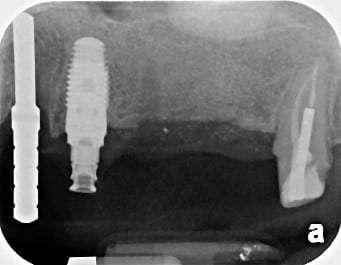
Stage 2: Bone Graft Placed in an External Sinus Lift
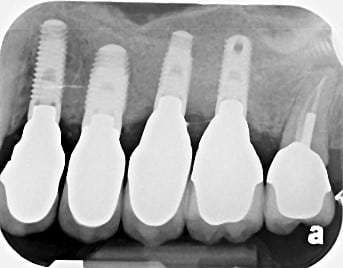
Stage 3: Implants Placed in the Matured Bone Graft
Where the Graft Material Comes From
There are several possible sources of graft material. In our practice we use carefully screened bone from a bone bank, combined with a bone growth stimulator made up of biological growth factors and proteins. This approach has served our patients well over many years, producing dense bone that receives and protects the new implant.
How Reliable Is Sinus Grafting?
A large body of published research supports the long-term predictability of implants placed in grafted sinuses. Success, however, is not automatic. It follows from careful 3D imaging, honest assessment of your anatomy, and precision implant placement into the new bone. That is the standard our practice, led by Dr. Gerald Marlin, a specialty-trained prosthodontist with more than 4,100 dental implants placed, applies to every grafted site.
When the Problem Is Width, Not Height
The sinus lift solves a height problem in the upper back jaw. When the ridge is too narrow to hold an implant, the answer is a different procedure called ridge augmentation, which rebuilds the width of the jaw and typically matures over four to six months before implants are placed. We explain it in what ridge augmentation bone grafting is.
Find Out What Your Jaw Actually Needs
If you have been told you lack the bone for implants, that is the beginning of a conversation, not the end of one. A 3D scan will show exactly what you have and what can be rebuilt. Call 202-244-2101 or request a consultation at Elite Prosthetic Dentistry in Friendship Heights, Washington, DC, and get an answer specific to your anatomy.
See How We Resolve These Problems
Our patient success stories show real cases and real results. Browse outcomes from a specialist prosthodontist with decades of experience and 4,100+ implants placed.
Key Takeaways
- ✓ A sinus lift (sinus augmentation) raises the sinus membrane in the upper back jaw and places bone graft material beneath it, creating enough bone height for dental implants.
- ✓ Bone under the sinus shrinks after teeth are lost, often fastest in the first few months, which is why many upper molar sites cannot accept an implant without grafting.
- ✓ There are two techniques: an internal lift, done through the implant site itself, and an external lift, a separate procedure used when little or no bone remains.
- ✓ We graft with bone-bank material combined with biological growth factors, producing dense bone that can receive and protect the implant.
- ✓ Sinus grafting is a well-studied, predictable procedure when it is planned carefully with 3D imaging and precise implant placement.
Frequently Asked Questions
What is a sinus lift in simple terms?
It is a bone graft for the upper back jaw. The maxillary sinus sits just above the roots of your upper molars, and when those teeth are lost the bone beneath the sinus shrinks. A sinus lift gently raises the sinus membrane and fills the space below it with graft material, so an implant has solid bone to anchor into.
Does everyone who wants upper implants need a sinus lift?
No. It is only needed when the bone between the ridge and the sinus floor is too short to hold an implant safely. A 3D CT scan measures that height exactly, which is how we determine whether you need a lift, and if so, which type.
What is the difference between an internal and an external sinus lift?
An internal lift is done through the implant preparation itself and gently elevates the membrane a few millimeters, usually with the implant placed the same day. An external lift is a separate grafting procedure used when very little or no bone remains, performed months before the implant so the new bone can mature first.
Is a sinus lift safe for my sinuses?
Performed correctly, a sinus lift does not change how your sinuses function or how you breathe. The membrane is lifted intact and the graft sits beneath it, outside the sinus airspace. Careful 3D planning is what keeps the procedure predictable.
Related Patient Success Stories
Explore similar patient success stories demonstrating our expertise in advanced prosthetic dentistry.
 Before
 After
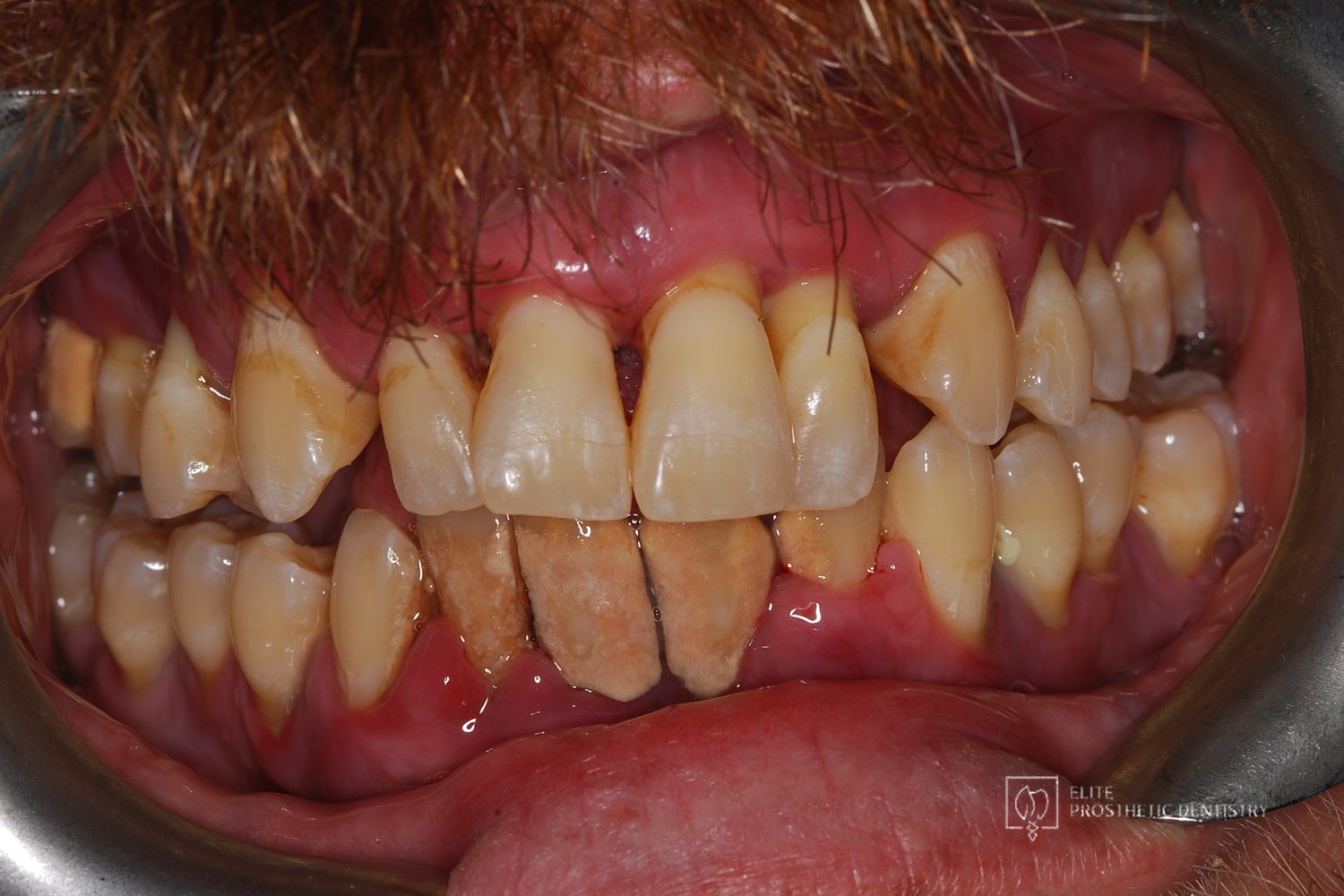
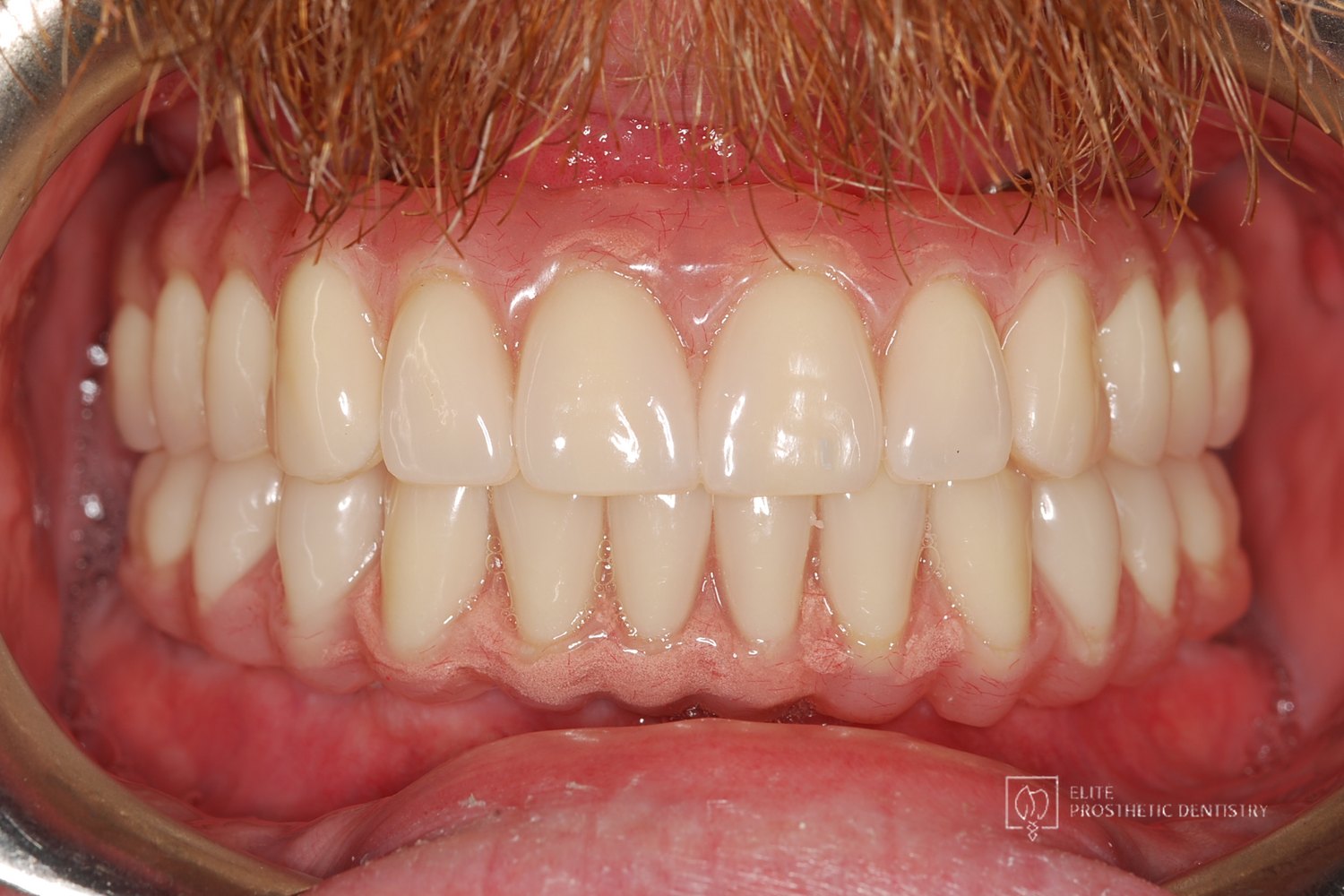
Both Arches Rebuilt After Advanced Periodontal Disease: Twelve Guided Implants and a Signature Hybrid Prosthesis
Advanced periodontal disease had destroyed the support around the remaining teeth in both arches. None could be kept, and the bone that would carry implants had been lost along with them.
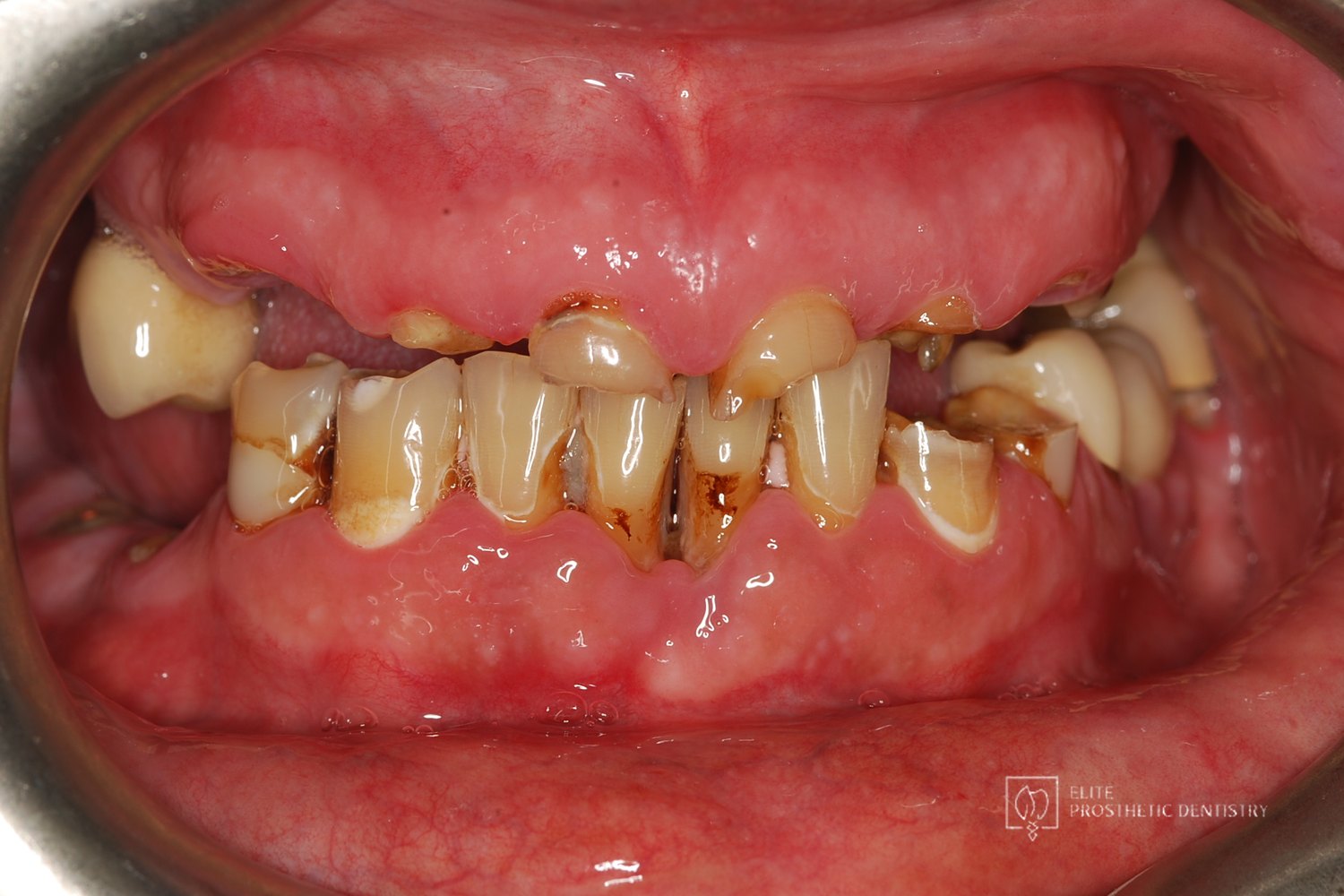 Before
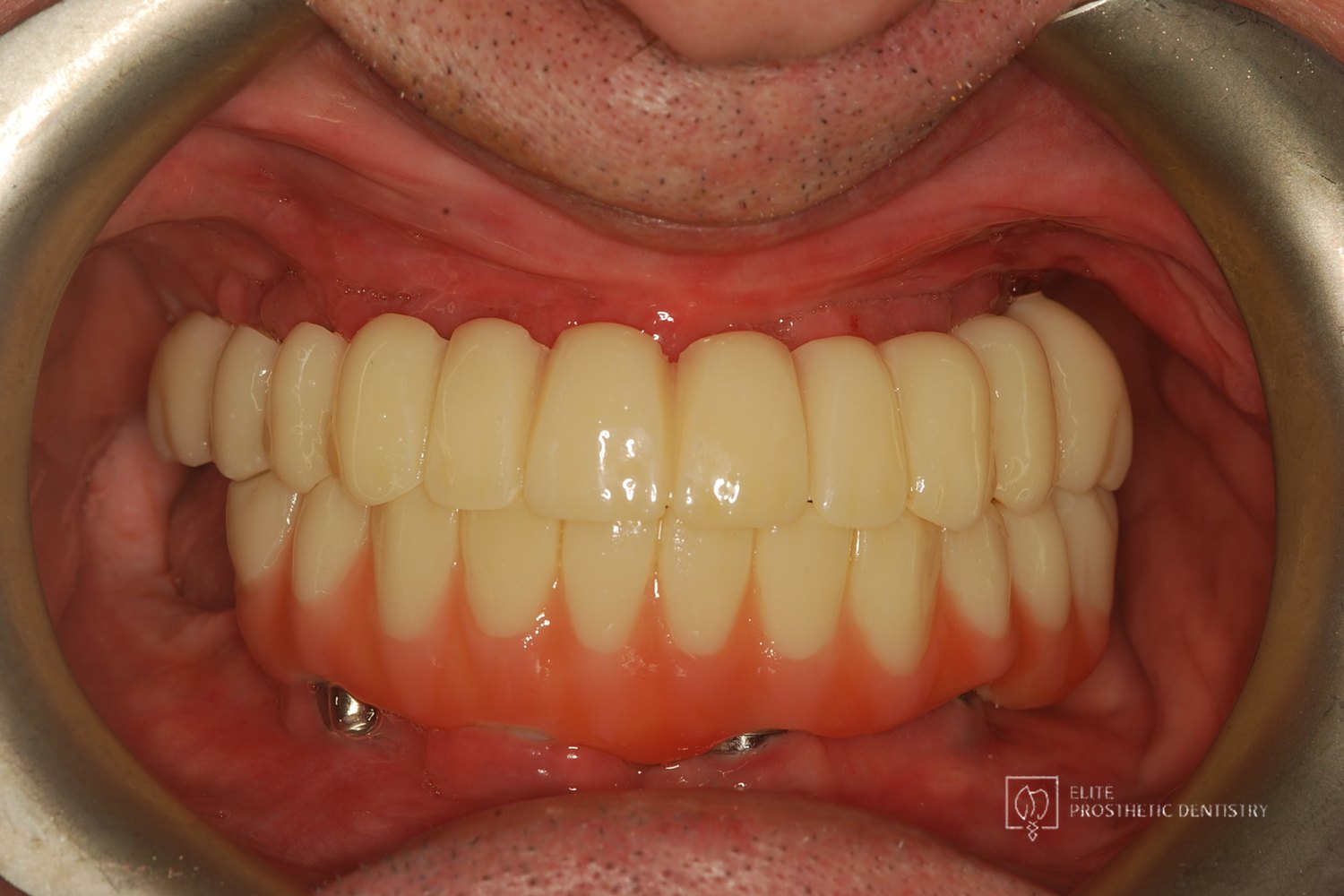 After
Both Arches Rebuilt After Years Without Dental Care and Heavy Grinding: Eight Guided Implants and an Elite Hybrid Prosthesis
Years without dental care combined with heavy grinding had destroyed the teeth in both arches. None were salvageable, and the bone needed rebuilding before implants could carry a new bite.
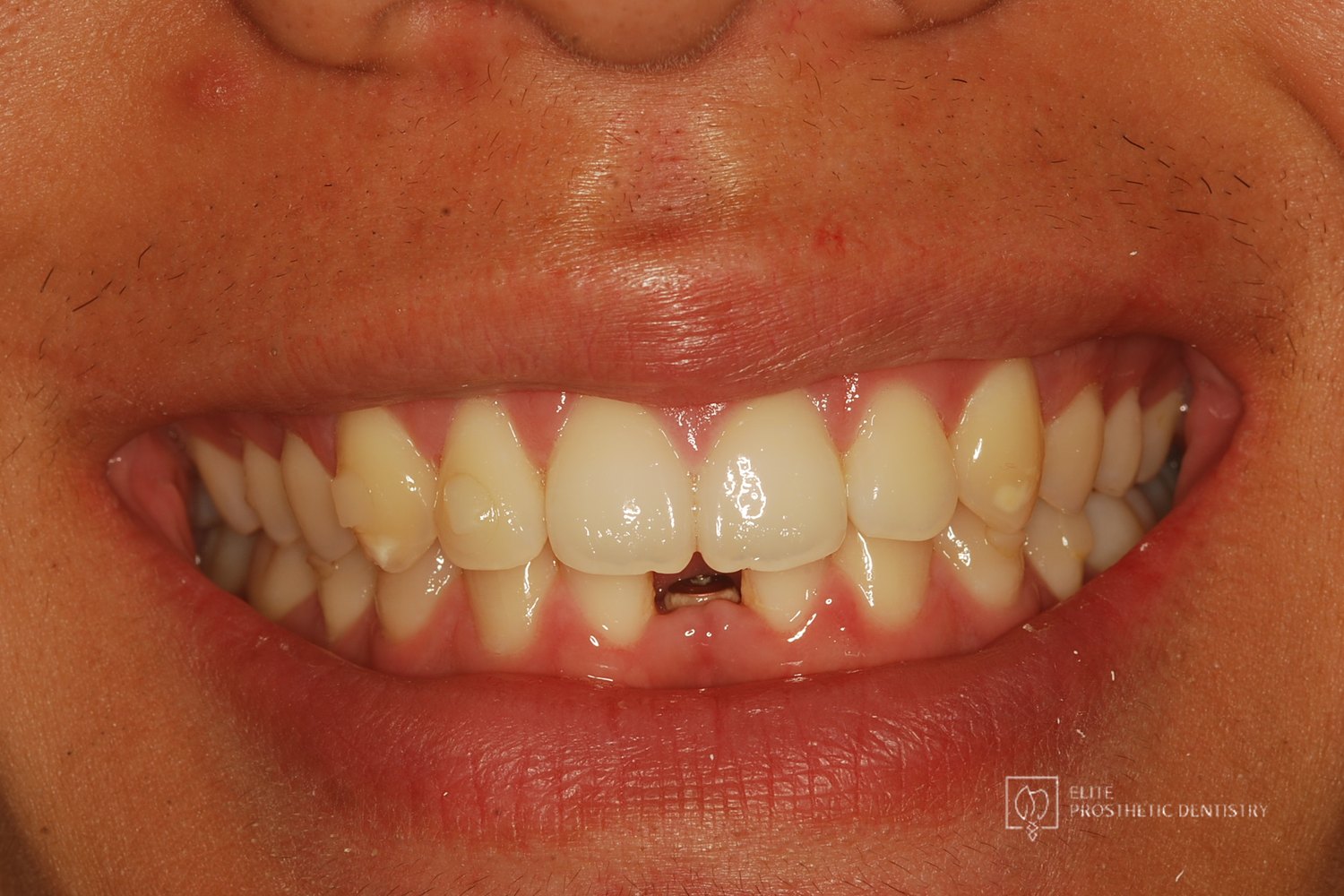 Before
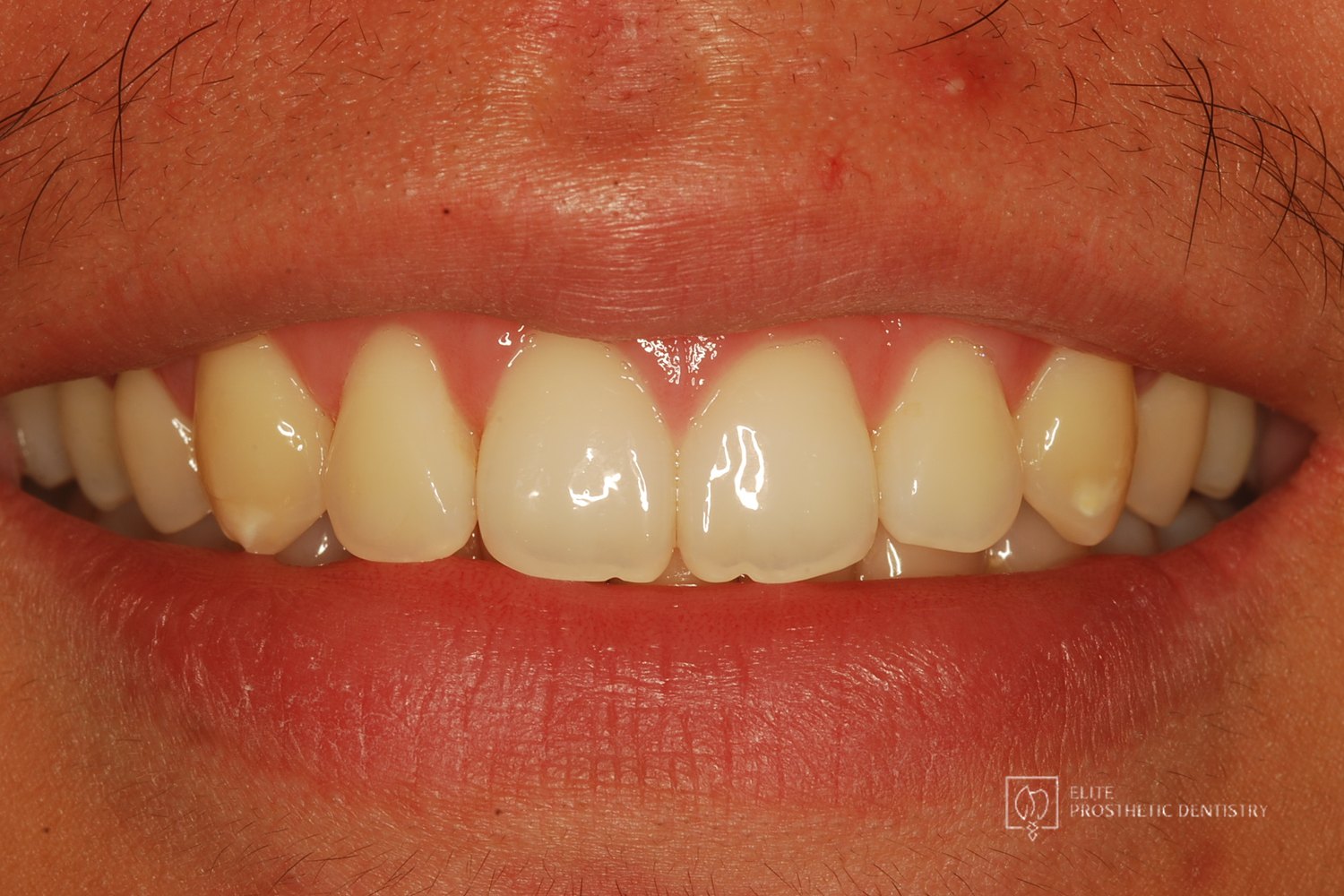 After
Bone Loss Around a New Dental Implant: Removed Early, the Ridge Rebuilt, and a Guided Replacement Implant Restored
A 26-year-old patient referred for a crown on a recently placed lower front implant arrived with 5 mm pocketing, bone loss, and exposed implant threads around it; a CBCT scan showed a ridge too narrow to hold the implant fully in bone. A crown could have been made, but the foundation would not have lasted.
Related Articles
Deepen your knowledge with additional insights on this topic.
 Bone Grafting & Surgical
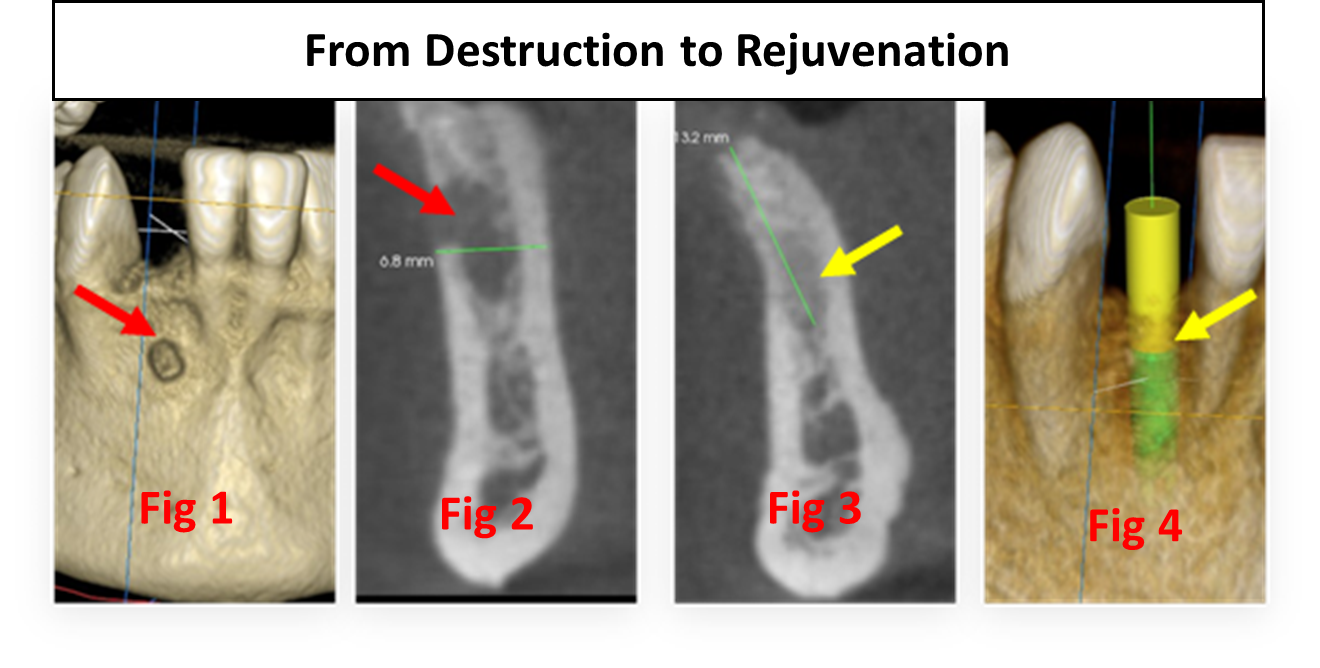
Rebuilding a Ruined Implant Site with Severely Damaged Bone: The Three-Stage Protocol
Debridement, growth-factor grafting, CBCT-guided planning: the step-by-step protocol that turns a severely damaged implant site into a healthy ridge.
 Bone Grafting & Surgical
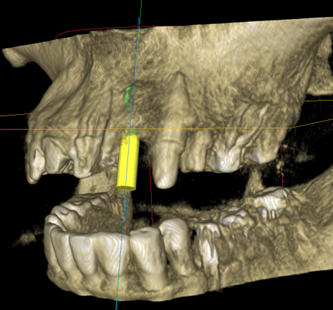
What Is Ridge Augmentation Bone Grafting?
Ridge augmentation rebuilds a jaw ridge too narrow or angled for an implant. See real measurements from planning to precise placement. Washington DC.
 Bone Grafting & Surgical
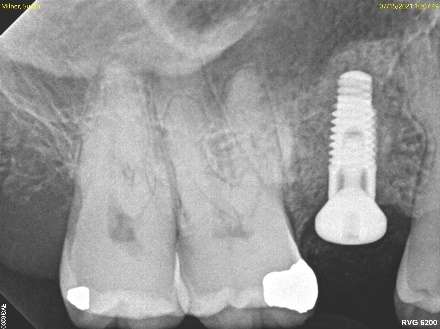
What Is a Partial (Internal) Sinus Lift?
A partial (internal) sinus lift adds bone at a single implant site through the implant preparation itself, often with the implant placed the same visit.