
Bone Grafting in Great Falls, VA
Expert bone grafting for dental implants in Great Falls, VA. Dr. Marlin restores lost bone structure. Schedule consultation, 25 minutes from Great Falls.
Bone Grafting in Great Falls, VA
Great Falls residents with missing teeth and insufficient bone for dental implants benefit from bone grafting procedures that restore lost bone structure, enabling optimal implant placement. Dr. Gerald Marlin’s prosthodontic expertise encompasses advanced bone grafting techniques. Located 25 minutes away via Georgetown Pike and Chain Bridge Road, the practice offers bone grafting expertise that allows patients who would otherwise be unable to receive implants to achieve implant restoration and enjoy the benefits of tooth replacement that functions like natural teeth.
Understanding Bone Loss and Resorption
When a tooth is present, the root provides stimulation that maintains the surrounding bone. This biological principle is fundamental to oral health. The moment a tooth is lost or extracted, the bone that supported that tooth loses its stimulus and begins to shrink. This process is called resorption.
The rate and extent of bone resorption varies between individuals, but the pattern is predictable. Within the first year after tooth loss, significant bone resorption occurs. As years pass, the bone continues to resorb, eventually creating a situation where insufficient bone remains to support a dental implant.
For Great Falls residents with teeth missing for years, substantial bone loss might have occurred. This does not mean implants are impossible. Bone grafting restores the lost bone structure, creating foundation for implants.
Why Bone Support Matters for Implants
Dental implants are artificial tooth roots that integrate into bone through a biological process called osseointegration. The implant functions only if it has adequate bone surrounding it. Without sufficient bone volume, implants fail to integrate, become loose, or are rejected.
Additionally, the position of the implant relative to adjacent teeth and gum tissue affects the final aesthetic result. Optimal implant positioning often requires bone grafting to augment the ridge. When sufficient bone is not present, implants might need to be placed at compromised angles or positions that create aesthetic or functional problems.
For Great Falls patients, bone grafting before implant placement is investment in superior long-term results. The extra cost and time of grafting is worthwhile compared to dealing with implant failure or an aesthetically compromised result.
Types of Bone Grafting Materials
Several bone grafting materials are available, each with advantages and disadvantages.
Autogenous bone (your own bone) is the gold standard for bone grafting. It is your body’s own bone harvested from another location, typically the lower jaw, hip, or chin. Autogenous bone is biologically superior because it contains living cells that can differentiate into bone-forming cells. The disadvantage is that harvesting autogenous bone requires a second surgical site and additional operative time.
Allogeneic bone (bone from another human) comes from bone banks. The bone is processed and prepared for use as graft material. Allogeneic bone is excellent for bone grafting and does not require a second surgical site. The disadvantage is slightly longer incorporation time compared to autogenous bone. For most Great Falls patients, allogeneic bone provides excellent results.
Xenogeneic bone (bone from animals) is also used for grafting. Processed bovine bone (from cows) is commonly used. Xenogeneic materials are safe and work well for many grafting situations.
Synthetic bone substitutes (alloplastic materials) are lab-engineered bone analogs. These materials are safe, effective, and do not require harvesting from another site. They work well for some grafting situations, particularly smaller augmentations.
our practice evaluates your specific situation and recommends the graft material most appropriate for your case. For larger grafts, he might recommend autogenous bone combined with allogeneic material. For smaller augmentations, synthetic material might be ideal.
Surgical Technique and Placement
Bone grafting is a surgical procedure performed under local anesthesia or sedation. our team at Elite Prosthetic Dentistry makes a small incision in the gum tissue, exposing the bone surface where grafting is needed. The graft material is carefully placed and secured in position.
For larger grafts, our prosthodontic team might use a bone graft membrane or barrier to contain the graft material and protect it during the healing phase. The graft site is closed with sutures and left to heal.
The surgical technique is refined through extensive experience. our practice’s 40 years in prosthodontics include thousands of bone grafting procedures. This experience allows him to place grafts precisely and maximize success.
Healing and Integration Timeline
After bone grafting, the graft material begins integrating into your existing bone through a biological healing process. New bone forms within and around the graft material, gradually incorporating it into your skeletal structure.
Healing takes time. Most grafts require three to six months for adequate integration. During this healing period, you must avoid disturbing the graft site. Chewing forces in the grafting area are minimized.
Larger grafts might require six to nine months for complete integration. our prosthodontic team provides specific timeline guidance based on your graft size and type.
Minor Ridge Augmentation
Not all patients need extensive bone grafting. Some patients have good overall bone volume but need minor ridge augmentation to optimize implant positioning. Minor augmentation might involve grafting just one to two millimeters of bone to enhance ridge contours.
For these minor augmentations, Elite Prosthetic Dentistry often uses synthetic bone materials that require no harvesting. The procedure is straightforward, and integration is rapid. Three to four months of healing usually provides adequate bone for implant placement.
Major Bone Grafting
Some Great Falls patients have extensive bone loss requiring major bone grafting. This might occur when many teeth have been missing for years, or when patients have had significant gum disease causing bone destruction.
Major grafting might involve building bone volume substantially. The procedure might require autogenous bone harvested from the hip or chin, combined with allogeneic material. Major grafting extends healing time to six to nine months and might be staged in two phases.
Despite the extent of major grafting, success rates remain excellent. our specialty-trained team has successfully managed numerous major grafting cases, restoring sufficient bone to support implants in patients who would otherwise be unable to receive them.
Sinus Lift Grafting
When upper back teeth are missing for extended periods, the sinus floor (the bone between the tooth roots and the sinus cavity) resorbs, leaving insufficient bone for implants. Sinus lift grafting (also called sinus augmentation) raises the sinus floor and fills the space with graft material, creating bone suitable for implant placement.
Sinus lift grafting is a predictable procedure with high success rates. Dr. Marlin has performed hundreds of sinus lift cases. The procedure allows upper back implants to be placed in patients who would otherwise lack sufficient bone.
Implant Placement After Grafting
Once bone grafting has healed and the graft has integrated, implant placement follows. At the time of implant placement, Elite Prosthetic Dentistry uses 3D imaging to verify adequate bone volume and optimal positioning. If more bone augmentation is needed, additional grafting can be performed at the implant placement appointment.
For most patients, one bone grafting procedure followed by implant placement after healing is sufficient. The staged approach (graft first, wait for healing, then place implant) provides predictable success.
Guided Tissue Regeneration
In some cases, guided tissue regeneration (GTR) techniques are used to optimize bone formation. Membrane barriers are placed during bone grafting to protect the graft and direct bone formation. These membranes contain the graft material and guide new bone formation in the desired location.
Membranes are either resorbable (dissolving over time) or non-resorbable (requiring removal). our practice selects the appropriate membrane type based on the clinical situation.
Post-Grafting Care and Instructions
After bone grafting, specific care instructions help ensure optimal healing. Sutures are typically removed after two weeks. Avoid chewing in the grafting area for several weeks. Smoking and strenuous activity should be minimized during healing.
Great Falls patients receive detailed written post-grafting instructions before leaving. our specialty-trained team’s team reviews these instructions and answers questions. Complications are rare, but patients are instructed what warning signs to watch for.
Pain Management After Grafting
Some discomfort is normal after bone grafting, typically managed with standard pain medication. Swelling peaks around day two or three and gradually resolves over one to two weeks. Most patients find discomfort manageable and resume normal activities within one week.
Ice applied immediately after surgery reduces swelling. Elevation of the head helps minimize swelling. These simple measures, combined with pain medication, make recovery comfortable.
Complications and Outcomes
Bone graft complications are uncommon. Success rates are excellent, typically 90 to 95 percent depending on graft type and location. When grafts do fail, they can usually be retreated with additional grafting.
our team at Elite Prosthetic Dentistry monitors graft healing with periodic radiographs and clinical examination. Any issues are identified early and managed appropriately.
Cost of Bone Grafting
Bone grafting costs vary based on graft type, size, and complexity. Elite Prosthetic Dentistry provides a detailed cost estimate during your treatment planning consultation so you understand the investment for your specific situation.
our office assists with insurance verification, as some insurance plans cover portions of bone grafting costs. The practice offers flexible payment options to accommodate different financial situations. Many Great Falls patients find the investment in bone grafting worthwhile for the ability to receive implants that function and last for decades.
Bone Grafting as Investment in Future Health
Great Falls patients considering bone grafting should view it as investment in long-term oral health. The grafting extends treatment timeline and adds cost, but the result is implants in optimal positions that function excellently and integrate fully with the jaw. The alternative is either no tooth replacement or implants in compromised positions with less predictable outcomes.
For most patients, the investment in bone grafting provides superior long-term results.
Why Prosthodontic Expertise Matters
Bone grafting represents complex surgical technique combined with prosthodontic understanding of implant requirements. Elite Prosthetic Dentistry’s 40 years in prosthodontics include extensive bone grafting experience. We understand exactly how much bone is needed for different implant situations, optimal graft positioning, and material selection that maximizes success.
our expertise extends from simple augmentations to complex major grafting procedures. For Great Falls patients, accessing this level of expertise means superior bone grafting outcomes and implant success.
Taking the Next Step
If you are a Great Falls resident with missing teeth and uncertain whether implants are possible, Dr. Marlin invites you to schedule a consultation. We will evaluate your bone, discuss your options, and explain exactly what bone grafting might involve.
The 25-minute drive from Great Falls via Georgetown Pike and Chain Bridge provides access to bone grafting expertise unavailable locally. To schedule your consultation, contact our office or visit our request appointment page. Learn more about our bone grafting services and dental implants to understand the complete approach to implant restoration.
Related Resources
Frequently Asked Questions
Why do I need bone grafting if I just need a dental implant?
Dental implants require adequate bone volume and density for successful integration. When teeth are missing for years, the bone where the tooth root was gradually resorbs (shrinks). If insufficient bone remains, an implant will not have stable support. Bone grafting restores volume so implants can be placed in ideal positions and function optimally.
What types of bone grafting material can be used for Great Falls patients?
We use several graft materials including your own bone (autograft), bone from bone banks (allograft), and synthetic bone substitutes (alloplast). Autograft is strongest but requires a second surgical site. Allograft is excellent and widely available. Synthetic materials work well for many situations. Dr. Marlin recommends the best material for your specific case.
How long does bone grafting take to heal before implants can be placed?
Healing time varies based on graft type and size. Most grafts require three to six months for adequate healing and integration. During this time, the graft fuses with your existing bone, creating stable foundation for implants. Larger grafts might require six to nine months. Dr. Marlin provides timeline during planning.
Is bone grafting painful or create significant swelling?
Bone grafting is performed under local anesthesia or sedation, so you feel minimal discomfort during the procedure. Afterward, some discomfort is normal for a few days, managed with pain medication. Swelling typically peaks at day two or three and gradually resolves. Most patients resume normal activities within one week.
What is the success rate of bone grafting for dental implant placement?
Bone grafting success rates are excellent, typically 90 to 95 percent depending on graft type and size. Most grafts integrate successfully and support excellent implant outcomes. Failures are uncommon and often can be retreated with additional grafting. For Great Falls patients, bone grafting is a reliable way to enable implant placement.
Related Case Studies
Explore similar cases demonstrating our expertise in advanced prosthetic dentistry.
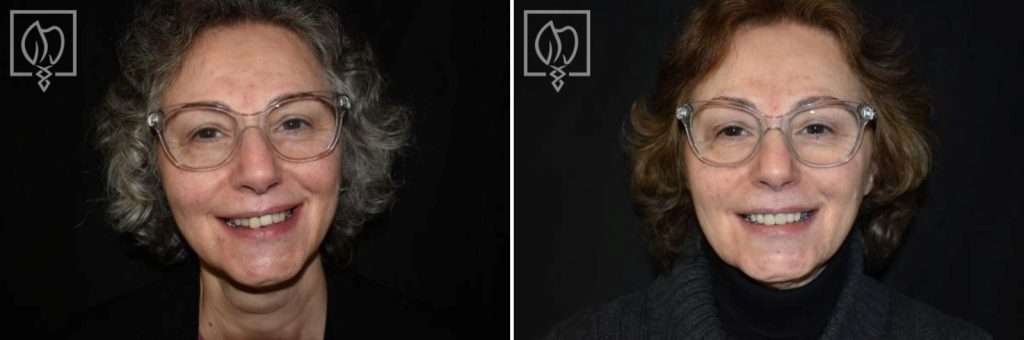 Complex
 Temporary Crowns Restore Patient's Smile in Just One Day with an Immediate Smile Makeover
Her dental implant looked artificial in her mouth and was impacting her smile. She had been very unhappy with her unsightly smile line and was beco...
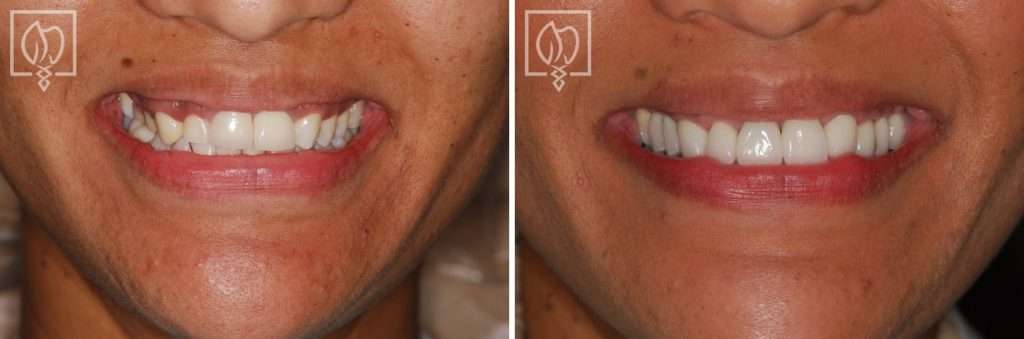 Complex
 Multi-Faceted Treatment for Patient Unhappy With Her Artificial-Looking Crowns, Teeth and Gums
Many patients come to Elite Prosthetic Dentistry unhappy with the appearance of their smile. A particular patient who sought our help was very unha...
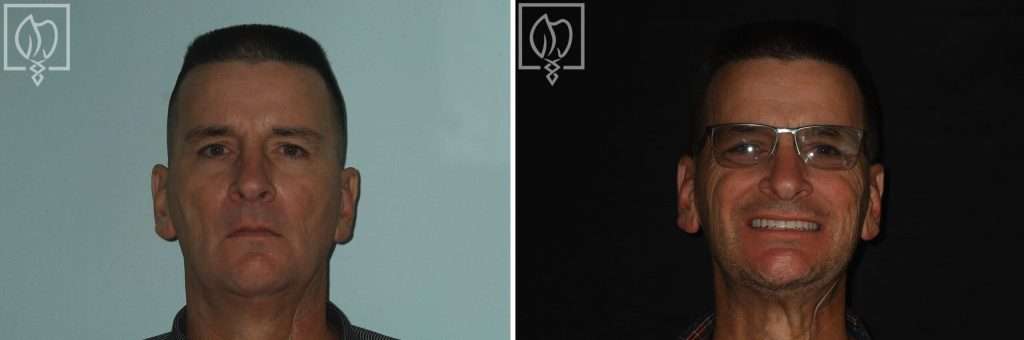 Standard
 Treating Kevin’s Collapsed Bite with a Complete Smile Makeover with New Dentures
Kevin came to us very dissatisfied with his existing condition. He looked much older than his age because his bite was collapsed and no one could r...
Related Articles
Deepen your knowledge with additional insights on this topic.
Rejuvenating a Ruined Implant Site Having Severely Damaged Bone
Even after a failed implant and significant bone loss, it is often possible to rebuild the ridge and restore a healthy foundation for a new implant.
If a Single Front Tooth is Replaced with an Implant, can it Look Natural?
A single front tooth implant can look completely natural with precision placement, custom abutments, and hand-crafted porcelain crowns. Washington, DC.
What is Precision Implant Placement (PIP)?
Learn what Precision Implant Placement (PIP) is and how meticulous planning ensures optimal implant positioning for long-lasting results in Washington, DC.
Getting Here from Great Falls
Elite Prosthetic Dentistry is conveniently located near Great Falls, VA.
Georgetown Pike east to Chain Bridge, cross into DC, north on Arizona Avenue to Jenifer Street NW.
Address:
4400 Jenifer Street NW, Suite 220
Washington, DC 20015
Phone: (202) 244-2101
Schedule ConsultationSchedule Your Consultation from Great Falls
Great Falls residents trust Dr. Gerald Marlin for precision dental care. With 3,900+ implants placed and 40+ years of experience, your smile is in expert hands.