
Osseointegration: Big Word, Simple Concept!
Was this word the invention of an evil doctor who loves long and complicated words? No! Osseointegration actually derives from the Greek osteon, bone and the Latin integrare, to make whole. It’s a physical process that was first observed by Swedish researchers in the 1960s and refers to the functional connection between a titanium implant and living bone. Simply put, without osseointegration, dental implants would not work at all. This process is the biological miracle that allows us to replace missing teeth with restorations that function just like natural teeth.
How It Works
Osseointegration is a natural process: When the titanium dental implant connects to bone cells, it is locked into the jawbone, forming a solid bond. While the process is natural, the implementation and success are far from simple. Implant healing times and initial stability depend greatly on implant characteristics and to a large extent on your doctor. We have extensive experience in placing dental implants and therefore can ensure that you receive the best care and outcome when it comes to implant surgery and the healing process.
The first evidence of the bone bonding with the implant occurs after a few weeks, while a more robust connection progresses over the next months or years. During this critical healing period, the bone cells gradually migrate toward the titanium surface and begin to integrate with it at the molecular level. This progressive strengthening means that an implant becomes more stable over time, not less stable. The osseointegration process makes the implant increasingly resistant to external shocks over time, though it still requires proper care and maintenance to protect your investment.
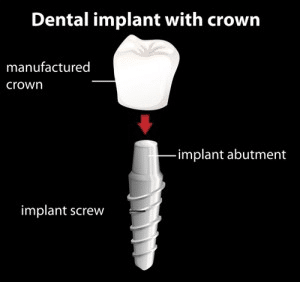
Understanding the Biology Behind Your Implant
The success of osseointegration depends on several critical factors, all of which Dr. Marlin carefully considers. The surface characteristics of the implant, the quality and quantity of bone available, proper surgical technique, and the initial stability achieved at the time of implant placement all influence whether osseointegration will succeed. This is why working with an experienced implant specialist matters so much. Dr. Marlin uses precision surgical guides based on 3D CT scans to position every implant in the exact location that will provide optimal bone support and optimal aesthetics.
The Long-Term Benefits
The benefits of dental implants can’t be overstated. Not only do they give you a fully functioning bite back, they also prevent your jawbone from deteriorating and protect your facial profile. Without tooth roots, the underlying bone naturally resorbs over time, which can change your facial appearance and age your smile. Implants prevent this bone loss because the titanium implant acts as an artificial tooth root, maintaining stimulation to the bone.
If you have questions about osseointegration or want to learn more about whether dental implants might be right for you, give us a call today. Dr. Marlin and his team are ready to discuss your options and help you understand how this remarkable process can restore your smile and your confidence.
Related Case Studies
Explore similar cases demonstrating our expertise in advanced prosthetic dentistry.
 Complex
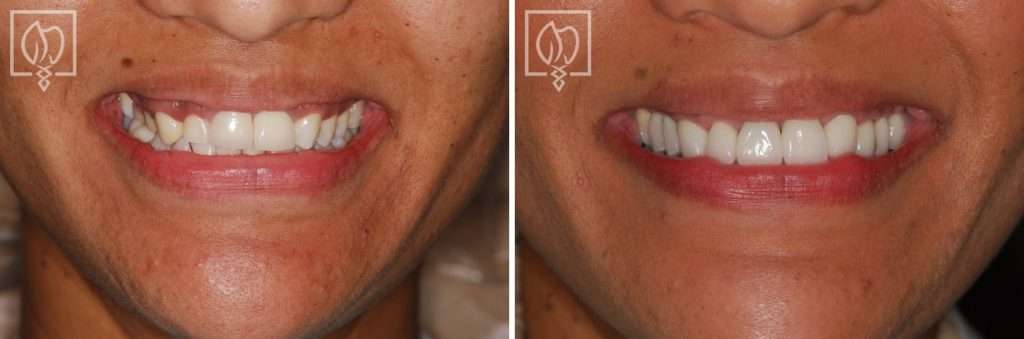
 Temporary Crowns Restore Patient's Smile in Just One Day with an Immediate Smile Makeover
Her dental implant looked artificial in her mouth and was impacting her smile. She had been very unhappy with her unsightly smile line and was beco...
 Complex
 Multi-Faceted Treatment for Patient Unhappy With Her Artificial-Looking Crowns, Teeth and Gums
Many patients come to Elite Prosthetic Dentistry unhappy with the appearance of their smile. A particular patient who sought our help was very unha...
 Standard
 Treating Kevin’s Collapsed Bite with a Complete Smile Makeover with New Dentures
Kevin came to us very dissatisfied with his existing condition. He looked much older than his age because his bite was collapsed and no one could r...
Related Articles
Deepen your knowledge with additional insights on this topic.
Rejuvenating a Ruined Implant Site Having Severely Damaged Bone
Even after a failed implant and significant bone loss, it is often possible to rebuild the ridge and restore a healthy foundation for a new implant.
If a Single Front Tooth is Replaced with an Implant, can it Look Natural?
A single front tooth implant can look completely natural with precision placement, custom abutments, and hand-crafted porcelain crowns. Washington, DC.
What is Precision Implant Placement (PIP)?
Learn what Precision Implant Placement (PIP) is and how meticulous planning ensures optimal implant positioning for long-lasting results in Washington, DC.