
Bone Grafting in Foxhall, DC
Bone grafting in Foxhall, DC to rebuild jaw structure for dental implants. Expert surgical reconstruction by prosthodontist Dr. Gerald Marlin. Call today.
Bone Grafting in Foxhall, DC
Bone Grafting: Restore Support for Dental Implants in Foxhall
When you lose a tooth, the bone that supported it begins to deteriorate. Over months and years, significant bone loss can occur. This creates a challenge for implant placement. Without adequate bone, implants cannot be successfully positioned or may fail over time. Residents of Foxhall can trust Dr. Gerald Marlin for this specialized care.
At Elite Prosthetic Dentistry, our prosthodontic team specializes in bone grafting procedures that rebuild bone structure. This enables successful implant placement and ensures your implants will function beautifully and reliably for decades. Bone grafting is an essential component of comprehensive implant dentistry.
Understanding Bone Loss
When a tooth is lost, the bone that supported it loses its purpose. Without the stimulation that living tooth roots provide, bone begins to resorb or shrink. This process starts immediately and continues over time.
After several years of tooth loss, significant bone loss can occur. The jaw becomes smaller and narrower. This affects not just the possibility of implant placement, but also your facial appearance and the success of any eventual implant.
Why Bone Grafting Matters for Implants
Successful implant placement requires adequate bone volume and density. If bone loss has occurred, the area may not support an implant. Bone grafting restores the bone structure needed for successful implant placement.
Additionally, even if some implant placement is possible without grafting, bone grafting ensures optimal implant positioning and support. This results in implants that function better and last longer.
Types of Bone Grafting Materials
our team at Elite Prosthetic Dentistry uses several types of graft materials, each with different properties, benefits, and costs.
Autograft (Your Own Bone)
Autograft uses bone harvested from another part of your body, typically your own jaw or chin. This is considered the gold standard because your body readily accepts your own bone with minimal immune response. Autograft contains living bone cells that promote rapid healing and integration. However, autograft requires harvesting bone from one location to graft to another, creating a second surgical site. It also has limited volume available.
Allograft (Human Bone)
Allograft uses bone from a tissue bank, typically from donors who have consented to donation. The bone is processed to remove cellular material while preserving the structural framework that serves as a scaffold. Your body gradually replaces allograft with your own bone over months to years. Allograft is readily available in large volumes and doesn’t require harvesting from your own body.
Xenograft (Animal Bone)
Xenograft uses processed bone from animals, typically bovine (cow). Like allograft, xenograft provides a mineral scaffold that your body gradually replaces with your own bone. It’s widely available and cost-effective. Your body gradually incorporates xenograft material, replacing it with your natural bone.
Synthetic Materials
Synthetic bone substitute materials are engineered to mimic natural bone structure. These are composed of calcium phosphate, hydroxyapatite, or other biocompatible materials. They integrate with your existing bone over time and are gradually replaced by your body’s natural bone. Synthetic materials are versatile, reliable, and avoid any biological material concerns.
Elite Prosthetic Dentistry selects the material best suited to your specific situation, considering the extent of bone loss, the location, your timeline preferences, and your medical history. He’ll discuss the advantages and disadvantages of each option during your consultation.
The Bone Grafting Procedure
Your bone grafting journey begins with a consultation. our practice examines your mouth, takes radiographs or 3D imaging, and assesses the extent of bone loss. We discuss your goals and treatment options.
If bone grafting is appropriate, we explain the procedure, recovery, timeline, and costs. We answer your questions and addresses concerns.
On the day of your procedure, the area is numbed with local anesthesia. Elite Prosthetic Dentistry accesses the bone deficiency, typically making a small incision in the gum. We carefully places graft material to rebuild the lost bone structure.
The incision is closed with dissolving sutures. Detailed post-operative instructions are provided.
Healing Timeline
Bone grafting follows a predictable healing timeline. During the first two weeks, the graft site undergoes inflammation and initial integration. Your body sends blood and cells to the graft area to begin the healing process.
Over the next 4-6 weeks, the graft material begins integrating with your existing bone. New blood vessels grow into the graft, and your body’s bone-building cells populate the area.
Over the next several months, your body gradually replaces the graft material with your own natural bone. This integration is essential for successful implant placement. The newly formed bone must be dense and stable enough to support dental implants.
Total healing time is typically 4-6 months before implant placement can proceed. Some cases with smaller grafts may heal faster. Complex cases with large grafts may require 6-9 months for complete integration.
Recovery and Post-Operative Care
After bone grafting, you may experience mild soreness for a few days. Pain is typically minimal and easily managed with over-the-counter medication. Some swelling and bruising may occur and is normal. Swelling usually peaks around 48 hours after the procedure and gradually subsides over a week.
You’ll follow post-operative instructions carefully to ensure proper healing. This typically includes avoiding heavy lifting, strenuous exercise, and certain foods for the first week. You should avoid smoking and alcohol as they impair bone healing. Some physical restrictions may apply for several weeks to protect the graft site during initial healing.
Bone grafting requires healing time, typically 4-6 months, before implant placement can proceed. During this time, the graft material integrates with your existing bone, becoming part of your jaw.
Sedation for Bone Grafting
Many patients choose sedation dentistry for bone grafting. Sedation makes the procedure more comfortable and allows Dr. Marlin to work efficiently. If you have anxiety about the procedure, sedation may be beneficial.
Implant Placement After Grafting
Once healing is complete, typically after 4-6 months, implant placement can proceed. The newly grafted bone has integrated with your existing bone and provides adequate support for successful implant placement.
our practice uses advanced 3D imaging to precisely plan implant positioning. The grafted bone is now indistinguishable from natural bone.
Multiple Implants and Extensive Grafting
If you’re missing multiple teeth and have significant bone loss, your treatment plan may involve extensive grafting. This can be staged in phases, with grafting occurring in one area while implants are placed in another location that has adequate bone.
our practice develops a strategic timeline to minimize total treatment duration while ensuring successful outcomes.
Success Rates
Bone grafting is highly successful. Studies show success rates exceeding 95% when performed by experienced surgeons. Elite Prosthetic Dentistry’s 40+ years of experience and 3,900+ successful implant placements demonstrate expertise in bone grafting and implant dentistry.
The On-Site Laboratory Advantage
Once implants integrate and bone heals, our on-site dental laboratory fabricates custom crowns and bridges that attach to your implants. This ensures superior quality and perfect customization.
Cost of Bone Grafting
Bone grafting costs vary depending on the extent of grafting needed, the graft material used, and whether additional procedures are required. our prosthodontic team discusses costs in detail during your consultation.
Many insurance plans provide coverage for bone grafting when it’s deemed necessary for implant placement. We verify your insurance benefits and discuss your out-of-pocket costs.
Why Choose Bone Grafting
Bone grafting gives you options. Without grafting, some patients might be told implants aren’t possible. Bone grafting opens the door to successful implant placement, allowing you to replace missing teeth with permanent, natural-looking, fully functional implants.
The investment in bone grafting pays dividends in implant success, longevity, and satisfaction.
Getting Here from Foxhall
Foxhall is just 12 minutes north on Foxhall Road NW to MacArthur Boulevard, continuing to our Friendship Heights office. The convenient location makes consultations and multiple procedural appointments easy to schedule.
Schedule Your Bone Grafting Consultation
If you have missing teeth and are interested in implants, bone grafting may be an option for you. Schedule a consultation with Dr. Marlin to assess your situation, or call (202) 244-2101. Learn more about our bone grafting services.
Elite Prosthetic Dentistry | 4400 Jenifer St NW Suite 220 | Washington, DC 20015
Related Resources
Frequently Asked Questions
Why is bone grafting necessary?
Bone loss occurs after tooth loss due to lack of stimulation. Without adequate bone, implants cannot be successfully placed or may fail over time. Bone grafting rebuilds bone structure, allowing successful implant placement and ensuring long-term implant stability and function.
What materials are used for bone grafting?
Several materials are available including autograft (your own bone), allograft (human bone from tissue banks), xenograft (animal bone), and synthetic materials. Dr. Marlin selects the material best suited to your specific situation. Each has different properties and benefits.
Is bone grafting painful?
The grafting procedure is performed under local anesthesia, so you shouldn't feel pain during treatment. You may feel pressure or vibration. After the procedure, mild soreness is common for a few days. Pain is typically minimal and easily managed with over-the-counter medication.
How long does bone grafting take to heal?
Bone grafting requires healing time, typically 4-6 months, before implant placement can proceed. During this time, the graft material integrates with your existing bone. We provide detailed post-operative instructions to ensure proper healing.
Will the bone graft be visible or feel different?
No. The bone graft is completely internal and not visible. You won't feel any difference in your mouth. Once healed and integrated with your natural bone, the graft site is indistinguishable from natural bone structure.
Related Case Studies
Explore similar cases demonstrating our expertise in advanced prosthetic dentistry.
 Complex
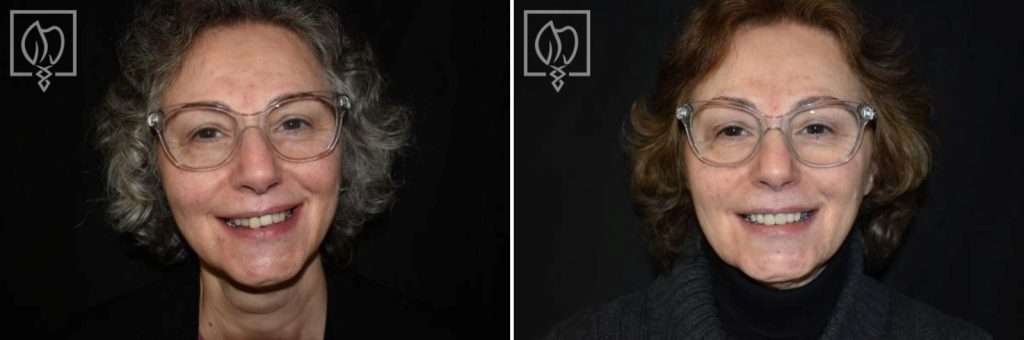
 Temporary Crowns Restore Patient's Smile in Just One Day with an Immediate Smile Makeover
Her dental implant looked artificial in her mouth and was impacting her smile. She had been very unhappy with her unsightly smile line and was beco...
 Complex
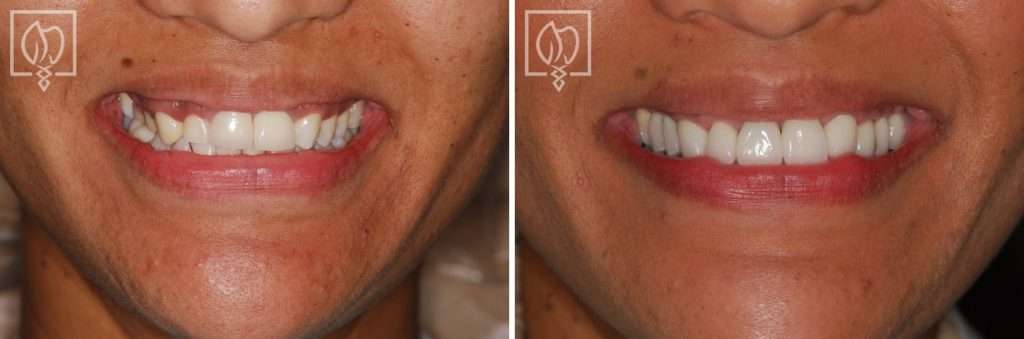
 Multi-Faceted Treatment for Patient Unhappy With Her Artificial-Looking Crowns, Teeth and Gums
Many patients come to Elite Prosthetic Dentistry unhappy with the appearance of their smile. A particular patient who sought our help was very unha...
 Standard
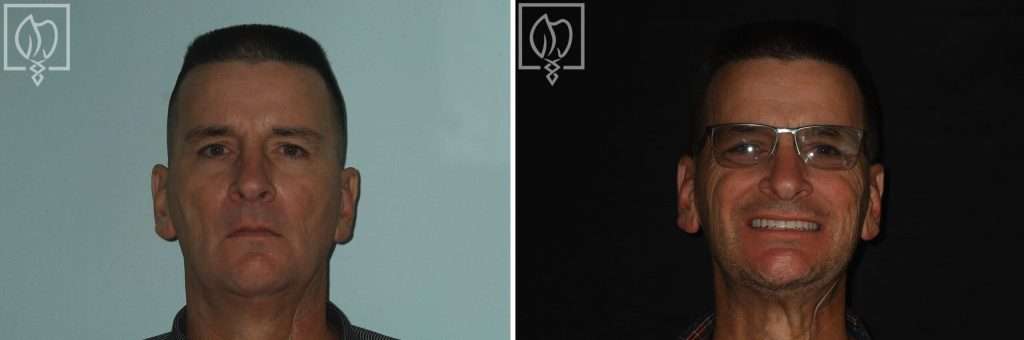
 Treating Kevin’s Collapsed Bite with a Complete Smile Makeover with New Dentures
Kevin came to us very dissatisfied with his existing condition. He looked much older than his age because his bite was collapsed and no one could r...
Related Articles
Deepen your knowledge with additional insights on this topic.
Rejuvenating a Ruined Implant Site Having Severely Damaged Bone
Even after a failed implant and significant bone loss, it is often possible to rebuild the ridge and restore a healthy foundation for a new implant.
If a Single Front Tooth is Replaced with an Implant, can it Look Natural?
A single front tooth implant can look completely natural with precision placement, custom abutments, and hand-crafted porcelain crowns. Washington, DC.
What is Precision Implant Placement (PIP)?
Learn what Precision Implant Placement (PIP) is and how meticulous planning ensures optimal implant positioning for long-lasting results in Washington, DC.
Getting Here from Foxhall
Elite Prosthetic Dentistry is conveniently located near Foxhall, DC.
Drive north on Foxhall Road NW to MacArthur Boulevard, continuing to our Friendship Heights office.
Address:
4400 Jenifer Street NW, Suite 220
Washington, DC 20015
Phone: (202) 244-2101
Schedule ConsultationSchedule Your Consultation from Foxhall
Foxhall residents trust Dr. Gerald Marlin for precision dental care. With 3,900+ implants placed and 40+ years of experience, your smile is in expert hands.