
Why Is Bone Preservation for Dental Implants Important?
If you’re missing one, several, or all of your natural teeth, you may qualify for dental implants. Unlike other tooth restoration options, dental implants replace both your natural tooth root and your missing tooth. The result is a strong, natural-looking tooth replacement that can last for life with proper care.
To qualify for dental implants, you must have enough bone in your jaw. When you lose a tooth, the bone that helped hold that tooth in place will naturally deteriorate. In fact, most bone loss happens during the first six months after tooth loss [1]. The longer you wait to replace the tooth, the more the bone will deteriorate.
Fortunately, bone preservation protects against bone loss and significantly strengthens your follow-on dental implant restoration. Our extensive expertise with bone grafting contributes to our very high success rate with implant surgery and restoration at Elite Prosthetic Dentistry (>97% after 20 years).
What Is Bone Preservation?
When you lose a tooth or need a tooth removed due to injury, decay, or even impaction, such as with wisdom teeth, the space where the tooth used to be in your jaw remains. This space, or the tooth socket, may heal improperly if bone preservation is not done. The socket can essentially collapse, which can compromise the quality of bone in that area.
Bone preservation is when Dr. Marlin reintroduces a small amount of bone into the empty socket after a tooth extraction before sealing the wound. This process helps preserve the socket and the bone quality for future restorations [2]. With bone preservation, it’s much easier to place a dental implant once the area heals.
You can maintain the bone that surrounded your tooth root and help prevent teeth from shifting into the empty space after tooth extraction with bone preservation followed by an implant restoration. Most importantly, this process greatly strengthens restoring your smile with dental implants.
Bone Density Matters When Placing a Dental Implant
Dental implants with our practice have an impressive success rate of over 97%, lasting a minimum of 20 years for patients at Elite Prosthetic Dentistry, even though the national average for dental implant restoration success over the same time period is only 83.4% [3]. However, in order for dental implants to be properly placed and last for decades with proper care, you need to have enough bone in your jaw [4].
Since dental implants allow you to bite, chew, and essentially have all the functions of a natural tooth, they must be secure in your jaw. To correctly place a dental implant for successful healing and fusion with your natural jawbone, enough bone with good density must initially exist in the area.
People who have been missing their natural teeth for months or years have reduced bone in the area where tooth loss occurred, requiring a bone graft to rebuild the implant site for solid support.
Bone grafting has a very high success rate, and this extra step is often well worth it for patients to build up healthy bone so they can get a dental implant [5]. Without adequate bone, your restoration options are limited.
Since dental implants mimic the nature of your tooth roots to stimulate the bone in your jaw, they help maintain healthy bone over your lifetime, which can prevent the sagging or sunken facial appearance that can result from missing teeth.
How to Preserve Your Bone for a Successful Implant Placement
The best way to preserve your bone for a dental implant is to ensure that the professional who extracts your tooth does a bone preservation procedure, also called alveolar ridge preservation. By filling the tooth socket with bone and allowing it to heal, you can ensure you have a healthy space for a dental implant.
Even if you don’t have enough bone in your jaw to initially support a dental implant, you may qualify for a bone graft to restore the bone in your jaw so you can have an implant successfully placed to restore your smile. The most important thing you can do is not wait to restore your tooth - the sooner you pursue restoration options, the more success you will have.
Contact Elite Prosthetic Dentistry today to discover more about your smile restoration options for bone grafting, dental implants, and bone preservation with Dr. Marlin. Call us at (202) 244- 2101 or complete our contact form online.
Sources:
Related Case Studies
Explore similar cases demonstrating our expertise in advanced prosthetic dentistry.
 Complex
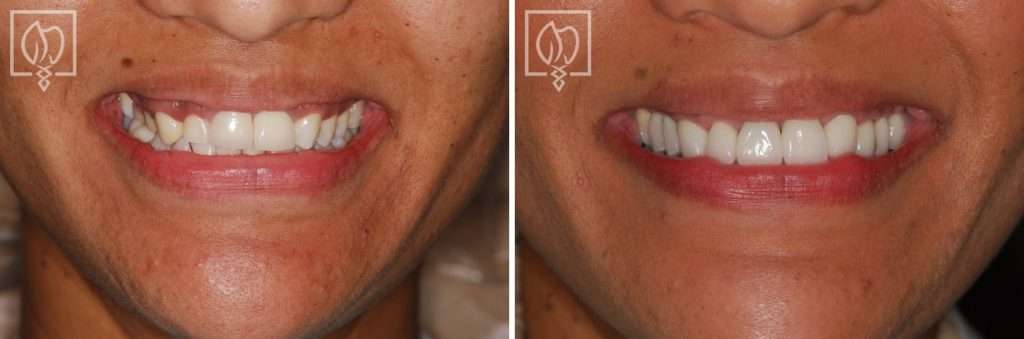
 Temporary Crowns Restore Patient's Smile in Just One Day with an Immediate Smile Makeover
Her dental implant looked artificial in her mouth and was impacting her smile. She had been very unhappy with her unsightly smile line and was beco...
 Complex
 Multi-Faceted Treatment for Patient Unhappy With Her Artificial-Looking Crowns, Teeth and Gums
Many patients come to Elite Prosthetic Dentistry unhappy with the appearance of their smile. A particular patient who sought our help was very unha...
 Standard
 Treating Kevin’s Collapsed Bite with a Complete Smile Makeover with New Dentures
Kevin came to us very dissatisfied with his existing condition. He looked much older than his age because his bite was collapsed and no one could r...
Related Articles
Deepen your knowledge with additional insights on this topic.
Rejuvenating a Ruined Implant Site Having Severely Damaged Bone
Even after a failed implant and significant bone loss, it is often possible to rebuild the ridge and restore a healthy foundation for a new implant.
If a Single Front Tooth is Replaced with an Implant, can it Look Natural?
A single front tooth implant can look completely natural with precision placement, custom abutments, and hand-crafted porcelain crowns. Washington, DC.
What is Precision Implant Placement (PIP)?
Learn what Precision Implant Placement (PIP) is and how meticulous planning ensures optimal implant positioning for long-lasting results in Washington, DC.