
What Causes Failed Dental Implants Due to Bone Loss?
Dental implants offer a permanent and natural-looking alternative to dentures and have the potential to last for life. Although properly placed and cared for dental implants have a very high success rate, it is possible for failure to occur.
What causes failed dental implants due to bone loss? Here, we explore some common reasons causing bone loss leading to dental implant failure.
The Importance of Bone Quality in Dental Implant Success
To begin with, a dental implant consists of a titanium post surgically placed into the jawbone to provide a strong and stable foundation for a dental crown or prosthesis. The implant goes through a process called osseointegration, where it fuses with the surrounding bone over time, ensuring stability and long-term success.
With insufficient and/or poor quality bone, dental implants do not have the foundation necessary to properly integrate into the jaw and provide as strong and stable a restoration as possible [1]. If the patient initially lacks the proper bone, then a bone graft should have been done prior to implant placement to provide the ideal foundation. Unfortunately, the need for this preliminary bone graft has frequently not been diagnosed or the process was by-passed to perform “implant therapy” as rapidly as possible.
How Does an Implant Fail Due to Bone Loss?
Bone loss called peri-implantitis is the predominant cause of implant failure [2]. Although there is not yet a consensus on the exact point at which a dental implant can be considered failing, typically, it begins with peri-implant mucositis, a condition that involves inflammation and infection of the gum tissues surrounding the implant.
Peri-implant mucositis if untreated, will ultimately lead to bone deterioration around the implant (the peri-implantitis). It is diagnosed when the patient has bone loss up to the first thread from the implant platform, although it really begins when bone is lost around the top of the implant (before the threads). Elite Prosthetic Dentistry considers a dental implant to be failing when there is bone loss around the implant extending to the first thread.
Both Peri-implant mucositis and peri-implantitis (the actual bone loss) can be predestined if an implant is improperly placed, or an abutment and crown are fabricated with the wrong emergence profile (the proper contour of the abutment matching that of natural tooth at that site where it meets the gingiva. In short, expertise with implant surgery and restoration is key to implant longevity. Bone loss can also occur due to poor oral hygiene, bacterial infection, and excessive mechanical load on the implant. When left untreated, peri-implantitis will, eventually, cause bone deterioration and ultimately result in the failure of the dental implant.
Other Factors Contributing to Bone Loss and Dental Implant Failure
Not all failed dental implants are exclusively due to bone loss. In many cases, implant failure is the result of multiple factors, including, but not limited to [3]:
- Improper implant placement. Implant surgery is a complex procedure that requires great skill and precision. Surgical errors, such as improper implant placement or inadequate initial stability, can lead to implant failure.
- Gum disease. Dental implants are not immune to the effects of gum disease. Poor oral hygiene and untreated gum disease can lead to bacterial infection around the implant site, causing implant failure.
- Smoking. Smoking is known to impair the body’s ability to heal and can increase the risk of implant failure. Smoking can also contribute to infections and compromised bone health, two factors that threaten the integrity of dental implants.
- Health conditions. Certain systemic conditions, such as uncontrolled diabetes, autoimmune disorders, or radiation therapy in the head and neck area, may compromise the success of dental implant treatment.
Overall, the success of dental implants relies on various factors, including proper implant placement, meticulous surgical techniques, and post-operative care.
How to Prevent Bone Loss and Dental Implant Failure
To prevent implant failure resulting from bone loss, it is crucial to maintain good oral hygiene practices, including regular brushing, flossing, and routine dental check-ups.
Check-ups are crucial because they allow your dentist to ensure the health and integrity of your dental implants. It also gives them an opportunity to identify and address any issues, such as gum disease at an early stage, which can reduce the risk of implant failure and the need for restorative procedures.
Of course, taking good care of your health, eating a nutritious diet, and keeping up with your oral health can all help prevent bone loss and implant failure [4].
At Elite Prosthetic Dentistry, our patients rarely experience implant failure due to our strict treatment regimen and our patients’ adherence to our Hygiene protocol.
Restore Your Failing Implant for Long-Term Success With Elite Prosthetic Dentistry
If you are concerned about bone loss around your implant, do not wait to seek professional care. Dr. Marlin, Prosthodontist at Elite Prosthetic Dentistry, has decades of experience placing and restoring dental implants. He also has a very high success rate with repairing failing implants by detoxifying and bone grafting them back to a point of health (/dental-services/dental-implants/repairing-the-failing-implant/ ). Dr. Marlin can diagnose bone loss, if present, and help you restore your implant for a beautiful, natural-looking smile. Contact us today to schedule a consultation.
Sources:
Related Case Studies
Explore similar cases demonstrating our expertise in advanced prosthetic dentistry.
 Complex
 Temporary Crowns Restore Patient's Smile in Just One Day with an Immediate Smile Makeover
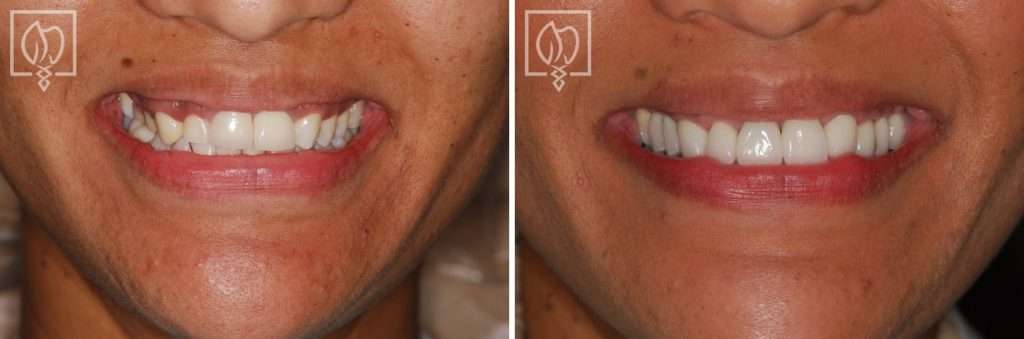
Her dental implant looked artificial in her mouth and was impacting her smile. She had been very unhappy with her unsightly smile line and was beco...
 Complex
 Multi-Faceted Treatment for Patient Unhappy With Her Artificial-Looking Crowns, Teeth and Gums
Many patients come to Elite Prosthetic Dentistry unhappy with the appearance of their smile. A particular patient who sought our help was very unha...
 Standard
 Treating Kevin’s Collapsed Bite with a Complete Smile Makeover with New Dentures
Kevin came to us very dissatisfied with his existing condition. He looked much older than his age because his bite was collapsed and no one could r...
Related Articles
Deepen your knowledge with additional insights on this topic.
Rejuvenating a Ruined Implant Site Having Severely Damaged Bone
Even after a failed implant and significant bone loss, it is often possible to rebuild the ridge and restore a healthy foundation for a new implant.
If a Single Front Tooth is Replaced with an Implant, can it Look Natural?
A single front tooth implant can look completely natural with precision placement, custom abutments, and hand-crafted porcelain crowns. Washington, DC.
What is Precision Implant Placement (PIP)?
Learn what Precision Implant Placement (PIP) is and how meticulous planning ensures optimal implant positioning for long-lasting results in Washington, DC.