
What are Bar Attachment Denture Dental Implants?
Understanding Bar Attachment Dentures: A Comprehensive Overview
Bar attachment dentures represent an innovative solution for patients who have experienced significant tooth loss and require a removable prosthesis that functions with greater stability and retention than traditional dentures. If you have questions about bar attachment dentures and how they might benefit your specific situation, you are certainly not alone. Dr. Gerald Marlin and our team at Elite Prosthetic Dentistry provide comprehensive consultation and treatment planning for these advanced restorations.
What Is a Bar Attachment Denture?
A bar attachment denture, also called an implant-retained overdenture with a bar attachment system, is a removable denture that is supported and retained by dental implants through a specialized connector system. Unlike a traditional complete denture that relies solely on suction and friction against the tissues of the jaw for retention, a bar attachment denture is mechanically attached to implants, providing superior stability, retention, and functional support.
The restoration consists of two primary components: the dental implants themselves, which are surgically placed in the jawbone, and the denture base with attached retention mechanisms that snap onto or clip around a bar structure connecting the implants. This combination allows the denture to be removed by the patient for cleaning while remaining far more stable during function than conventional dentures.
How Bar Attachment Systems Work
The bar in a bar attachment denture is typically a surgical-grade metal framework that is connected to multiple implants and positioned above the tissues of the jawbone. The denture base contains corresponding attachment mechanisms, often small clips or retentive elements that engage the bar. When you insert the denture, these mechanisms snap onto the bar, securing the denture in place with a secure mechanical connection.
The most commonly used bar attachment systems include the Hader bar, the ERA attachment system, and various other proprietary systems designed to optimize retention while allowing for proper denture insertion and removal. The specific system recommended for your case depends on factors such as implant positioning, your manual dexterity, and your specific functional requirements.
Advantages of Bar Attachment Dentures
Bar attachment dentures offer numerous advantages over conventional complete dentures, particularly for patients who have sufficient bone volume to support multiple implants.
Superior Retention and Stability: The mechanical attachment to implants dramatically improves retention compared to traditional dentures, which can shift or lift during speaking, chewing, or laughing. This enhanced stability allows for more confident function and improved quality of life.
Improved Chewing Function: With secure attachment to implants, the denture remains stable during mastication, allowing patients to chew a wider variety of foods with greater efficiency and without the discomfort of movement or shifting.
Reduced Bone Loss: The implants help preserve the remaining jawbone by directing forces through the implant posts rather than putting direct pressure on the ridge beneath the denture. This can slow the progressive bone resorption that is inevitable with conventional dentures.
Better Speech: Denture stability improves articulation and reduces the need for adjustment or conscious control during speech. Many patients notice that their speech is clearer and more natural with bar attachment dentures than with conventional dentures.
Easier Cleaning: Because bar attachment dentures are removable, you can clean all surfaces thoroughly, reducing the risk of tissue irritation and improving long-term oral health.
Improved Eating Confidence: Many patients with conventional dentures limit their diet to soft foods due to instability. Bar attachment dentures allow for a much wider range of food choices and eating experiences.
The Treatment Process
Creating a bar attachment denture requires careful planning and coordination between surgical placement and prosthodontic design. The process typically involves several phases.
Initial Evaluation and Planning: Comprehensive examination, including radiographic imaging and bone assessment, determines if you have sufficient bone volume for implant placement. Three-dimensional imaging helps us plan precise implant positioning for optimal bar design and retention.
Implant Surgery: Multiple implants, typically four to six depending on your case, are surgically placed in the anterior region of the jaw. The implants are allowed to integrate with the bone, a process called osseointegration, which typically requires three to six months.
Abutment and Bar Fabrication: Once osseointegration is complete, custom abutments are fabricated and the bar structure is created. This framework must be precisely designed to fit your anatomy and allow for optimal denture attachment.
Denture Fabrication: The denture base is fabricated with integrated attachment mechanisms that will engage the bar. The vertical dimension, occlusion, and esthetics are carefully established to provide optimal function and appearance.
Delivery and Adjustment: The completed restoration is delivered and adjusted to ensure proper retention, comfortable fit, and correct occlusal contacts.
Follow-up Care: Regular professional appointments monitor the health of the supporting tissues, the function of the attachments, and the overall success of the restoration.
Maintenance and Care
Maintaining a bar attachment denture requires consistent attention to both the denture itself and the supporting implants. Daily removal and thorough cleaning of all surfaces is essential. The attachment mechanisms must be inspected regularly to ensure they continue to provide appropriate retention as they experience normal wear.
Professional cleaning appointments help maintain the health of tissues around the implants. Dr. Marlin and his team monitor your bar attachment denture through regular checkups, making adjustments as needed and ensuring long-term success of this sophisticated restoration.
Is a Bar Attachment Denture Right for You?
Bar attachment dentures are not appropriate for all patients, but they can be transformative for those with sufficient bone volume and the desire for improved prosthetic stability. Factors such as your bone volume, implant positioning, manual dexterity, and specific functional needs influence whether this treatment is ideal for your situation.
At Elite Prosthetic Dentistry in Washington DC and Bethesda, Dr. Gerald Marlin provides thorough evaluation and clear discussion of all options. With over 40 years of implant experience and nearly 4000 implants placed, Dr. Marlin has the expertise to help you determine whether a bar attachment denture is the optimal solution for your needs. Contact our office today to discuss your options for advanced implant-supported prosthetics.
Related Case Studies
Explore similar cases demonstrating our expertise in advanced prosthetic dentistry.
 Complex
 Temporary Crowns Restore Patient's Smile in Just One Day with an Immediate Smile Makeover
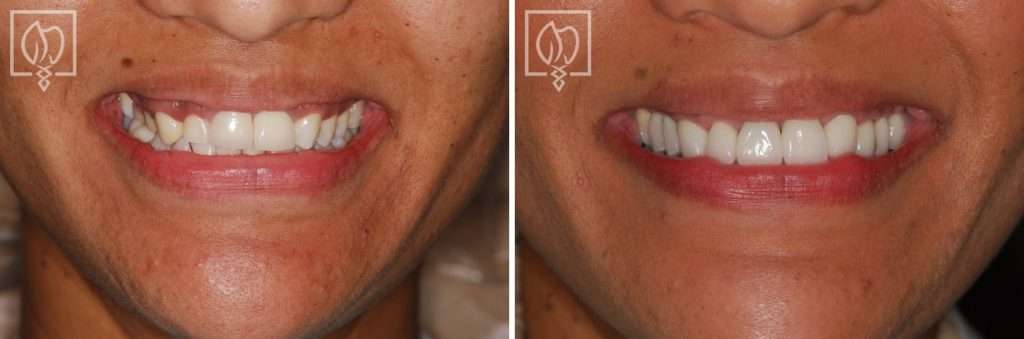
Her dental implant looked artificial in her mouth and was impacting her smile. She had been very unhappy with her unsightly smile line and was beco...
 Complex
 Multi-Faceted Treatment for Patient Unhappy With Her Artificial-Looking Crowns, Teeth and Gums
Many patients come to Elite Prosthetic Dentistry unhappy with the appearance of their smile. A particular patient who sought our help was very unha...
 Standard
 Treating Kevin’s Collapsed Bite with a Complete Smile Makeover with New Dentures
Kevin came to us very dissatisfied with his existing condition. He looked much older than his age because his bite was collapsed and no one could r...
Related Articles
Deepen your knowledge with additional insights on this topic.
How is the Gummy Smile Fixed?
Dr. Marlin reshapes gum tissue and fabricates custom crowns to correct gummy smiles, creating a balanced and confident smile in Washington, DC.
Will Shifting Teeth Needing Splinting Look Individual? | Dr. Gerald Marlin
Splinted crowns stabilize shifting teeth while maintaining the appearance of individual natural teeth. Case study from Washington, DC prosthodontist.
Did Zoom Meetings Make You Unhappy with Your Smile?
Video calls made many people more aware of their smile. Explore cosmetic dentistry options to transform your confidence in Washington, DC.