
Suffering from TMJ? Understand How Your Dentist is Best Positioned to Treat Your TMJ
Why Your Dentist Is Your Best Resource for TMJ Treatment
If you suffer from TMJ disorder, including symptoms such as jaw pain, headaches, and a characteristic clicking or popping jaw, your dentist can be best positioned to effectively treat this condition. While many healthcare providers may encounter TMJ patients, it is the prosthodontist or dentist who specializes in bite mechanics and occlusion who truly understands the underlying causes and most effective solutions. Dr. Gerald Marlin, a prosthodontist with over 40 years of clinical experience and more than 3,900 dental implants placed, brings this specialized expertise to patients throughout the Washington DC and Bethesda Chevy Chase area.
Understanding Why Dentists Specialize in TMJ
The temporomandibular joint is intimately connected to every aspect of dental function and bite mechanics. When you seek treatment for TMJ disorder, you need a provider who understands not just the joint itself, but how it relates to your teeth, bite alignment, chewing function, and overall occlusion. This is where dentistry’s unique training becomes invaluable.
Dentists spend years studying occlusion, which refers to how your upper and lower teeth come together. This isn’t a simple process. Your bite involves multiple positions and movements, each with specific biomechanical requirements. The centric relation, or the most retruded position of the mandible when the muscles are relaxed, differs from centric occlusion, where your teeth make maximum contact. Your jaw also makes lateral movements, protrusive movements, and functional movements during chewing. A prosthodontist understands all of these relationships intimately because proper bite mechanics are central to everything we do.
When these bite relationships are disrupted, the consequences ripple throughout the system. Teeth may shift, muscles may develop compensation patterns, and the temporomandibular joints may experience abnormal forces. A dentist can identify these discrepancies through clinical examination and diagnostic testing in ways that other healthcare providers cannot.
The Diagnostic Advantage Dentists Possess
Your dentist has access to specific diagnostic tools and clinical methods for evaluating TMJ dysfunction. Through detailed intraoral examination, dentists can assess your bite relationship in multiple positions. We can feel for joint sounds during palpation, evaluate the range of motion of your mandible, check for muscle tenderness, and observe your occlusal plane alignment. Many dental offices have advanced imaging capabilities, including cone beam computed tomography, that provides detailed three-dimensional views of the joints and associated structures.
Dentists also have the unique ability to examine your teeth for wear patterns that reveal your bite mechanics. If you grind your teeth, the pattern and location of wear on specific teeth tells us exactly how your jaw is moving and where abnormal forces are concentrated. Flat-topped cusps, worn edges, or asymmetrical wear patterns all provide diagnostic clues. Fractured or chipped teeth often result from TMJ dysfunction and abnormal bite forces.
Additionally, we can assess your periodontal health, which is frequently affected by bite trauma in TMJ patients. Excessive forces on certain teeth due to poor bite relationships can cause bone loss and periodontal disease that is localized to those specific areas. Identifying and treating the underlying bite problem is essential to stabilizing the periodontal disease.
Comprehensive Treatment Planning
When you have TMJ dysfunction, the problem rarely involves the joint alone. The entire system of teeth, supporting structures, muscles, and joints must be evaluated and treated as an integrated unit. This is where prosthodontic training proves most valuable. A prosthodontist can design a comprehensive treatment plan that may include one or more of the following components.
An occlusal appliance or bite guard can be carefully fabricated to position your jaw in a more physiologically sound relationship. This device relieves muscle tension and joint stress by correcting the bite interference that initiated the dysfunction.
Bite correction through selective grinding, called occlusal equilibration, can eliminate premature contacts and deflecting cusps that are forcing your jaw into an abnormal position. Small adjustments to key teeth can sometimes result in dramatic improvement in symptoms.
For patients with significant bite problems, orthodontic treatment may be recommended to improve the overall relationship of your upper and lower teeth. Modern orthodontics, particularly in combination with other treatments, can achieve long-term solutions.
Prosthodontic rehabilitation may involve replacing missing teeth, restoring worn or damaged teeth, or correcting tooth position through crowns or veneers. If your TMJ dysfunction has resulted in significant dental damage, comprehensive restoration by a skilled prosthodontist ensures that your teeth are restored in a way that supports optimal jaw function.
Why Specialty Training Matters
Dr. Marlin’s four decades of experience treating complex bite and occlusion cases has given him the expertise to recognize subtle patterns and relationships that others might miss. His success with thousands of implant cases has deepened his understanding of occlusion, because dental implants demand precise bite relationships to survive and function long-term. This knowledge transfers directly to diagnosing and treating TMJ disorder.
A prosthodontist’s training is specifically focused on restoring optimal function and bite mechanics. Whether you need a simple bite adjustment or comprehensive restoration, this specialized knowledge means better outcomes for TMJ patients.
If you are experiencing symptoms of TMJ disorder, schedule a consultation with Dr. Marlin at Elite Prosthetic Dentistry. Proper diagnosis and treatment from a dentist with specialized expertise can relieve your pain and restore your quality of life.
Related Case Studies
Explore similar cases demonstrating our expertise in advanced prosthetic dentistry.
 Complex
 Temporary Crowns Restore Patient's Smile in Just One Day with an Immediate Smile Makeover
Her dental implant looked artificial in her mouth and was impacting her smile. She had been very unhappy with her unsightly smile line and was beco...
 Complex
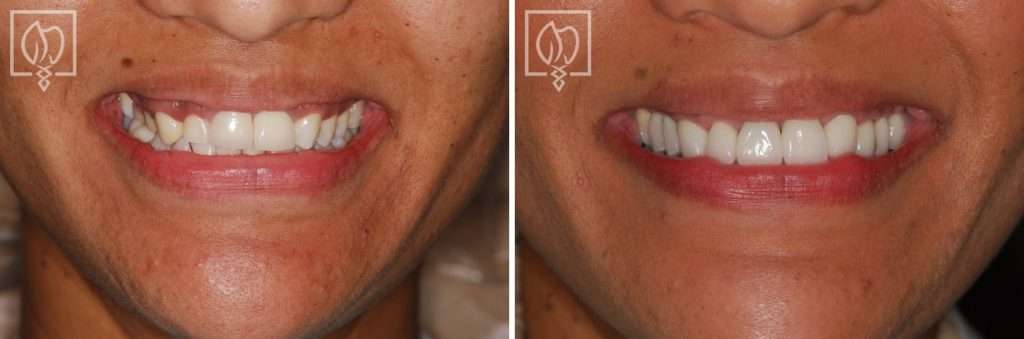
 Multi-Faceted Treatment for Patient Unhappy With Her Artificial-Looking Crowns, Teeth and Gums
Many patients come to Elite Prosthetic Dentistry unhappy with the appearance of their smile. A particular patient who sought our help was very unha...
 Standard
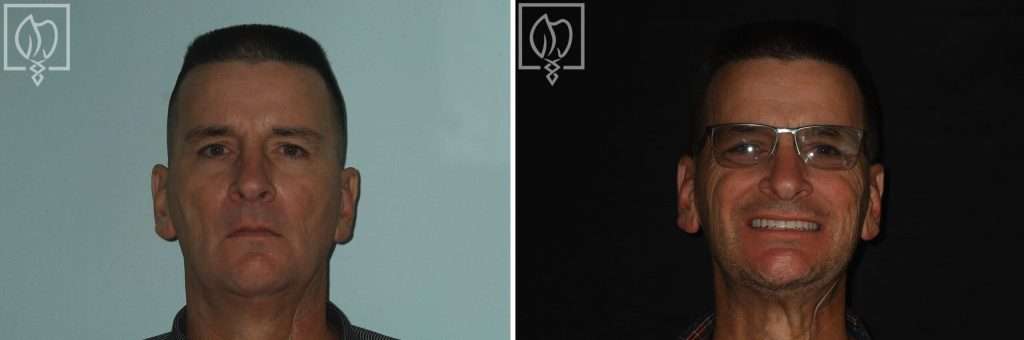
 Treating Kevin’s Collapsed Bite with a Complete Smile Makeover with New Dentures
Kevin came to us very dissatisfied with his existing condition. He looked much older than his age because his bite was collapsed and no one could r...
Related Articles
Deepen your knowledge with additional insights on this topic.
How is the Gummy Smile Fixed?
Dr. Marlin reshapes gum tissue and fabricates custom crowns to correct gummy smiles, creating a balanced and confident smile in Washington, DC.
Will Shifting Teeth Needing Splinting Look Individual? | Dr. Gerald Marlin
Splinted crowns stabilize shifting teeth while maintaining the appearance of individual natural teeth. Case study from Washington, DC prosthodontist.
Did Zoom Meetings Make You Unhappy with Your Smile?
Video calls made many people more aware of their smile. Explore cosmetic dentistry options to transform your confidence in Washington, DC.