
Rejuvenating a Ruined Implant Site Having Severely Damaged Bone
Even after a failed implant and significant bone loss, it is often possible to rebuild the ridge and restore a healthy foundation for a new implant. The keys are thorough infection control, biologically sound bone augmentation with growth factors, and precise CBCT based planning for the future implant position.
From Destruction to Rejuvenation
Mr. O arrived with a severely compromised ridge. A previous implant had been inserted with a perforation that led to a large infection and further bone breakdown after the implant was removed. Another implant was about to be placed into the damaged site without first rebuilding the bone, which would have risked massive reinfection and potentially rendered the area inoperable for any future implant.
Our approach:
- Performed debridement under oral sedation to remove all infected tissue and contaminants.
- Augmented the ridge using bone particles combined with a growth factor to reestablish the proper width and density.
- Used CBCT based virtual planning to determine the prosthetically ideal implant position before the placement stage.
The implant site was converted from a hopeless situation into a healthy, implant ready ridge with a very good prognosis. With the width and density restored, the final result appears natural and stable.
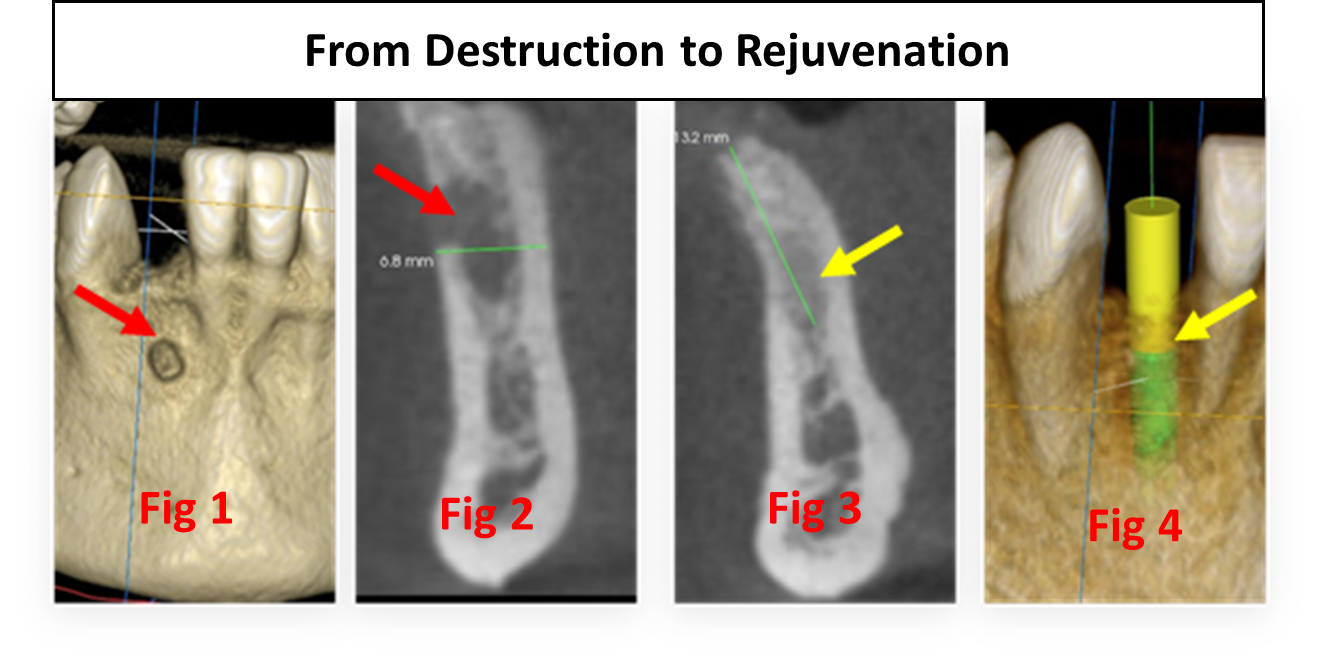
Composite image summarizing the rejuvenation of a ruined implant site with severely damaged bone
Why Preplanning and Guided Placement Matter
- Infection control first: placing an implant into an infected site risks reinfection and further bone loss.
- Biologic rebuild: grafting with growth factors can restore ridge width and density for long term stability.
- Prosthetic driven planning: CBCT guidance helps position the implant ideally for the final crown and gum architecture.
Frequently Asked Questions
Can a ruined implant site be rebuilt?
Yes. After thorough debridement, ridge augmentation with biologics can restore bone for a predictable implant.
Why is CBCT planning important?
It maps the ideal implant position before surgery and helps ensure precise, prosthetically driven placement.
What happens if an implant is placed without rebuilding the bone?
There is a significant risk of reinfection and additional bone loss, which may eliminate future implant options.
What materials are used in the graft?
We use bone particles with a growth factor to rebuild width and density for long term stability.
Additional Case Images
Extra views from this case for readers who want more clinical detail. These are not the primary figure set.
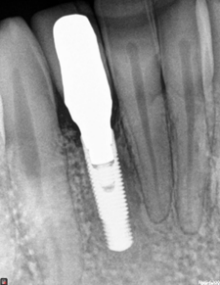
Additional view
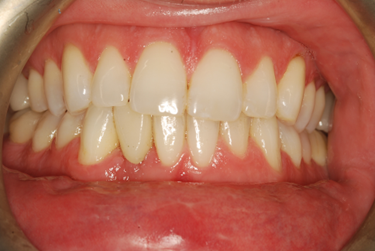
Additional view
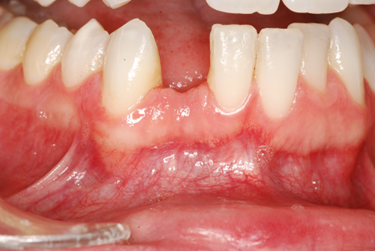
Additional view
Related Case Studies
Explore similar cases demonstrating our expertise in advanced prosthetic dentistry.
 Complex
 Temporary Crowns Restore Patient's Smile in Just One Day with an Immediate Smile Makeover
Her dental implant looked artificial in her mouth and was impacting her smile. She had been very unhappy with her unsightly smile line and was beco...
 Complex
 Multi-Faceted Treatment for Patient Unhappy With Her Artificial-Looking Crowns, Teeth and Gums
Many patients come to Elite Prosthetic Dentistry unhappy with the appearance of their smile. A particular patient who sought our help was very unha...
 Standard
 Treating Kevin’s Collapsed Bite with a Complete Smile Makeover with New Dentures
Kevin came to us very dissatisfied with his existing condition. He looked much older than his age because his bite was collapsed and no one could r...
Related Articles
Deepen your knowledge with additional insights on this topic.
Rejuvenating a Ruined Implant Site Having Severely Damaged Bone
Even after a failed implant and significant bone loss, it is often possible to rebuild the ridge and restore a healthy foundation for a new implant.
If a Single Front Tooth is Replaced with an Implant, can it Look Natural?
A single front tooth implant can look completely natural with precision placement, custom abutments, and hand-crafted porcelain crowns. Washington, DC.
What is Precision Implant Placement (PIP)?
Learn what Precision Implant Placement (PIP) is and how meticulous planning ensures optimal implant positioning for long-lasting results in Washington, DC.