
Infection Control
The Critical Role of Infection Control in Dentistry
Infection control is not simply a regulatory requirement or an afterthought in dental practice. It is a fundamental principle that protects both patients and clinical staff from serious disease transmission and postoperative complications. At Elite Prosthetic Dentistry, infection control has been a cornerstone of our practice since 1985, when we became one of the first offices in Washington, DC to incorporate autoclavable, sterilized hand pieces into our clinical protocols. This long-standing commitment reflects our understanding that rigorous infection control directly translates to better patient outcomes and safer clinical environments.
The oral cavity presents unique challenges for infection control. The mouth contains hundreds of bacterial species, some benign and others potentially pathogenic. During dental procedures, we create open wounds and breach the protective barriers of skin and mucous membranes. Without comprehensive infection control measures, pathogenic organisms from one patient can be transmitted to another, or environmental contaminants can contaminate sterile surgical fields. Additionally, immunocompromised patients, those with specific medical conditions, and individuals taking certain medications are at elevated risk for developing postoperative infections that can lead to serious complications.
Federal Guidelines and Standards We Follow
Infection control in our practice is guided by evidence-based recommendations from multiple federal agencies: the Occupational Safety and Health Administration (OSHA), the Environmental Protection Agency (EPA), and the Centers for Disease Control and Prevention (CDC). These agencies continuously review scientific literature and clinical data to establish standards that minimize disease transmission in healthcare settings. Rather than viewing these requirements as burdensome, we embrace them as the best practices that protect our patients and team members.
OSHA standards address occupational exposure to bloodborne pathogens, protecting our clinical staff from direct exposure to blood and body fluids. The EPA oversees the safe use and disposal of disinfectants and chemical sterilants used throughout our office. CDC guidelines provide detailed recommendations for hand hygiene, personal protective equipment, sterilization methods, and surface disinfection. Our office maintains thorough documentation of our adherence to these standards and regularly reviews our protocols to ensure we remain current with any evolving recommendations.
Personal Protective Equipment and Hand Hygiene
Every clinical team member uses appropriate personal protective equipment during patient care. This includes latex-free gloves, which we employ because latex allergies are increasingly common among both patients and healthcare workers. Our team changes gloves between patients and wears fresh gloves for each new patient encounter. We use protective face masks rated for the level of aerosol generation we anticipate from each procedure. For surgical cases, particularly dental implant placement or bone grafting procedures, our surgical team wears full-face protection including face shields or protective eyewear in addition to masks.
Hand hygiene is foundational to all infection control efforts. All clinical staff perform thorough hand washing with disinfectant hand soap before beginning the day, before putting on gloves, after removing gloves, and after any potential exposure to blood or body fluids. This simple but critical practice removes transient pathogens and significantly reduces the risk of cross-contamination.
Environmental Surface Disinfection
Between each patient, all clinical surfaces that may have been contacted by gloved hands, patient blood or saliva, or instruments are thoroughly disinfected using EPA-approved disinfectants. We identify high-touch surfaces in each treatment area and maintain systematic protocols to ensure none are missed. The operatory chair, handpiece stands, light handles, and all other surfaces are meticulously cleaned and disinfected. For high-risk cases or when visible contamination is present, we use hospital-grade disinfectants with documented efficacy against a broad spectrum of pathogens.
Our treatment rooms are designed with this cleaning protocol in mind. Surfaces are smooth and non-porous whenever possible, allowing for thorough disinfection without harboring microorganisms in cracks or crevices.
Sterilization of Instruments and Handpieces
The sterilization of dental instruments and handpieces is among the most critical components of our infection control program. Every instrument that enters a patient’s mouth must be sterilized before use, with no exceptions. This includes high-speed and low-speed handpieces, prophylaxis angles, scalers, explorers, mirrors, and all hand instruments used in clinical care.
We employ high-pressure steam autoclaves, which use steam, heat, and pressure to kill all bacteria, viruses, and spores. Our sterilization protocols follow validated parameters for time, temperature, and pressure specific to each item being sterilized. Items are wrapped appropriately to maintain sterility after sterilization and before use. We maintain detailed sterilization logs documenting each load, including the date, time, items sterilized, operator, and any special parameters used.
Our long-standing commitment to handpiece sterilization dates back to our adoption of autoclavable handpieces in 1985. At that time, many dental offices only disinfected handpieces without sterilizing them, which proved inadequate for true pathogen elimination. By choosing to fully sterilize all handpieces between patients, we eliminated an important vector for disease transmission that persists in some practices today.
Disposable Materials and Barrier Techniques
Many items used in dental care are disposable and intended for single use only. Suction tips, air/water syringe tips, bib chains, and other patient contact items are used once and discarded. We never reuse disposable items, as this practice would compromise the safety provided by their design. For surgical cases, we use sterile pre-packaged instruments and disposable barriers on surgical sites to prevent contamination.
Rigorous Documentation and Staff Training
Every team member at Elite Prosthetic Dentistry receives ongoing training in infection control protocols. New staff members complete comprehensive orientation covering all aspects of our infection control program. Our team participates in continuing education to stay current with any updates to CDC, OSHA, or EPA guidelines. We maintain training records and periodically audit our actual practices against our written protocols to identify any areas for improvement.
Our commitment to infection control reflects our core value: providing your dental care in the safest, most professional manner possible. We are always available to discuss any aspect of our infection control regimen, because we believe informed patients are empowered patients. If you have questions about how we maintain the highest standards of sterilization and disinfection, we welcome the conversation.
Related Case Studies
Explore similar cases demonstrating our expertise in advanced prosthetic dentistry.
 Complex
 Temporary Crowns Restore Patient's Smile in Just One Day with an Immediate Smile Makeover
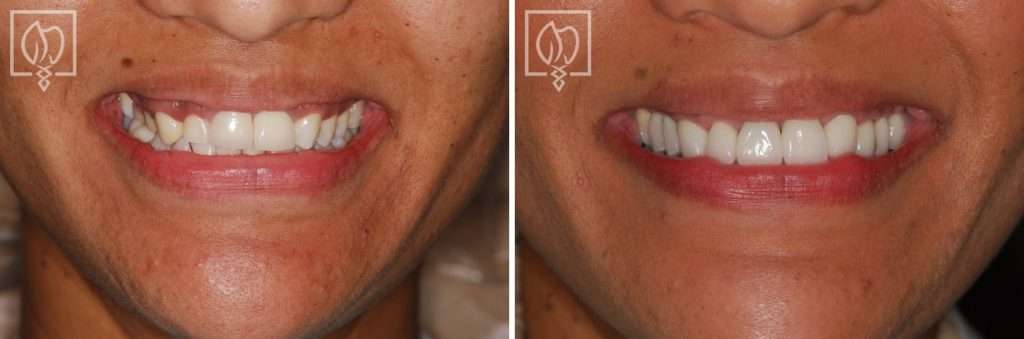
Her dental implant looked artificial in her mouth and was impacting her smile. She had been very unhappy with her unsightly smile line and was beco...
 Complex
 Multi-Faceted Treatment for Patient Unhappy With Her Artificial-Looking Crowns, Teeth and Gums
Many patients come to Elite Prosthetic Dentistry unhappy with the appearance of their smile. A particular patient who sought our help was very unha...
 Standard
 Treating Kevin’s Collapsed Bite with a Complete Smile Makeover with New Dentures
Kevin came to us very dissatisfied with his existing condition. He looked much older than his age because his bite was collapsed and no one could r...
Related Articles
Deepen your knowledge with additional insights on this topic.
How is the Gummy Smile Fixed?
Dr. Marlin reshapes gum tissue and fabricates custom crowns to correct gummy smiles, creating a balanced and confident smile in Washington, DC.
Will Shifting Teeth Needing Splinting Look Individual? | Dr. Gerald Marlin
Splinted crowns stabilize shifting teeth while maintaining the appearance of individual natural teeth. Case study from Washington, DC prosthodontist.
Did Zoom Meetings Make You Unhappy with Your Smile?
Video calls made many people more aware of their smile. Explore cosmetic dentistry options to transform your confidence in Washington, DC.