
Dental Implants 101
The Fundamentals of Dental Implant Treatment
Whether you are missing a single tooth, or at risk of losing many, dental implants may be an excellent solution for you. Dental implants have become an increasingly popular and preferred solution for missing or failing teeth, and for good reason. They offer numerous clinical and functional advantages over traditional tooth replacement options like bridges and removable partial dentures. Understanding the basics of implant treatment helps you determine whether this approach is right for your situation and what to expect during the treatment process.
What Is a Dental Implant?
Dental implants are high-tech replacements for natural tooth roots. When you lose a tooth, you lose both the visible crown and the root structure that supported it. A traditional bridge attempts to replace the crown alone, but it cannot replace the root function. A dental implant replaces the root by providing a permanent anchor for a replacement tooth.
The implant system consists of three main components: the implant itself, which is surgically placed in the jawbone; the abutment, which connects the implant to the restoration; and the crown, which is the visible replacement tooth.
The implant is a small screw made of titanium, a biocompatible metal. The titanium screw is threaded to increase the surface area in contact with bone, enhancing the stability of the implant when it integrates with bone. Once the implant is placed, bone cells grow directly on the titanium surface in a process called osseointegration, which creates a strong biological bond between the implant and your bone.
After osseointegration is complete, typically in three to six months, the abutment is placed on top of the implant. The abutment is a small connector piece that extends above the gum line. The crown is then attached to the abutment. The crown looks identical to a natural tooth and functions exactly like your natural tooth did before it was lost.
Many people report higher confidence and comfort after receiving their new tooth. The stability of the implant means they no longer worry about the tooth shifting or moving, and they can eat all their favorite foods without concern.
What’s So Great About Implants?
Dental implants offer numerous advantages over other methods of tooth replacement, which explains their growing popularity among patients seeking to restore missing teeth.
Longevity and Durability: The cool thing about implants is that if taken care of properly, they can last for life. Usually the only component that needs to be replaced, if anything at all, is the crown that sits on top of the implant. The implant itself is extremely durable. The other great thing about implants is that unlike natural teeth, they cannot decay. You still have to clean and maintain them like your other teeth, but no roots are any longer at risk of causing that tooth to fail. The implant cannot develop a cavity. The crown can wear out over many years, but the implant itself typically remains strong indefinitely.
Preservation of Bone: When a natural tooth is lost, the bone that supported the tooth root begins to resorb, or shrink away. This bone loss continues throughout the rest of your life if the missing tooth is not replaced with something that can transmit chewing forces to the bone. Dental implants transmit these forces directly to the bone, stimulating the bone to maintain its volume and density. This is a significant advantage over bridges or removable dentures, which cannot prevent bone loss.
Preservation of Adjacent Teeth: A traditional bridge requires the teeth adjacent to the missing tooth to be shaved down and crowned to support the bridge. This means that healthy tooth structure is permanently altered. With a dental implant, the adjacent teeth are left completely untouched. More of your own natural tooth structure is preserved, which is beneficial for your long-term oral health.
Superior Function: Implants function exactly like your natural teeth. There is no shifting, no need for adhesive, and no need to remove the tooth at meals or in social situations. This allows for confident eating, speaking, and smiling without worry.
Esthetic Excellence: Implant crowns can be designed to look indistinguishable from natural teeth. Custom shading and positioning create restorations that blend seamlessly with your existing dentition.
What Is the Surgical Process Like?
The process of implant treatment can be done either all at once, or in steps. This depends on the specific recommendations for your particular case and your individual needs. Understanding the phases of treatment helps you know what to expect.
Phase One, Tooth Extraction and Implant Placement: The first step is to remove the root of your natural tooth if it is still present. If there is not enough bone to place the implant, you may need bone grafting first. Bone grafting is a procedure to add bone to the jaw when insufficient bone volume exists.
Once adequate bone volume is confirmed, the implant is placed surgically in the position where the tooth root was or where the missing tooth needs to be replaced. The surgical procedure is typically done under local anesthesia in our office. The gum is then stitched closed and allowed to heal. This phase is relatively brief, often taking only one to two hours depending on the complexity.
Phase Two, Healing and Osseointegration: After implant placement, the implant must integrate with bone. This can take five to six months. During this time, the implant is protected from chewing forces. You may wear a temporary denture or partial denture, or you may go without the tooth temporarily.
Phase Three, Abutment and Crown Placement: Once osseointegration is complete, the next step is to reopen the gum and place the abutment on the implant. This is a minor surgical procedure. A temporary crown is placed so you can function and heal while your permanent crown is being fabricated in the laboratory.
Phase Four, Permanent Crown Delivery: You then return to our office to get your permanent crown attached to the abutment. At this point, you have your fully functional replacement tooth.
Accelerated Treatment: In some cases, all of these steps can be done in a single visit, but this depends on your specific situation. Dr. Marlin evaluates each case individually to determine what timeline is appropriate.
Caring for Your Implants
Once your implant is in place and healed, you care for it just like a natural tooth. Brush gently twice daily, floss around the implant crown daily, and maintain regular professional cleaning appointments. Avoid chewing on hard objects or using your teeth as tools, just as you would with natural teeth.
With proper care and professional monitoring, your implant should provide decades of reliable service.
Ready to Restore Your Smile?
If you have any questions about dental implants, or if you think you might be a good candidate for implant treatment, please call our office for more information. Dr. Marlin and our team would be glad to help you explore whether dental implants are the right solution for your missing teeth.
At Elite Prosthetic Dentistry in Washington DC and Bethesda, we have the expertise and technology to provide excellent implant treatment. Contact us today to schedule a consultation and take the first step toward restoring your smile.

Related Case Studies
Explore similar cases demonstrating our expertise in advanced prosthetic dentistry.
 Complex
 Temporary Crowns Restore Patient's Smile in Just One Day with an Immediate Smile Makeover
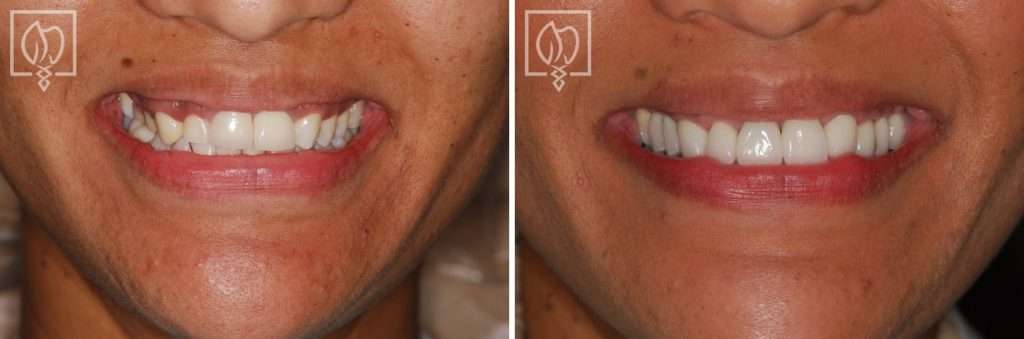
Her dental implant looked artificial in her mouth and was impacting her smile. She had been very unhappy with her unsightly smile line and was beco...
 Complex
 Multi-Faceted Treatment for Patient Unhappy With Her Artificial-Looking Crowns, Teeth and Gums
Many patients come to Elite Prosthetic Dentistry unhappy with the appearance of their smile. A particular patient who sought our help was very unha...
 Standard
 Treating Kevin’s Collapsed Bite with a Complete Smile Makeover with New Dentures
Kevin came to us very dissatisfied with his existing condition. He looked much older than his age because his bite was collapsed and no one could r...
Related Articles
Deepen your knowledge with additional insights on this topic.
How is the Gummy Smile Fixed?
Dr. Marlin reshapes gum tissue and fabricates custom crowns to correct gummy smiles, creating a balanced and confident smile in Washington, DC.
Will Shifting Teeth Needing Splinting Look Individual? | Dr. Gerald Marlin
Splinted crowns stabilize shifting teeth while maintaining the appearance of individual natural teeth. Case study from Washington, DC prosthodontist.
Did Zoom Meetings Make You Unhappy with Your Smile?
Video calls made many people more aware of their smile. Explore cosmetic dentistry options to transform your confidence in Washington, DC.