
Dental Implant Success
The Multi-Faceted Nature of Dental Implant Success
What do you use your teeth for? Eating, drinking, speaking, laughing, and countless other activities that form the foundation of daily life. When you experience tooth loss, all of these functions are affected to varying degrees. Missing teeth impact not only what you can eat and how you appear, but also your confidence, your ability to communicate clearly, and your overall quality of life. A very reliable and safe method for replacing missing teeth is dental implant treatment, which has revolutionized prosthodontics over the past three decades.
Dental implants provide superior longevity, function, and aesthetic outcomes compared to traditional bridges or removable partial dentures. However, implant success is not automatic. Multiple factors must align for an implant to achieve long-term success, and understanding these factors helps you optimize the outcomes of your treatment.
How Dental Implants Function
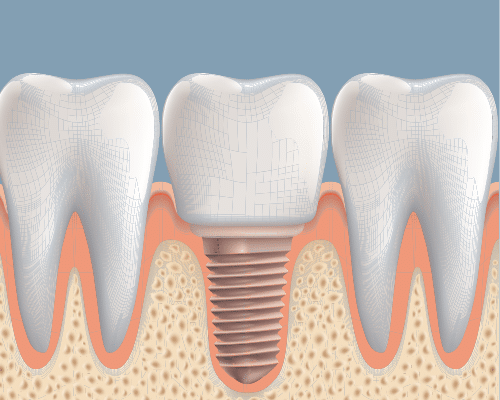
Dental implants permanently attach prosthetic teeth to small posts, or “roots,” that are embedded directly in the jawbone. These posts are made of titanium, a biocompatible metal that integrates with bone through a biological process called osseointegration. During this process, bone cells attach themselves directly to the titanium surface, essentially creating a fusion between the implant and the bone. This biological integration creates exceptional stability and strength, allowing the implant to function much like a natural tooth root.
The process of osseointegration typically requires three to six months. During this time, the implant is protected while bone grows directly on the titanium surface. Once osseointegration is complete, the implant is strong enough to support the crown, bridge, or denture that is attached to it.
Clinical Advantages of Dental Implants
Dental implants offer numerous advantages over other methods of tooth replacement:
Functional Restoration: Dental implants restore full chewing function. Unlike removable dentures, which can shift during eating, implants are fixed in place and function like natural teeth. This stability allows you to eat a full range of foods without concern for denture movement or discomfort.
Preservation of Jawbone: When teeth are lost, the underlying jawbone begins to resorb, or shrink away. This bone loss continues throughout life when the missing tooth is not replaced. Dental implants help prevent this bone loss by transmitting the forces of chewing directly to the bone, which stimulates the bone to maintain its mass and strength.
Structural Support for Adjacent Teeth: Unlike traditional bridges, which require the teeth adjacent to the missing tooth to be modified and crowned, dental implants do not affect neighboring teeth. More of your natural tooth structure is preserved, which is beneficial for long-term oral health.
Support of Facial Structures: The progressive bone loss that occurs with tooth loss causes facial height to decrease and facial appearance to age prematurely. By preserving bone mass, dental implants help maintain your facial support and appearance.
Elimination of Denture Inconvenience: For patients who wear removable partial dentures, implants eliminate the need to remove the denture at every meal or social occasion. They also eliminate the need for denture adhesives and avoid the embarrassment of denture movement or dislodgment.
The Factors That Determine Implant Success
While dental implants have predictable success rates in the range of 95 to 98 percent when properly placed and maintained, several factors influence whether an implant will succeed or fail in your specific case.
Adequate Bone Volume: Successful implant placement requires sufficient bone volume and bone quality to support the implant. If bone volume is insufficient, bone augmentation or grafting may be necessary before implant placement.
Overall Health Status: Certain systemic conditions can affect implant success. Uncontrolled diabetes, autoimmune conditions, and some medications can impair bone healing and osseointegration. Careful health screening before treatment helps identify potential concerns.
Smoking: Smoking significantly reduces implant success rates by impairing blood flow and bone healing. Patients who smoke should ideally quit or reduce smoking before and after implant placement.
Oral Hygiene: Excellent oral hygiene is essential for implant success. Just as natural teeth require good cleaning habits to prevent disease, implants require meticulous home care to prevent implant-related infections and bone loss.
Careful Surgical Placement: The position and angulation of the implant in the bone significantly affects long-term success. Improper placement can lead to bone loss, esthetic problems, and eventual failure. Dr. Marlin’s 40+ years of implant experience and over 3,900 implants placed ensures precise surgical positioning.
Quality Prosthodontic Design: After osseointegration is complete, the crown or denture attached to the implant must have proper occlusion and esthetics. Poor crown design can create excessive forces on the implant and surrounding bone, leading to early failure.
The Timeline for Implant Treatment
The procedure for dental implants can be relatively quick, and in some cases can be completed in a single day. However, the overall timeline for full treatment typically involves multiple phases:
Initial Evaluation: Comprehensive examination, radiographic imaging, and bone assessment to determine if you are a good candidate for implants.
Implant Placement Surgery: The surgical phase in which the implant is placed in the jawbone, typically an outpatient procedure.
Osseointegration Period: Three to six months for the implant to integrate with bone, during which the implant is typically protected under a temporary covering.
Abutment and Crown Placement: After osseointegration is confirmed, an abutment (connector piece) is placed on the implant, and the permanent crown is fabricated and attached.
Follow-Up Care: Regular professional appointments to monitor implant health and ensure continued success.
Living with Your Dental Implants
Your implants become part of you, so they eliminate the discomfort of removable dentures. They also prevent the embarrassment of removing dentures at every snack or meal, as well as the need for denture adhesives. Sliding dentures that make chewing difficult are replaced with stable, fixed teeth that function predictably.
Nearby teeth are not altered in order to support a dental implant, thus more of your own natural tooth structure is left intact. This preservation of natural tooth structure improves your long-term oral health and simplifies future treatment if the implant-supported crown ever needs replacement.
Durability and Longevity
Dental implants are very durable, lasting several decades when properly maintained. When implants are cared for meticulously, they can last for decades with proper care. The implant itself rarely fails after successful osseointegration, though the crown attached to the implant may eventually need replacement due to normal wear, esthetic preferences, or changes in adjacent teeth.
Don’t Miss Out
Missing teeth impact every aspect of your life, from eating to speaking to social confidence. Dental implants represent one of the most reliable and esthetic solutions for tooth replacement available in modern dentistry. At Elite Prosthetic Dentistry in Washington DC and Bethesda, we specialize in dental implant treatment. Dr. Marlin’s extensive experience ensures that your implants are placed with precision and fabricated with artistry to provide optimal function and appearance.
If you have missing teeth and want to restore your smile and your confidence, contact Prosthetic Dentistry of Washington D.C. today at 202-244-2101 to discuss your implant options and begin your journey to restored oral health.
Related Case Studies
Explore similar cases demonstrating our expertise in advanced prosthetic dentistry.
 Complex
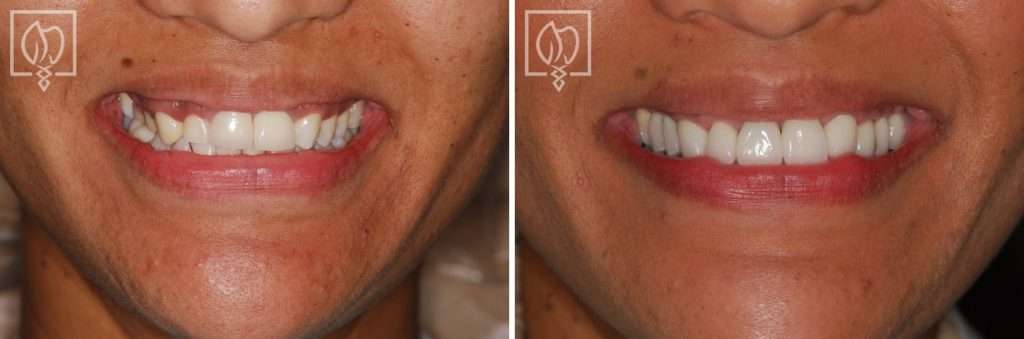
 Temporary Crowns Restore Patient's Smile in Just One Day with an Immediate Smile Makeover
Her dental implant looked artificial in her mouth and was impacting her smile. She had been very unhappy with her unsightly smile line and was beco...
 Complex
 Multi-Faceted Treatment for Patient Unhappy With Her Artificial-Looking Crowns, Teeth and Gums
Many patients come to Elite Prosthetic Dentistry unhappy with the appearance of their smile. A particular patient who sought our help was very unha...
 Standard
 Treating Kevin’s Collapsed Bite with a Complete Smile Makeover with New Dentures
Kevin came to us very dissatisfied with his existing condition. He looked much older than his age because his bite was collapsed and no one could r...
Related Articles
Deepen your knowledge with additional insights on this topic.
How is the Gummy Smile Fixed?
Dr. Marlin reshapes gum tissue and fabricates custom crowns to correct gummy smiles, creating a balanced and confident smile in Washington, DC.
Will Shifting Teeth Needing Splinting Look Individual? | Dr. Gerald Marlin
Splinted crowns stabilize shifting teeth while maintaining the appearance of individual natural teeth. Case study from Washington, DC prosthodontist.
Did Zoom Meetings Make You Unhappy with Your Smile?
Video calls made many people more aware of their smile. Explore cosmetic dentistry options to transform your confidence in Washington, DC.