
Atraumatic Dental Implant Surgery
Why Atraumatic Techniques Matter
At Prosthetic Dentistry of Washington, D.C. (located in the Washington, D.C.-Bethesda area), the vast majority of our implant patients tell us that they were pleasantly surprised that they only had to take ibuprofen (Advil, Motrin, etc.) after their surgery, and only for a short period of time. Why is that?
The answer lies in a sophisticated approach to implant surgery that minimizes trauma to your body. “Atraumatic” literally means without trauma. It’s a philosophy that considers how every decision during surgery affects your healing and comfort. From the incision size to the drilling technique to the way tissues are handled, every step is planned to reduce inflammation and damage.
Our Comprehensive Approach to Trauma Reduction
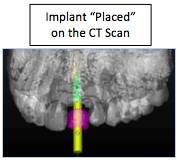
Dr. Marlin employs a specific drug regimen and a very specific surgical protocol that reduces swelling and tissue trauma. Every case involves the integral use of “guided surgery” by using custom surgical stents when inserting the implants. His extensive presurgical planning via a CT Scan (3D image) of your jaw allows Dr. Marlin to precisely plan the angle, depth, and location of each implant prior to the surgery as he is able to “place” them directly on the CT Scan. In many cases, he has the CT Scan software company create the surgical guide. This precise planning allows him to use a minimal flap design for surgical entry prior to actually placing the implant, which greatly reduces tissue trauma.
Rather than making a large opening in your gum tissue, minimal flap designs use smaller incisions that still provide Dr. Marlin with the visibility he needs while preserving your soft tissue. This tissue preservation is crucial for faster healing and less post-operative swelling. The premedication regimen, typically started before surgery, helps your body prepare for the procedure and manage inflammation more effectively.
As a result of our premedication regimen, Dr. Marlin’s planning of the implant precise placement, and the minimal tissue manipulation occurring during the surgery, the majority of our patients are impressed with how “easily” the procedure was performed and how little discomfort they experienced after the surgery. When you understand that sophisticated surgical planning leads to faster healing and less pain, you realize that implant surgery doesn’t have to be the frightening experience many people expect.
Related Case Studies
Explore similar cases demonstrating our expertise in advanced prosthetic dentistry.
 Complex
 Temporary Crowns Restore Patient's Smile in Just One Day with an Immediate Smile Makeover
Her dental implant looked artificial in her mouth and was impacting her smile. She had been very unhappy with her unsightly smile line and was beco...
 Complex
 Multi-Faceted Treatment for Patient Unhappy With Her Artificial-Looking Crowns, Teeth and Gums
Many patients come to Elite Prosthetic Dentistry unhappy with the appearance of their smile. A particular patient who sought our help was very unha...
 Standard
 Treating Kevin’s Collapsed Bite with a Complete Smile Makeover with New Dentures
Kevin came to us very dissatisfied with his existing condition. He looked much older than his age because his bite was collapsed and no one could r...
Related Articles
Deepen your knowledge with additional insights on this topic.
Rejuvenating a Ruined Implant Site Having Severely Damaged Bone
Even after a failed implant and significant bone loss, it is often possible to rebuild the ridge and restore a healthy foundation for a new implant.
If a Single Front Tooth is Replaced with an Implant, can it Look Natural?
A single front tooth implant can look completely natural with precision placement, custom abutments, and hand-crafted porcelain crowns. Washington, DC.
What is Precision Implant Placement (PIP)?
Learn what Precision Implant Placement (PIP) is and how meticulous planning ensures optimal implant positioning for long-lasting results in Washington, DC.