
Suffering from Severe Headaches? TMJ Could be a Cause & Dr. Marlin Can Help
Understanding the TMJ Connection to Headaches
Unbeknownst to many people, severe headaches can be directly related to temporomandibular joint dysfunction, commonly known as TMJ. This condition affects the joints and muscles that control jaw movement, and when dysfunction occurs, it can create a cascade of symptoms that extend far beyond the jaw itself. Many patients who experience frequent, debilitating headaches never consider their bite or jaw alignment as a potential culprit. At Elite Prosthetic Dentistry, we recognize this connection and have successfully treated numerous patients whose headaches resolved once their TMJ disorder was properly addressed.
The temporomandibular joints are among the most complex joints in the human body. These paired joints sit on either side of your face, just in front of your ears, and work in perfect coordination to allow you to open and close your mouth, chew, swallow, and speak. Each joint contains a disc of cartilage that acts as a shock absorber and facilitates smooth movement. When something disrupts this delicate system, whether through trauma, misalignment, or muscle tension, the resulting dysfunction can trigger pain signals that radiate throughout the head and neck.
How TMJ Dysfunction Causes Headaches
The connection between your jaw and your headaches is rooted in anatomy and biomechanics. The muscles of mastication, which include the masseter, temporalis, medial pterygoid, and lateral pterygoid muscles, are intimately involved in jaw movement. When the jaw is misaligned or the joints are not functioning optimally, these muscles work harder than they should, creating tension and fatigue. The temporalis muscle, in particular, covers much of the side and top of the head. When it becomes chronically tense from compensating for TMJ dysfunction, it directly contributes to tension-type headaches and migraines.
Additionally, the trigeminal nerve, which controls sensation and movement in the face and jaw, passes directly through the TMJ region. When joint dysfunction irritates or compresses this nerve, it can trigger pain that radiates upward into the head, temples, and even behind the eyes. This is why many TMJ patients report headaches that feel like they’re located at the temples or across the forehead, even though the problem originates in the jaw.
Poor bite alignment, or malocclusion, is another significant factor. When your upper and lower teeth do not come together correctly, your jaw muscles must work excessively to achieve a functional bite. This constant muscular effort creates hypertonicity and fatigue, which manifests as tension headaches that may be worse in the morning or late in the day.
Common Signs of TMJ-Related Headaches
If you experience frequent headaches along with any of the following symptoms, TMJ dysfunction may be the underlying cause. Listen for clicking, popping, or grinding sounds when you open your mouth or chew. Feel for tenderness in the jaw joints or muscles. Notice whether you clench or grind your teeth, particularly at night. Pay attention to difficulty opening your mouth fully or feeling that your bite has shifted. Some patients report ear pain or fullness, neck stiffness, or shoulder tension that accompanies their headaches.
TMJ-related headaches often have a distinctive pattern. They may be worse in the morning if you grind your teeth while sleeping, worse later in the day after chewing or talking extensively, or triggered by stress, which often causes people to clench their jaws unconsciously.
Dr. Marlin’s Approach to TMJ Treatment
Dr. Gerald Marlin, with over 40 years of experience in prosthodontics, brings a comprehensive understanding of occlusion and bite mechanics to TMJ treatment. Rather than simply masking the pain, Dr. Marlin’s approach focuses on identifying the underlying cause of your dysfunction and correcting it at its source. This may involve a thorough evaluation of your bite relationship, joint position, and muscle function.
Treatment options are tailored to each patient’s specific situation. Some patients benefit from a carefully designed occlusal appliance or bite guard that repositions the jaw to a more physiologically sound position, relieving muscle tension and joint stress. Others may require orthodontic correction to improve their bite relationship. For patients whose TMJ dysfunction has led to worn, compromised teeth, comprehensive prosthodontic rehabilitation may be indicated to restore proper bite and function.
The goal of TMJ dentistry is to create a bite that works with your joints and muscles, not against them. When achieved, patients often experience dramatic relief from headaches and associated symptoms.
Why a Dentist is Best Positioned to Treat TMJ
While physicians and neurologists play important roles in ruling out other causes of headaches, a prosthodontist or TMJ specialist dentist is uniquely positioned to diagnose and treat TMJ dysfunction. Dentists are trained extensively in occlusion, bite mechanics, and the relationship between tooth position and jaw function. We can examine your bite, assess your jaw alignment, and evaluate how your teeth come together in their various positions. We have diagnostic tools and clinical experience to identify even subtle dysfunction that contributes to your symptoms.
This condition can be effectively treated with proper TMJ dentistry, minimizing your pain and discomfort. If you have been suffering from unexplained headaches, particularly if you have other signs of jaw dysfunction, we encourage you to schedule a consultation with Dr. Marlin to explore whether TMJ disorder might be your answer.
Related Case Studies
Explore similar cases demonstrating our expertise in advanced prosthetic dentistry.
 Complex
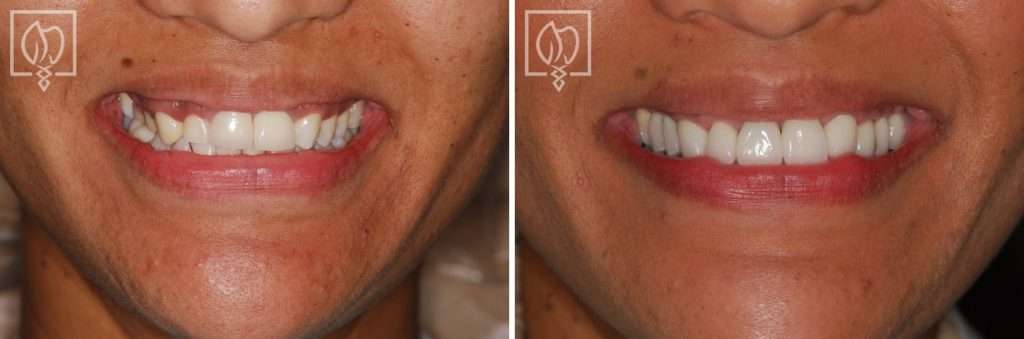
 Temporary Crowns Restore Patient's Smile in Just One Day with an Immediate Smile Makeover
Her dental implant looked artificial in her mouth and was impacting her smile. She had been very unhappy with her unsightly smile line and was beco...
 Complex
 Multi-Faceted Treatment for Patient Unhappy With Her Artificial-Looking Crowns, Teeth and Gums
Many patients come to Elite Prosthetic Dentistry unhappy with the appearance of their smile. A particular patient who sought our help was very unha...
 Standard
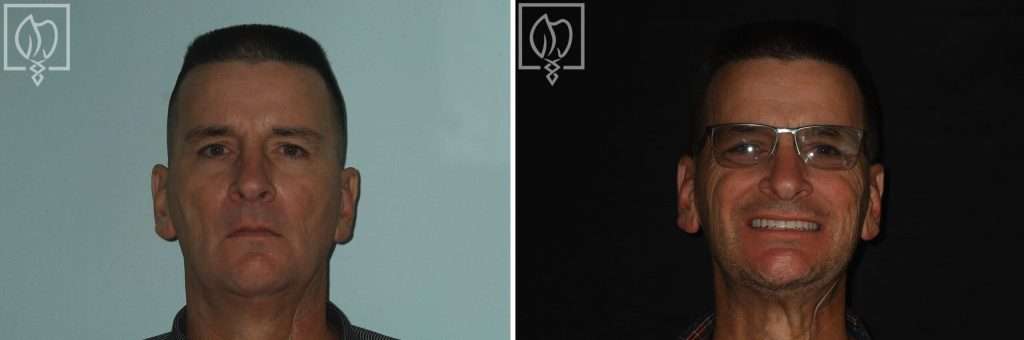
 Treating Kevin’s Collapsed Bite with a Complete Smile Makeover with New Dentures
Kevin came to us very dissatisfied with his existing condition. He looked much older than his age because his bite was collapsed and no one could r...
Related Articles
Deepen your knowledge with additional insights on this topic.
How is the Gummy Smile Fixed?
Dr. Marlin reshapes gum tissue and fabricates custom crowns to correct gummy smiles, creating a balanced and confident smile in Washington, DC.
Will Shifting Teeth Needing Splinting Look Individual? | Dr. Gerald Marlin
Splinted crowns stabilize shifting teeth while maintaining the appearance of individual natural teeth. Case study from Washington, DC prosthodontist.
Did Zoom Meetings Make You Unhappy with Your Smile?
Video calls made many people more aware of their smile. Explore cosmetic dentistry options to transform your confidence in Washington, DC.