
Oral Ecology
The Microbial Universe Inside Your Mouth
Your mouth has entire colonies of microorganisms, and most of them do no harm to you whatsoever. In fact, a stable, diverse oral microbiome is actually a sign of good oral health. Researchers have detected over 700 different strains of bacteria in the human oral cavity, and the vast majority of these are either harmless or beneficial members of your normal oral flora. These benign microorganisms occupy ecological niches in your mouth and actually help protect you from pathogenic invaders through a process called competitive exclusion.
However, when certain disease-causing bacteria are introduced into the oral environment, or when conditions shift to favor their growth, they can proliferate and affect your health in significant ways. Understanding oral ecology helps explain why some people maintain excellent oral health despite imperfect brushing habits, while others develop serious dental disease even with rigorous hygiene. It also helps us understand why certain prevention and treatment strategies work so well at controlling disease-causing bacteria.
The History and Science of Oral Biofilm
Bacteria in biofilm were first detected under the microscopes of Antony van Leeuwenhoek in the 17th century. Van Leeuwenhoek was an early microscopist who examined scrapings from human teeth and saw what he described as animalcules, or tiny living creatures. He didn’t fully understand what he was observing, but he was seeing bacteria. The concept of biofilm as an organized, protective structure wasn’t fully developed until the 1970s and 1980s, when researchers began understanding that bacteria in biofilms behave very differently from planktonic bacteria floating free in solution.
Bacteria in your mouth have both the ability to be harmful and to be beneficial and necessary to your immune system. Beneficial bacteria train and calibrate your immune response, preventing it from becoming either too reactive or too suppressed. The composition of your oral microbiome influences systemic immune function, which is why oral health is so intimately connected to overall health.

Understanding Biofilm Formation and Its Consequences
A biofilm forms when bacteria adhere to surfaces in a watery environment and begin to interact and organize. When bacteria settle on a surface like your teeth or gums, they excrete a glue-like substance called an extracellular polysaccharide matrix. This sticky material helps them stick to all kinds of materials, including teeth, implants, and other surfaces. The matrix also protects the bacteria within from antimicrobial agents, whether those are chemical disinfectants or your body’s immune defenses. Bacteria within a biofilm are dramatically more resistant to antibiotics and antimicrobial agents than bacteria floating freely in solution.
Dental plaque is a yellowish type of biofilm that builds up on teeth. It represents the organized growth of bacteria in a protective matrix on your tooth surface. When plaque remains undisturbed on teeth, the bacteria within multiply and the plaque becomes thicker and more established. As bacteria in plaque feed on dietary carbohydrates and proteins, they produce acids that erode tooth enamel and cause cavities. At the gum line, plaque can extend below the gum margin and trigger an inflammatory response in the gingival tissues. This is the beginning of gum disease.
Identifying Dangerous Bacteria
While most oral bacteria are harmless, a few specific strains have earned particular attention from researchers because of their strong association with dental disease:
Streptococcus mutans
This bacterium lives in your mouth and feeds off the sugars and starches you eat. As it metabolizes these carbohydrates, it produces enamel-eroding acids as a metabolic byproduct. These acids directly demineralize tooth enamel, creating the microscopic cavities that progress into cavitated dental caries. Streptococcus mutans is the leading bacterial cause of tooth decay. Its growth is inhibited by good oral hygiene and fluoride exposure, and suppressed by xylitol, which it cannot metabolize.
Porphyromonas gingivalis
This bacterium is strongly linked to periodontitis, one of the most serious oral diseases. Periodontitis is a progressive disease that involves inflammation of the supporting structures of the tooth. If left untreated, it results in destruction of the periodontal ligament and the alveolar bone that supports your teeth. Periodontitis causes pain, gum swelling, bleeding, and eventually leads to tooth loss. Porphyromonas gingivalis is also interesting because it can trigger systemic immune responses that have been associated with increased risk of cardiovascular disease and other systemic health conditions.
The Broader Impact of Oral Biofilm
A biofilm can contain communities of disease-causing bacteria working together, and if left uncontrolled, these communities can cause cavities as well as both gingivitis and periodontitis. Bacteria are also the cause of inflammation and pain of a root infection, which leads to the need for root canal treatment. Understanding this helps explain why root canal therapy works so well. During root canal treatment, the root canal system is thoroughly cleaned and shaped, removing all bacterial biofilm from the canal walls. The canal is then dried extremely well and sealed with gutta-percha, a biocompatible material that prevents any moisture from entering the space. Without moisture, bacteria cannot survive. A well-filled root canal offers bacteria a nutritionally limited and inhospitable space, preventing reinfection and allowing the periapical inflammation to resolve.
Controlling Biofilm and Treating Oral Infections
Biofilm can be controlled by proper oral hygiene, which disrupts and removes plaque before it becomes established. Daily brushing and flossing mechanically remove bacteria and prevent biofilm maturation. However, periodontitis requires more than just home care. Once periodontal disease has become established, treatment requires removal of biofilm and calculus (tartar) from below the gum line through non-surgical procedures like scaling and root planing, often followed by antibiotic therapy to eliminate remaining pathogens.
Antimicrobial agents like chlorhexidine and triclosan can reduce the degree of plaque and gingivitis while preventing disease-causing microorganisms from colonizing surfaces. These agents disrupt bacterial membranes and prevent biofilm formation. Mouth rinses containing these agents can supplement mechanical oral hygiene.
Maintaining Healthy Oral Ecology
The goal is not to eliminate all bacteria from your mouth, but to maintain a stable, healthy oral microbiome where beneficial bacteria are abundant and disease-causing bacteria are controlled. This is achieved through consistent oral hygiene, a healthy diet low in sugary foods and acidic beverages, and regular professional care from your dentist.
Don’t let oral bacteria be your “fr-enemy.” Call Elite Prosthetic Dentistry today at 202-244-2101 to discuss your oral health options and learn more about maintaining the healthy oral ecology that supports your best dental health.
Related Case Studies
Explore similar cases demonstrating our expertise in advanced prosthetic dentistry.
 Complex
 Temporary Crowns Restore Patient's Smile in Just One Day with an Immediate Smile Makeover
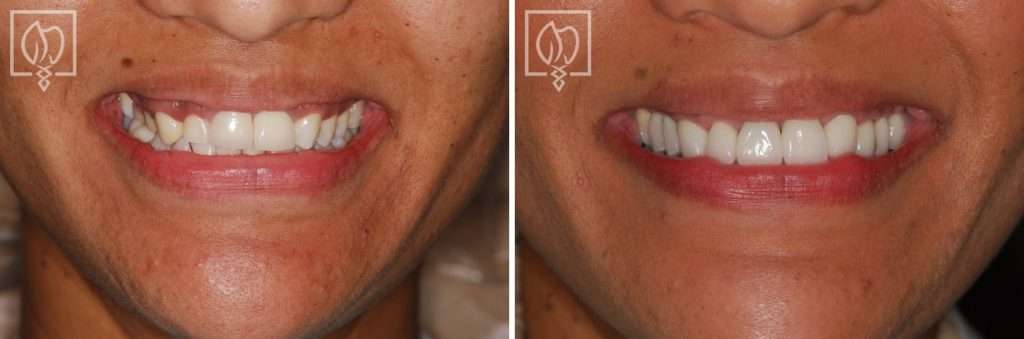
Her dental implant looked artificial in her mouth and was impacting her smile. She had been very unhappy with her unsightly smile line and was beco...
 Complex
 Multi-Faceted Treatment for Patient Unhappy With Her Artificial-Looking Crowns, Teeth and Gums
Many patients come to Elite Prosthetic Dentistry unhappy with the appearance of their smile. A particular patient who sought our help was very unha...
 Standard
 Treating Kevin’s Collapsed Bite with a Complete Smile Makeover with New Dentures
Kevin came to us very dissatisfied with his existing condition. He looked much older than his age because his bite was collapsed and no one could r...
Related Articles
Deepen your knowledge with additional insights on this topic.
How is the Gummy Smile Fixed?
Dr. Marlin reshapes gum tissue and fabricates custom crowns to correct gummy smiles, creating a balanced and confident smile in Washington, DC.
Will Shifting Teeth Needing Splinting Look Individual? | Dr. Gerald Marlin
Splinted crowns stabilize shifting teeth while maintaining the appearance of individual natural teeth. Case study from Washington, DC prosthodontist.
Did Zoom Meetings Make You Unhappy with Your Smile?
Video calls made many people more aware of their smile. Explore cosmetic dentistry options to transform your confidence in Washington, DC.