
Can a Failing Implant Be Salvaged or Replaced?
The Challenge
Occasionally patients visit us to repair an implant that, for some reason, is failing. Even with extensive bone loss, the implant can usually be sa...
Challenge
Occasionally patients visit us to repair an implant that, for some reason, is failing. Even with extensive bone loss, the implant can usually be sa...
Complexity Level
Outcome
Precisely placed dental implants with custom-crafted restorations for restored function and aesthetics
Understanding Failing Implants
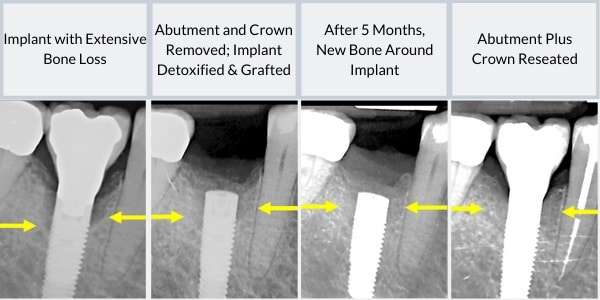
Occasionally patients visit us to repair a dental implant that, for some reason, is failing. The good news is that even with extensive bone loss, the implant can usually be saved through careful planning and advanced bone grafting techniques. Rather than automatically recommending implant removal and replacement, a skilled prosthodontist and implant surgeon will evaluate whether the implant can be salvaged.
Factors That Impact Implant Success
The video below explains the factors that can limit the success of a dental implant. It also provides an overview of Dr. Gerald Marlin’s approach to compromised implants and shows how proper planning can help avoid complications after placement.
Success Story: Saving a Dental Implant
The Challenge
In this example, the implant under the abutment and crown started to lose bone seven years after its placement and restoration. The implant showed extensive bone loss for approximately one-third its length, which was concerning and required immediate intervention. When bone loss occurs around an implant, it can create several problems. The implant becomes less stable, it may become visible (creating an aesthetic problem if it is in the front of the mouth), and it may eventually become loose or fail.
Our Approach to Saving the Implant
Traditional treatment would involve removing the failing implant and placing a new one. However, modern techniques often allow us to save the implant through bone grafting and careful management. In order to detoxify and regraft the bony housing around the implant, we removed the abutment and crown from the implant. We then carefully selected bone graft material that was combined with a growth factor to promote new bone formation. The implant was “buried” under a protective filter below the gingiva (gum tissue), protecting it during the bone healing phase.
The Results
An X-ray taken after four months showed dramatic new bone formation that not only filled in around the implant’s side, but actually grew over the top. The new bone integration was strong and stable. After five months, the implant was surgically exposed, and the abutment and crown were carefully reseated. This approach saved the implant without the need for removal.
Salvaging vs. Replacing Failing Implants
The decision to salvage or replace a failing implant depends on several factors, including the amount and quality of remaining bone, the location of the implant, and the patient’s overall health. Dr. Marlin uses advanced imaging and careful evaluation to determine the best approach for each patient. When salvage is possible, it is usually the preferred option because it preserves the existing implant and avoids the time and cost of implant removal and replacement. Many patients are pleasantly surprised to learn that their “failing” implant can be saved through this advanced approach.
Schedule Your Washington D.C. Consultation Today
If you suspect that your dental implant is failing, call 202-244-2101 to schedule a consultation with Dr. Marlin. Elite Prosthetic Dentistry serves patients from Washington D.C., Bethesda, Chevy Chase, Arlington, and nearby areas of Maryland and Virginia as well as those who travel to our practice from out-of-state or out-of-country.
Related Case Studies
Explore similar cases demonstrating our expertise in advanced prosthetic dentistry.
 Complex
 Temporary Crowns Restore Patient's Smile in Just One Day with an Immediate Smile Makeover
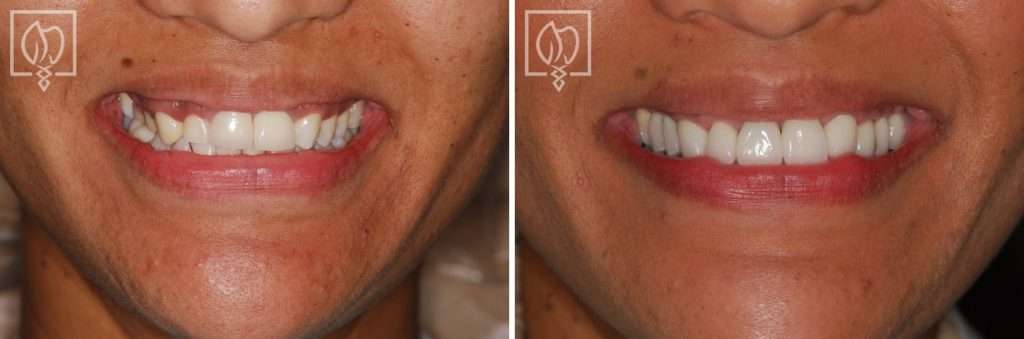
Her dental implant looked artificial in her mouth and was impacting her smile. She had been very unhappy with her unsightly smile line and was beco...
 Complex
 Multi-Faceted Treatment for Patient Unhappy With Her Artificial-Looking Crowns, Teeth and Gums
Many patients come to Elite Prosthetic Dentistry unhappy with the appearance of their smile. A particular patient who sought our help was very unha...
 Standard
 Treating Kevin’s Collapsed Bite with a Complete Smile Makeover with New Dentures
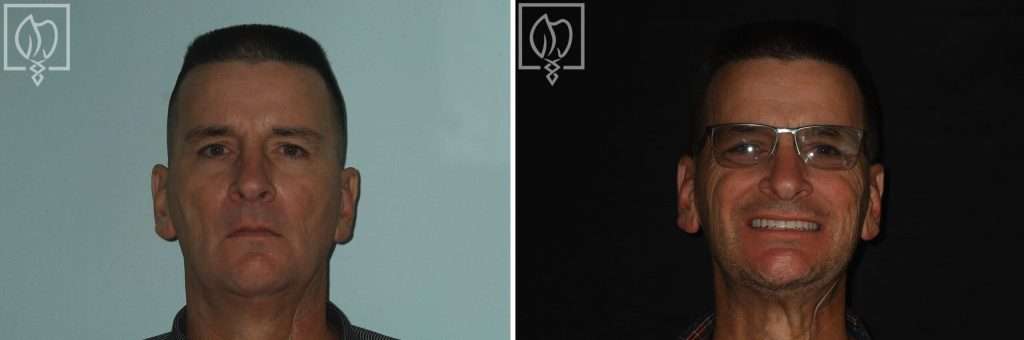
Kevin came to us very dissatisfied with his existing condition. He looked much older than his age because his bite was collapsed and no one could r...