
Dental Inlays and Onlays in Washington, DC
Custom inlays and onlays at Elite Prosthetic Dentistry. Conservative porcelain restorations for damaged teeth that preserve tooth structure.
Inlays & Onlays
A Conservative Alternative to Crowns That Preserves Your Natural Tooth Structure
What are inlays and onlays, and how are they different from fillings or crowns?
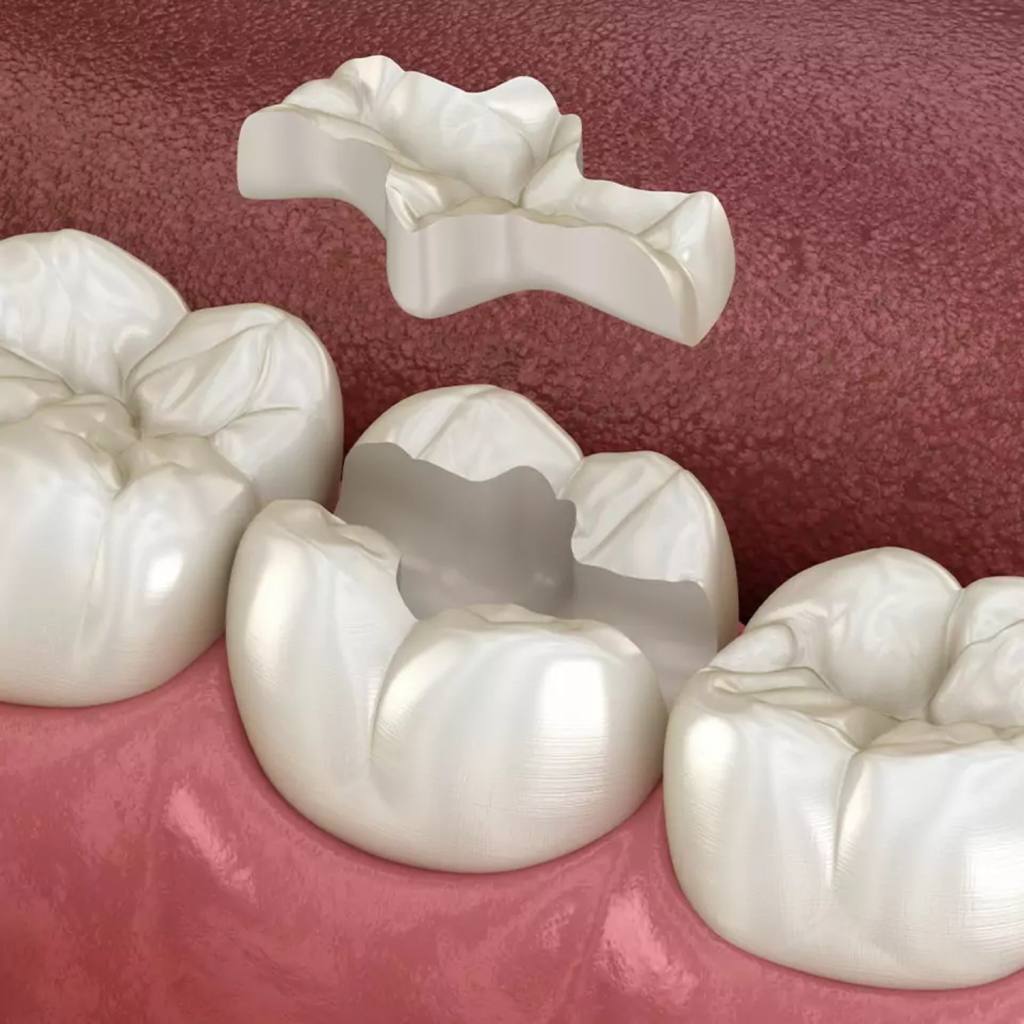
Inlays and onlays are custom-made restorations used to repair moderately damaged or decayed teeth, often when the damage is too extensive for a simple filling but not severe enough to require a full crown. Sometimes referred to as “indirect fillings,” they are bonded to the tooth to restore strength, function, and appearance. These restorations represent an excellent middle ground between conservative and comprehensive treatment options.
At Elite Prosthetic Dentistry in Washington, DC, Dr. Gerald Marlin uses inlays and onlays to preserve as much of your natural tooth as possible while delivering long-lasting results with precision-fit ceramic or porcelain restorations. This conservative approach respects the principle that in dentistry, preservation of natural tooth structure should always be a priority when it doesn’t compromise long-term durability and function.
Understanding the Conservative Approach
In restorative dentistry, there is a hierarchy of treatment options based on the amount of tooth structure that must be removed. At one end of the spectrum is a simple filling, which removes only the decayed or damaged portion of the tooth. At the other end is a crown, which requires preparing the entire tooth down to a smaller diameter. Inlays and onlays fit into this spectrum between these two extremes, making them an ideal choice for situations where a filling won’t provide sufficient strength but a crown would unnecessarily sacrifice healthy tooth structure.
The advantage of this conservative approach extends beyond the immediate restoration. By preserving more of your natural tooth, you maintain greater natural tooth strength and structure. Natural tooth structure, even when it must be prepared and partially removed, generally remains stronger and more resilient than a fully crowned tooth. This means that an inlay or onlay restoration typically has fewer complications over its lifetime compared to a crown.
What’s the difference between an inlay and an onlay?
Inlays fit within the cusps (edges) of your tooth, essentially filling the central chewing surface. An inlay is used when the damage is confined to the interior or center portion of the tooth, without extending to the edges or cusps. The preparation for an inlay is relatively conservative and preserves all of the cusps and structural elements that define the tooth’s shape and contour.
Onlays extend over one or more of the cusps, providing more coverage when damage is slightly more extensive. When a crack extends into one or more cusps, or when decay involves a larger area of the tooth that approaches or touches the cusps, an onlay becomes necessary. The onlay covers and protects these cusp areas while still preserving more tooth structure than a full crown would require.
Both options are fabricated in our in-house laboratory using exact digital impressions to ensure a perfect match in color and contour. The distinction between an inlay and onlay is not arbitrary; it’s a careful clinical decision based on the location and extent of the defect, the strength demands that will be placed on the tooth during chewing, and the esthetic considerations particular to your smile.
The Benefits of Inlays and Onlays
Choosing an inlay or onlay over a crown offers several significant advantages. First, natural tooth structure is preserved, maintaining the tooth’s inherent strength and reducing the risk of future complications. Second, these restorations typically require less aggressive tooth preparation, which means less removal of healthy tooth structure and less risk of damaging the nerve. Third, the cost is typically less than a full crown while offering superior results compared to a large filling.
Additionally, inlays and onlays are more durable than composite or amalgam fillings. While a large filling may need replacement every ten to fifteen years due to wear, degradation, or secondary decay, an inlay or onlay can often last twenty years or longer. This longevity makes them a more economical choice in the long term despite the higher initial investment compared to a filling.
What Makes Custom Inlays and Onlays Different?
Unlike mass-produced or outsourced restorations, every inlay and onlay Dr. Marlin places is fully customized for your bite, esthetics, and long-term durability. We carefully match the color and translucency to surrounding teeth and use only high-quality ceramic, porcelain-fused-to-metal (PFM), or zirconia materials, depending on your specific needs.
Patients often come to us when they’ve had a poorly fitted or short-lived restoration placed elsewhere and are looking for a superior, lasting solution. The difference lies in the precision of fit, the quality of the materials, and the meticulous attention to detail that Dr. Marlin brings to every case. Each restoration is individually designed and crafted, not selected from a generic library of shapes and sizes.
According to the American College of Prosthodontists, carefully designed restorations can help preserve natural tooth structure and extend the life of a tooth by decades when done properly. This is particularly true of inlays and onlays, which balance conservation of tooth structure with the durability and longevity that full coverage restorations provide.
How Long Do Inlays and Onlays Last?
When expertly designed and maintained with regular hygiene visits and good at-home care, your inlay or onlay can last 15 to 25 years or longer. Our patients often report decades of wear thanks to the precision fit and high-strength materials Dr. Marlin uses. The longevity of these restorations is a testament to the conservative approach and the meticulous craftsmanship involved in their fabrication.
What is the process like?
Consultation and Assessment
Dr. Marlin evaluates your tooth and determines whether an inlay or onlay is the most appropriate option, or whether another restoration might better serve your needs.
Digital Scan and Preparation
We collect highly accurate digital impressions and conservatively prepare your tooth. Unlike crown preparation, the tooth is reshaped only as much as necessary to remove decay or damage and provide ideal seating for the restoration.
Temporary Restoration
A temporary restoration protects your prepared tooth while your custom restoration is being fabricated in our laboratory.
Custom Fabrication
Our in-house laboratory team carefully designs and fabricates your restoration using premium ceramic or other high-quality materials. The restoration is crafted to fit perfectly with your tooth and its neighbors.
Final Placement
Your inlay or onlay is carefully seated and adjusted for optimal comfort, function, and esthetics. We verify the fit and bite, and the restoration is bonded in place with a durable, long-lasting cement.
Why Choose Inlays and Onlays?
For many patients with moderate decay or damage, inlays and onlays represent the ideal balance between conservation and durability. They preserve more natural tooth structure than crowns while providing greater longevity and reliability than large fillings. If your dentist has recommended an inlay or onlay, you can be confident that you’re choosing a restoration option with an excellent track record of long-term success.
Frequently Asked Questions
How do I know if I need a crown or just a filling?
If the tooth has lost more than 50% of its structure or has cracks, a crown is typically recommended over a filling for long-term stability.
Do crowns feel like real teeth?
Yes. Properly placed crowns feel and function just like your natural teeth. Most patients forget they even have one after a few days.
Can I replace an old crown that looks unnatural?
Absolutely. Dr. Marlin often replaces old, worn-out, or mismatched crowns with beautiful, updated restorations.
Are same-day crowns as good as custom crowns?
While same-day crowns offer speed, they often compromise fit, esthetics, or strength. Dr. Marlin prioritizes long-term success over convenience.
Your Best Smile Is Within Reach
Schedule a consultation with Dr. Gerald Marlin to discuss your treatment options and take the first step toward a healthier, more confident smile.
Related Case Studies
Explore similar cases demonstrating our expertise in advanced prosthetic dentistry.
 Complex
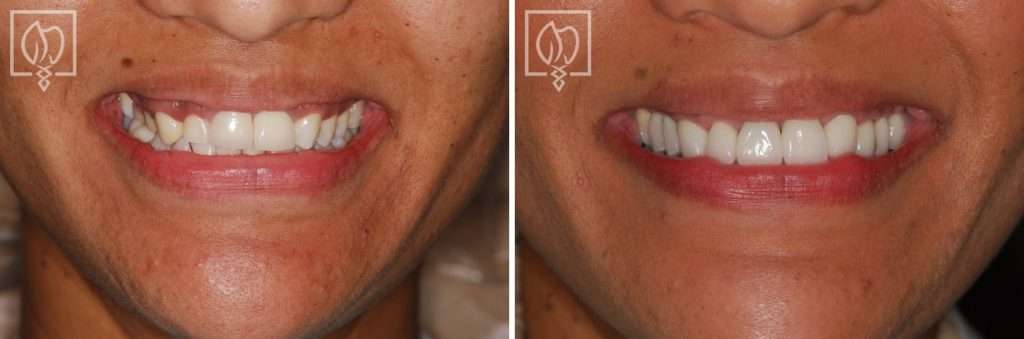
 Temporary Crowns Restore Patient's Smile in Just One Day with an Immediate Smile Makeover
Her dental implant looked artificial in her mouth and was impacting her smile. She had been very unhappy with her unsightly smile line and was beco...
 Complex
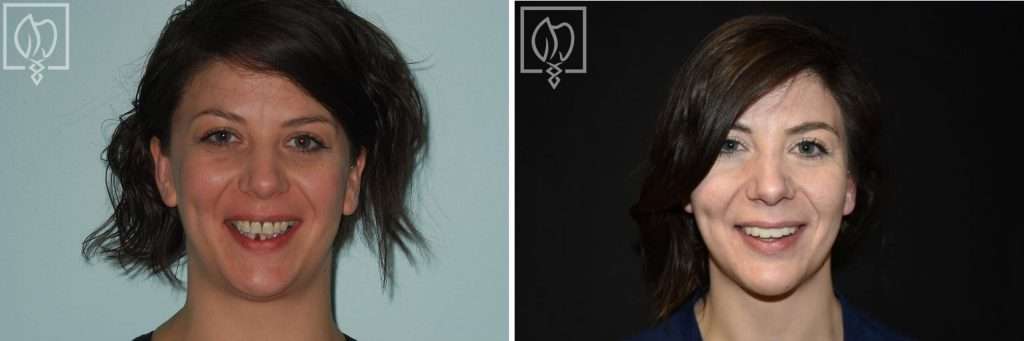
 Multi-Faceted Treatment for Patient Unhappy With Her Artificial-Looking Crowns, Teeth and Gums
Many patients come to Elite Prosthetic Dentistry unhappy with the appearance of their smile. A particular patient who sought our help was very unha...
 Complex
 Salvaging Ms. N’s Severely Broken-Down Upper and Lower Teeth from Gum and Bone Disease
Ms. N presented to us in complete distress with two lower anterior teeth that were about to fall out and wide gaps opening between her upper and lo...
Related Articles
Deepen your knowledge with additional insights on this topic.
Why are Some Temporary Crowns More Natural Than Others?
Temporary crowns fabricated in our in-house laboratory are made to blend with each individual’s lip line, facial pattern, and adjacent teeth in Washington, DC.
What Makes a Natural-Looking Crown?
A natural-looking crown blends with your gum tissue, matches your smile line, and has proper translucency and coloration. Washington, DC prosthodontist.
How is an Immediate Smile Makeover Performed?
An immediate smile makeover uses personalized temporary crowns crafted to match your facial pattern and smile line while final restorations are made.
Ready to Transform Your Smile?
With 40+ years of experience and 3,900+ dental implants placed, Dr. Gerald Marlin delivers results that last. Schedule your consultation today.