

Fixed Prosthodontics in Washington, DC
Fixed prosthodontics in Washington, DC. Dr. Gerald Marlin provides crowns, bridges, implant restorations, and full-mouth rehabilitation.
Fixed Prosthodontics
Precision Restorations That Look Natural and Last for Decades
What is fixed prosthodontics and who is it for?
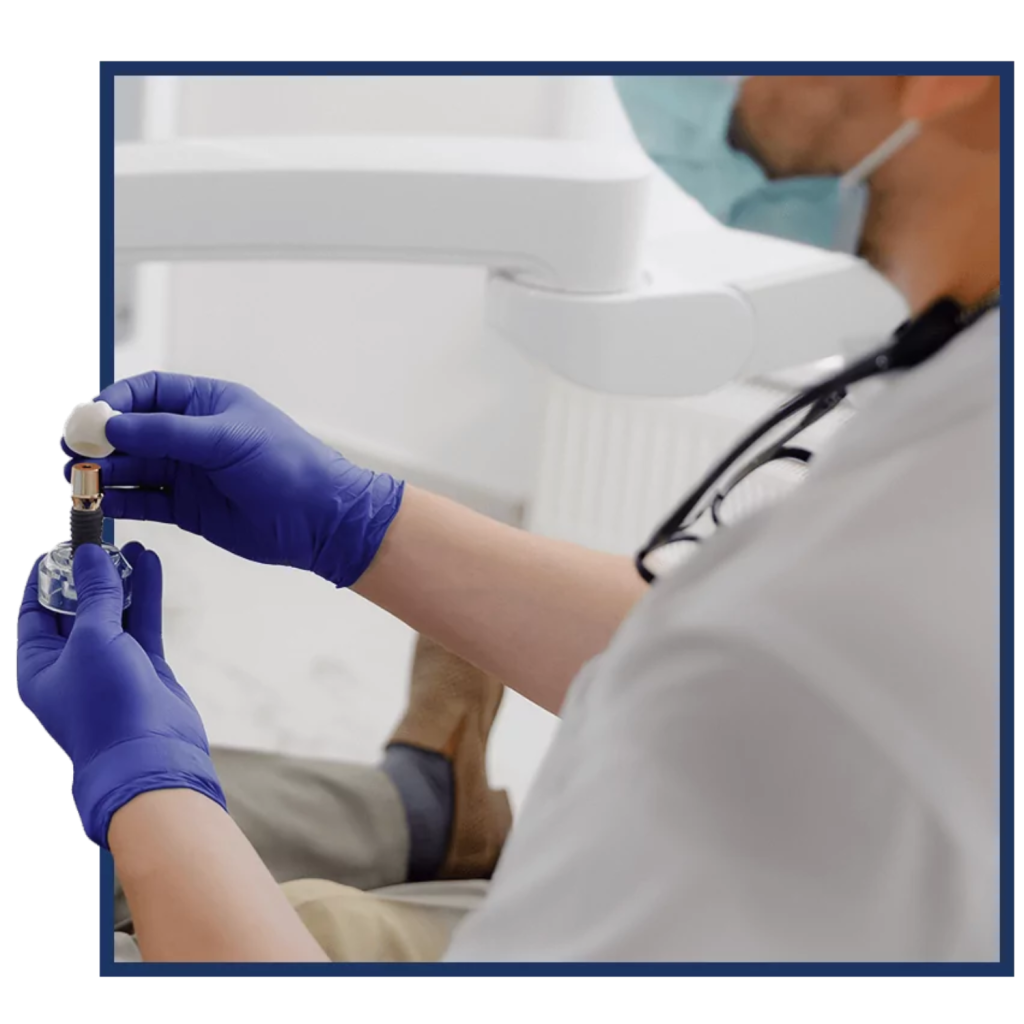
Fixed prosthodontics refers to custom dental restorations that are permanently cemented or bonded in place, such as crowns, bridges, veneers, inlays, and onlays. These restorations are ideal for patients with damaged, worn, or missing teeth who want to restore function and appearance with lasting results. At Elite Prosthetic Dentistry in Washington, DC, Dr. Gerald Marlin offers expert-level care using precision-crafted, long-lasting restorations tailored to your smile.
How is fixed prosthodontics different from removable options?
Unlike removable dentures or partials, fixed prosthodontic restorations remain securely in place. They are designed to mimic the look and strength of natural teeth while offering superior comfort and stability. Patients typically choose fixed options when they desire a more natural-feeling, permanent solution.
Why choose Dr. Gerald Marlin Of for your fixed restorations?
With over 40 years of prosthodontic experience, Dr. Marlin is recognized as a leading specialist in advanced restorative and cosmetic dentistry. He uses a meticulous, patient-focused approach and works with a dedicated on-site lab to ensure ideal results. His restorations are known for their fit, aesthetics, and longevity, qualities especially important to patients seeking full smile rehabilitation.
The Evolution of Crown and Bridge Materials
For much of dental history, crowns were fabricated from porcelain fused to metal (PFM). This combination provided strength (from the metal substructure) and esthetics (from the porcelain veneer). PFM crowns remain excellent restorations and are still used in many situations.
However, advances in ceramic materials have expanded options considerably. All-ceramic crowns, made entirely of high-strength porcelain or other ceramic materials, offer superior esthetics because there is no dark metal line visible at the gum margin. These all-ceramic restorations are indistinguishable from natural teeth for many patients.
Zirconia, a ceramic material, combines extraordinary strength with excellent esthetics. Zirconia crowns can be used in high-stress posterior positions while maintaining the natural appearance of anterior restorations. Other ceramic materials like lithium disilicate offer excellent light transmission and shade matching, allowing restoration of single anterior teeth with impossible-to-detect results.
The choice of material depends on location, esthetic demands, and functional needs. Dr. Marlin selects materials thoughtfully, recommending the option that provides the best balance of strength, esthetics, and longevity for your specific situation.
Understanding Crown Preparation and Tooth Reduction
Before a crown can be placed, the natural tooth must be shaped (prepared) to receive it. This preparation removes decay, creates a stable foundation, and shapes the tooth to accept the crown material. The amount of tooth structure removed depends on the tooth location, the thickness of the crown material, and the strength of the remaining tooth.
Many patients worry that crown preparation means extensive tooth loss. In reality, modern crown preparation conserves tooth structure. Advances in materials allow thinner, more conservative crowns that require less reduction than older designs. Dr. Marlin’s approach prioritizes tooth conservation: he removes only as much structure as necessary to achieve the goal.
The preparation is tapered, not undercut, so the crown slides on and off without requiring adhesive locking. The margins (edges) are carefully positioned for optimal esthetics and cleanability. The preparation is smooth and refined, without sharp angles or rough areas that could interfere with the crown margin.
The Importance of Marginal Fit
One of the most critical aspects of crown quality is marginal fit: how precisely the crown edge adapts to the prepared tooth. An ill-fitting crown allows bacteria and fluids to seep between the crown and the prepared tooth. Over time, this microleakage can cause decay at the crown margin and ultimately tooth loss beneath the crown.
Dr. Marlin’s approach ensures excellent marginal fit through meticulous preparation, precise impressions, and expert fabrication. Working with his in-house laboratory, he can ensure that the crown is fabricated and delivered with fit that meets his exacting standards.
Digital impressions using intraoral scanning technology allow precise three-dimensional capture of the prepared tooth and surrounding areas. This digital data is more accurate than traditional impression materials and eliminates distortion from impression handling and shipping.
Bridges: Replacing Missing Teeth Without Implants
A bridge is a fixed partial denture: an artificial tooth (or teeth) suspended between two crowns that are anchored to adjacent natural teeth. Bridges have been used successfully for decades and remain an excellent option in many situations.
Bridges are appropriate when the teeth on either side of a missing tooth are already compromised by decay or previous restorations. Rather than placing separate crowns on these teeth, a single bridge restoration spans the gap. This is sometimes more economical and functional than placing an implant.
However, bridges have limitations. They transfer forces from the artificial tooth to the anchor teeth, potentially stressing those teeth long-term. If an anchor tooth eventually fails, the bridge must be replaced. Bridges also replace only the visible crown portion of the missing tooth, not the root, so bone loss under the artificial tooth continues.
For these reasons, implants have largely replaced bridges for patients who have adequate bone and are comfortable with surgery. However, bridges remain an excellent solution for many patients and are still recommended in appropriate situations.
Inlays and Onlays: Conservative Restorations for Moderate Damage
When a tooth has decay or damage that is too extensive for a simple filling but not so extensive as to require a crown, inlays or onlays offer an excellent middle ground.
An inlay is a restoration that fits within the cusps (the pointed portions) of the tooth. It restores the chewing surfaces between the cusps without requiring tooth reduction to below the existing cusp height.
An onlay is similar but also covers one or more cusps. Onlays are appropriate when cusps have been damaged or weakened and need reinforcement.
These restorations are fabricated from metal or ceramic and then seated with adhesive. They are stronger than large fillings and more conservative than crowns, making them ideal for intermediate situations. They allow preservation of healthy tooth structure that a crown would require removal.
Digital Design and CAD/CAM Technology
Elite Prosthetic Dentistry utilizes advanced CAD/CAM (computer-aided design/computer-aided manufacturing) technology for crown and restoration fabrication. Rather than hand-sculpting restorations, the technology allows precision digital design, visualization, and fabrication.
Digital imaging of the prepared tooth captures its exact dimensions and contours. The technician uses specialized software to design the restoration, positioning the crown margin precisely, establishing optimal emergence profile, and creating ideal contacts with adjacent teeth.
This digital design is transferred to milling equipment that carves the restoration from a block of ceramic or other material. The result is a restoration with perfect internal fit, ideal marginal contours, and precise contact relationships.
The efficiency of CAD/CAM technology also allows faster turnaround. Simple cases can sometimes be completed in a single visit, with the crown designed, fabricated, tried in, and seated the same day. For more complex cases, the digital design ensures optimal quality even with traditional fabrication methods.
Longevity of Fixed Restorations and Maintenance
With excellent fabrication and proper care, crowns regularly last 15 to 25 years or more. Some of Dr. Marlin’s crowns have been in function for 30 or 40 years, testifying to the potential longevity of well-constructed restorations.
The factors that determine longevity are multiple. Excellent preparation and margin positioning are foundational. Superior materials matter. But patient care is equally important. Regular brushing and flossing, professional cleanings, and avoidance of trauma extend restoration life considerably.
Certain habits are destructive to crowns. Clenching and grinding (bruxism) can fracture ceramic restorations. Using teeth to open packages or bite hard objects can damage crowns. Avoiding these habits extends restoration life.
Professional maintenance involves monitoring for decay, assessing marginal fit, and detecting any problems early. Annual examinations allow Dr. Marlin to assess each crown and address any concerns before they progress.
Esthetic Excellence and Natural Appearance
Modern fixed restorations are remarkable in their ability to replicate natural teeth. An excellent crown is genuinely indistinguishable from a natural tooth, even to another dentist. This esthetic excellence is not accidental; it results from detailed attention to multiple factors.
Tooth shape must be anatomically correct, reflecting the natural proportions of the specific tooth being restored. Shade (color) must match adjacent teeth, accounting for subtle translucency variations. Surface texture must replicate the natural micro-detail of tooth enamel. Marginal contours must emerge seamlessly from surrounding gum tissue.
Achieving this excellence requires collaboration between dentist and technician. Digital communication, try-in appointments, and minor adjustments refine the result until it meets standards for natural appearance and optimal esthetics.
For patients undergoing smile makeovers involving multiple crowns, the challenge and reward are even greater. Coordinating shape, shade, alignment, and spacing across multiple teeth creates a harmonious smile that enhances facial esthetics and increases confidence.
Frequently Asked Questions
What's the difference between a crown and a veneer?
A crown covers the entire tooth and is often used when there’s extensive damage. A veneer only covers the front of the tooth and is used mainly for cosmetic improvements.
Are fixed restorations more durable than removable ones?
Yes. Fixed restorations are permanently bonded and typically last longer than removable options, especially with proper oral care.
How long do dental crowns or bridges last?
With excellent hygiene and professional maintenance, they can last 15-25 years or more.
What role does bone play in implant success?
Over time, various factors, including tooth loss, gum disease, and certain health conditions, can cause bone to lose density and weaken. Integration with the underlying bone is essential for implants to provide stable, long-lasting support for a crown, bridge, or full mouth prosthesis. If the underlying bone is inadequate, a bone grafting procedure is required to ensure proper fusion with the jaw bone.
How do I know which option is best for me?
During your consultation, Dr. Marlin will assess your goals, dental health, and bite function to recommend the most effective treatment for lasting results.
Your Best Smile Is Within Reach
Schedule a consultation with Dr. Gerald Marlin to discuss your treatment options and take the first step toward a healthier, more confident smile.
Related Case Studies
Explore similar cases demonstrating our expertise in advanced prosthetic dentistry.
 Complex
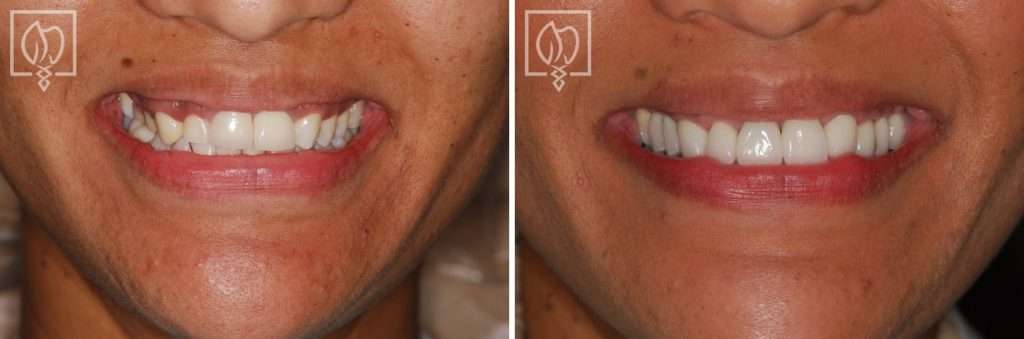
 Temporary Crowns Restore Patient's Smile in Just One Day with an Immediate Smile Makeover
Her dental implant looked artificial in her mouth and was impacting her smile. She had been very unhappy with her unsightly smile line and was beco...
 Complex
 Multi-Faceted Treatment for Patient Unhappy With Her Artificial-Looking Crowns, Teeth and Gums
Many patients come to Elite Prosthetic Dentistry unhappy with the appearance of their smile. A particular patient who sought our help was very unha...
 Standard
 Treating Kevin’s Collapsed Bite with a Complete Smile Makeover with New Dentures
Kevin came to us very dissatisfied with his existing condition. He looked much older than his age because his bite was collapsed and no one could r...
Related Articles
Deepen your knowledge with additional insights on this topic.
Why are Some Temporary Crowns More Natural Than Others?
Temporary crowns fabricated in our in-house laboratory are made to blend with each individual’s lip line, facial pattern, and adjacent teeth in Washington, DC.
What Makes a Natural-Looking Crown?
A natural-looking crown blends with your gum tissue, matches your smile line, and has proper translucency and coloration. Washington, DC prosthodontist.
How is an Immediate Smile Makeover Performed?
An immediate smile makeover uses personalized temporary crowns crafted to match your facial pattern and smile line while final restorations are made.
Ready to Transform Your Smile?
With 40+ years of experience and 3,900+ dental implants placed, Dr. Gerald Marlin delivers results that last. Schedule your consultation today.