
Dental Crowns in McLean, VA
Premium dental crowns in McLean, VA. Custom-crafted restorations by prosthodontist Dr. Gerald Marlin, 40+ years experience.
Dental Crowns in McLean, VA
Custom-Crafted Dental Crowns for McLean Residents
A single dental crown is often the most important restoration a person will receive. Whether the tooth is damaged by decay, trauma, or wear, the crown must not only restore function but integrate seamlessly into your smile. For McLean residents, where excellence is the standard, a premium crown is essential.
At Elite Prosthetic Dentistry, dental crowns are not one-size-fits-all treatments. Dr. Gerald Marlin approaches each crown as a precision craft, considering your bite, tooth anatomy, aesthetic preferences, and long-term durability. With 40+ years of prosthodontic experience, he understands crown design at a depth that ensures your restoration will remain beautiful and functional for decades.
Understanding the Dental Crown at a Clinical Level
A dental crown is an artificial tooth that completely covers a damaged tooth or implant. Think of it as a precisely crafted cap that sits on the underlying tooth structure, bearing chewing forces and aesthetic responsibility. The success of a crown depends on multiple factors: preparation design, material selection, fit and adaptation, and cementation technique.
our team at Elite Prosthetic Dentistry’s prosthodontic training provides comprehensive understanding of biomechanics, materials science, and restoration design. We don’t simply remove decay and place a crown; he engineers a restoration that will function optimally for years.
Why Tooth Preparation Matters
How a tooth is prepared for a crown significantly affects the restoration’s longevity and appearance. Excessive preparation weakens the tooth. Insufficient preparation compromises the crown’s fit and aesthetic result. our specialty-trained team’s preparation technique is designed to remove only necessary tooth structure while creating the ideal geometry for crown support.
For McLean patients, this precision is evident in how closely the crown margins fit the tooth. Well-adapted margins mean bacteria cannot seep underneath, protecting the tooth from secondary decay. Tight margins also mean cleaner aesthetics with no visible dark lines at the gum line, which matters when you’re in professional environments where your smile is on display.
Materials: Science and Aesthetics
The material you choose for your crown affects its appearance, strength, lifespan, and how it interacts with your natural teeth. our prosthodontic team discusses material options thoroughly during your consultation, helping you understand the trade-offs between aesthetics, durability, and cost.
All-Ceramic Crowns
All-ceramic (porcelain) crowns are the most aesthetic option available. Light passes through ceramic similarly to natural tooth enamel, creating a translucent quality that mimics real teeth remarkably well. Ceramic crowns are ideal for front teeth where appearance is paramount. They’re also the most biocompatible material, meaning your gum tissue typically responds better to ceramic margins than metal.
For McLean professionals and residents concerned with smile appearance, all-ceramic crowns are often the best choice for visible teeth. Modern all-ceramic materials are also quite strong, with many patients finding them durable enough for normal chewing. The key is that ceramic crowns require appropriate material thickness to maintain strength, which our practice accounts for during preparation.
Zirconia Crowns
Zirconia is an incredibly strong ceramic material, stronger than natural tooth enamel. It’s ideal for back teeth that bear heavy chewing forces, and for patients who have a history of breaking crowns or have particularly strong bite forces. Zirconia is more opaque than porcelain, so it’s less ideal for front teeth where light transmission matters, but many patients accept this trade for superior durability.
A zirconia crown can virtually never fracture under normal chewing, making it an excellent choice for back molars. Some patients also choose zirconia for premolars if appearance is less critical and durability is the priority.
Gold and Precious Metal Alloys
Gold crowns are the gold standard of crown materials, literally. Gold adapts perfectly to tooth structure, never corrodes, and lasts 40+ years routinely. The trade-off is visibility. Gold crowns are ideal for back teeth or for patients who prefer absolute durability over concealment.
Some McLean professionals choose a hybrid approach: ceramic for front teeth and gold for back teeth. This combines maximum aesthetics where it shows with maximum durability where the bite force is greatest.
Hybrid Materials: Porcelain-Fused-to-Metal
Porcelain-fused-to-metal (PFM) crowns combine a metal substructure with porcelain aesthetics. They’re stronger than all-ceramic alone while remaining more aesthetic than full metal. PFM is a good middle ground for patients who want both strength and appearance, though modern all-ceramic and zirconia materials have largely replaced PFM in many clinical situations.
our specialty-trained team will recommend materials based on your tooth’s location, your bite patterns, aesthetic priorities, and long-term goals. For McLean patients concerned with both appearance and durability, he’ll ensure you understand the advantages and limitations of each option before deciding.
Replacing Older Crowns: When an Update is Necessary
Many McLean residents have crowns that were placed years or even decades ago. As crowns age, they can develop problems: margin decay where the crown meets the tooth, chipping or cracking, discoloration, or simply a look that no longer matches modern standards or newly whitened natural teeth.
our practice frequently replaces crowns for patients whose existing crowns are no longer meeting their needs. Sometimes an old crown can be replaced with a newer, more aesthetic restoration using modern materials. If your existing crown is gold or older porcelain-fused-to-metal, an all-ceramic or zirconia replacement can dramatically improve your smile’s appearance.
The process is straightforward: the old crown is carefully removed, the tooth underneath is evaluated, and a new crown is fabricated. If the underlying tooth structure is still sound, we can proceed directly. If decay or other issues are discovered, these are addressed before the new crown is placed.
Crown replacement also presents an opportunity to refine the design. Maybe your old crown was adequate functionally but never looked quite right. A new crown gives us the chance to improve the shade, contour, and overall appearance to integrate better with your smile.
The Crown Design and Consultation Process
The consultation for a crown involves several important steps. During your visit, our team at Elite Prosthetic Dentistry evaluates the tooth, takes digital radiographs to assess the bone and root structure, and discusses your aesthetic and functional goals.
For visible teeth, he’ll discuss shade options, explaining how your crown will integrate with your natural teeth. We may take shade measurements to ensure accurate color matching. He’ll also evaluate your bite and your smile line, determining how much of the crown will be visible and thus how critical aesthetics are.
our team at Elite Prosthetic Dentistry explains the preparation process, answering questions about sensitivity, temporary crowns, and what to expect over the next few weeks. We discuss material options thoroughly, helping you understand why he recommends a particular material for your specific situation.
If you’re having multiple crowns placed, he’ll coordinate the treatment plan, explaining how the crowns will be designed to work together as a unified restoration. For patients undergoing a full smile redesign, the consultation includes comprehensive discussion of the overall aesthetic vision.
The Crown Design Process with Our On-Site Laboratory
Dr. Marlin uses digital technology to evaluate your tooth and plan the crown preparation. This technology helps him visualize the final result, ensuring the crown will be appropriately sized, shaped, and positioned relative to your other teeth and facial structure.
The impression taken after preparation is sent directly to our on-site laboratory, where a master ceramicist begins crafting your crown. This is a significant advantage compared to dental practices that send impressions to external laboratories across town or across the country.
With our on-site lab, our specialty-trained team communicates directly with our ceramicist about your specific requirements. If your tooth is in an area where the gum line shows when you smile, we’ll design the crown with extra attention to gum aesthetics. If you have a strong bite force, we’ll ensure the crown is appropriately thick for durability. For complex cases requiring specific aesthetic considerations, this direct communication ensures your crown is exactly what you need.
The on-site lab also means faster turnaround. Rather than waiting for a laboratory to schedule your work between other cases, our lab prioritizes cases based on our practice’s schedule. We use premium materials and techniques that may not be available through commercial laboratories, and we maintain complete quality control over the fabrication process.
For patients concerned about the final appearance, having an on-site laboratory means we can make adjustments quickly. If a shade needs refinement or a contour needs adjustment, we handle it immediately rather than sending the crown back to an external lab and waiting days for revisions.
Temporary Crowns: Not Temporary Dentistry
Between your preparation appointment and crown delivery, you’ll wear a temporary crown. Many patients don’t realize the temporary crown serves important functions. It protects the prepared tooth from sensitivity and decay, protects your bite relationship, and allows you to evaluate the shape and shade we’ve planned.
our practice’s temporary crowns are carefully fabricated and cemented, not hastily assembled. This level of attention to the temporary phase sets the stage for success when your permanent crown is delivered.
The Fit and Cementation Appointment
When your permanent crown is ready, Elite Prosthetic Dentistry removes the temporary crown and carefully evaluates the fit of your new crown. The marginal fit (the edge where the crown meets the tooth) is examined microscopically. The occlusion (bite) is checked to ensure the crown doesn’t contact prematurely or create bite trauma. The shade is evaluated in natural light and under dental lighting.
Only when everything meets his standards is the crown cemented permanently. The cement used is carefully selected for each case, and the cementation technique follows prosthodontic principles to maximize longevity and minimize microleakage.
Crown Longevity: The McLean Perspective
McLean residents invest in their homes, their vehicles, and their lives with the expectation of durability and value. The same should apply to your dental restorations. A crown that lasts 10 years requires replacement. A crown that lasts 25 years represents true value.
Elite Prosthetic Dentistry’s approach to crown preparation, material selection, and cementation is designed for longevity. This doesn’t mean crowns never need replacement, but it means the timeline is measured in decades, not years.
Crowns and Your Overall Smile
A single crown doesn’t exist in isolation. It must harmonize with your adjacent teeth in shape, shade, and surface texture. If your other teeth are slightly yellow, your new crown should match that shade, not contrast with it. If your smile line shows gum tissue on your crown tooth, the crown must be designed to optimize gum appearance.
Elite Prosthetic Dentistry considers your entire smile when designing a single crown, ensuring the restoration integrates seamlessly rather than standing out.
Maintaining Your Crown
A crown will last longer with proper care. Avoid chewing on hard objects like ice or hard candy. Floss carefully around the crown margins, as decay can develop where the crown meets your tooth. Brush normally, using a soft-bristled brush. For McLean residents with demanding schedules, we provide clear guidance on crown care during your appointment.
Regular checkups with Dr. Marlin allow him to monitor your crown and the tooth underneath. Early detection of any issues means small adjustments can be made before they become problems.
Scheduling Your Crown Consultation
If you have a damaged, cracked, or heavily filled tooth, a crown may be the optimal restoration. Dr. Marlin can evaluate your tooth and explain your options clearly. Sometimes a filling is still appropriate. Sometimes a crown is the better long-term choice.
McLean is just 20 minutes from our Friendship Heights office via Chain Bridge Road and Arizona Avenue NW. The drive from McLean is straightforward, and the value of having a prosthodontist handle your crown is significant.
Request an appointment or call (202) 244-2101 to schedule your crown consultation. Learn more about our custom-crafted crown services.
Related Resources
- Learn more about custom dental crown services
- Benefits of Custom Dental Crowns
- Explore cosmetic dentistry
- View all locations we serve
- Browse real patient case studies
- Patient education resources
- Explore treatment results
- What our patients say
- View our smile gallery
- Learn more: what makes a natural-looking crown
- Am I a candidate?
Frequently Asked Questions
How long do dental crowns last?
With proper care, dental crowns typically last 15 to 25 years. Dr. Marlin's custom-crafted crowns, made with premium materials and precise fit, often exceed these timeframes. Longevity depends on the material chosen, your bite forces, and oral hygiene. McLean residents who maintain good home care and regular checkups often find their crowns remain functional and beautiful for multiple decades.
What material should I choose for my crown?
Materials range from all-ceramic (most natural appearance, excellent for front teeth), zirconia (extremely strong, slightly less translucent), to gold and precious metal alloys (most durable, visible). Dr. Marlin recommends based on tooth location, your bite patterns, and aesthetic goals. For McLean professionals where appearance matters, ceramic crowns are typically preferred for visible teeth. Back teeth may benefit from stronger zirconia or gold.
Is getting a crown painful?
No. The tooth is numbed before any preparation begins. You may feel pressure and vibration during preparation, but not pain. After the anesthetic wears off, some patients experience mild sensitivity to temperature for a few days, which typically resolves quickly. Dr. Marlin's gentle technique minimizes trauma to the tooth and surrounding tissues, reducing post-operative sensitivity.
How many appointments are needed for a crown?
Typically two to three appointments. The first involves tooth preparation, impression, and placement of a temporary crown. The second appointment, usually two weeks later, involves removal of the temporary and placement of your permanent crown. If additional adjustments are needed, a brief follow-up may occur. For busy McLean professionals, we work efficiently to minimize appointments while maintaining premium results.
Why would a tooth need a crown instead of a filling?
Crowns restore teeth that are too damaged or weakened for a simple filling. This includes teeth with large cavities, significant wear, cracks, root canal treatment, or weak tooth structure. While fillings are appropriate for smaller restorations, larger cavities leave insufficient tooth structure to support a filling long-term. A crown completely encases the tooth, distributing forces evenly and protecting it from future damage.
Related Case Studies
Explore similar cases demonstrating our expertise in advanced prosthetic dentistry.
 Complex
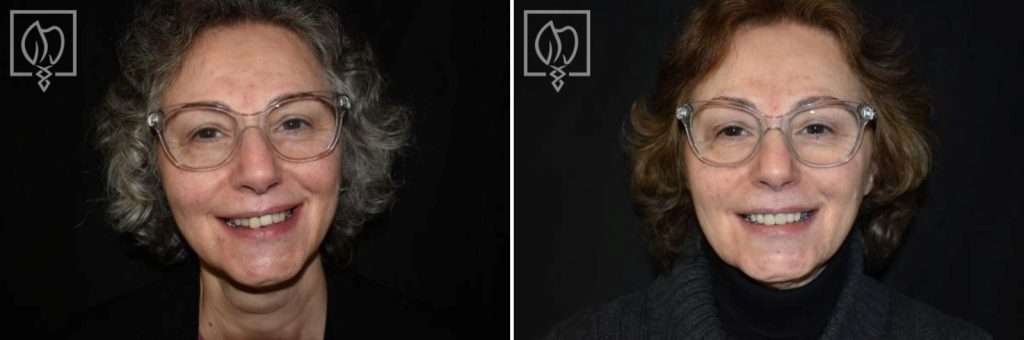
 Temporary Crowns Restore Patient's Smile in Just One Day with an Immediate Smile Makeover
Her dental implant looked artificial in her mouth and was impacting her smile. She had been very unhappy with her unsightly smile line and was beco...
 Complex
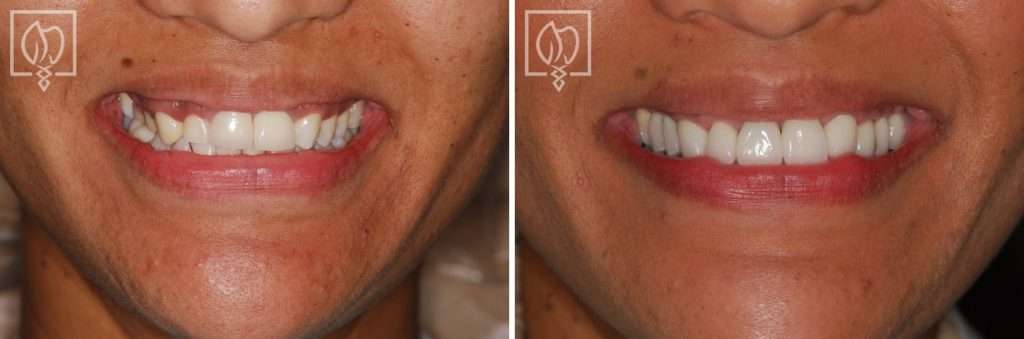
 Multi-Faceted Treatment for Patient Unhappy With Her Artificial-Looking Crowns, Teeth and Gums
Many patients come to Elite Prosthetic Dentistry unhappy with the appearance of their smile. A particular patient who sought our help was very unha...
 Complex
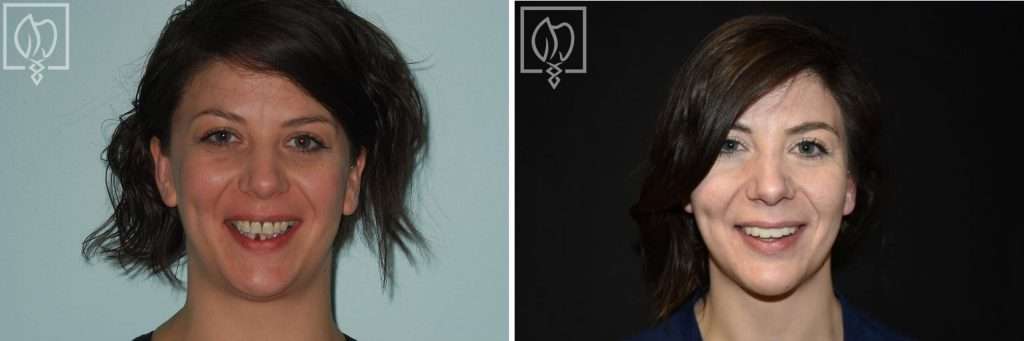
 Salvaging Ms. N’s Severely Broken-Down Upper and Lower Teeth from Gum and Bone Disease
Ms. N presented to us in complete distress with two lower anterior teeth that were about to fall out and wide gaps opening between her upper and lo...
Related Articles
Deepen your knowledge with additional insights on this topic.
Why are Some Temporary Crowns More Natural Than Others?
Temporary crowns fabricated in our in-house laboratory are made to blend with each individual’s lip line, facial pattern, and adjacent teeth in Washington, DC.
What Makes a Natural-Looking Crown?
A natural-looking crown blends with your gum tissue, matches your smile line, and has proper translucency and coloration. Washington, DC prosthodontist.
How is an Immediate Smile Makeover Performed?
An immediate smile makeover uses personalized temporary crowns crafted to match your facial pattern and smile line while final restorations are made.
Getting Here from McLean
Elite Prosthetic Dentistry is conveniently located near McLean, VA.
Cross Chain Bridge into DC, continue on Arizona Avenue to our Friendship Heights office.
Address:
4400 Jenifer Street NW, Suite 220
Washington, DC 20015
Phone: (202) 244-2101
Schedule ConsultationSchedule Your Consultation from McLean
McLean residents trust Dr. Gerald Marlin for precision dental care. With 3,900+ implants placed and 40+ years of experience, your smile is in expert hands.