
Dental Bridges and Fixed Partial Dentures in Washington, DC
Custom dental bridges and fixed partial dentures by Dr. Gerald Marlin. Replace missing teeth with precision-crafted restorations in Washington, DC.
Bridges (Fixed Partial Dentures)
Expertly Designed Bridges That Restore Your Smile and Confidence
What is a dental bridge and how does it work?
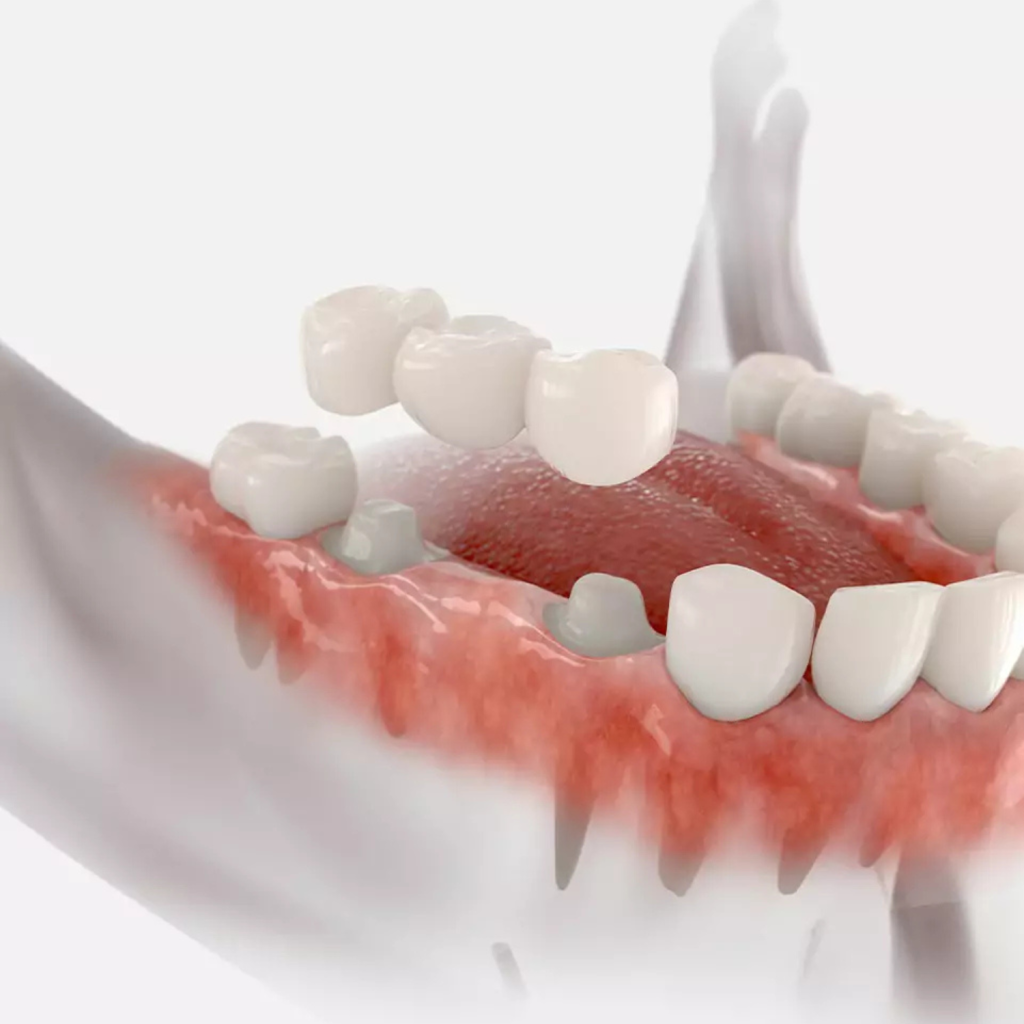
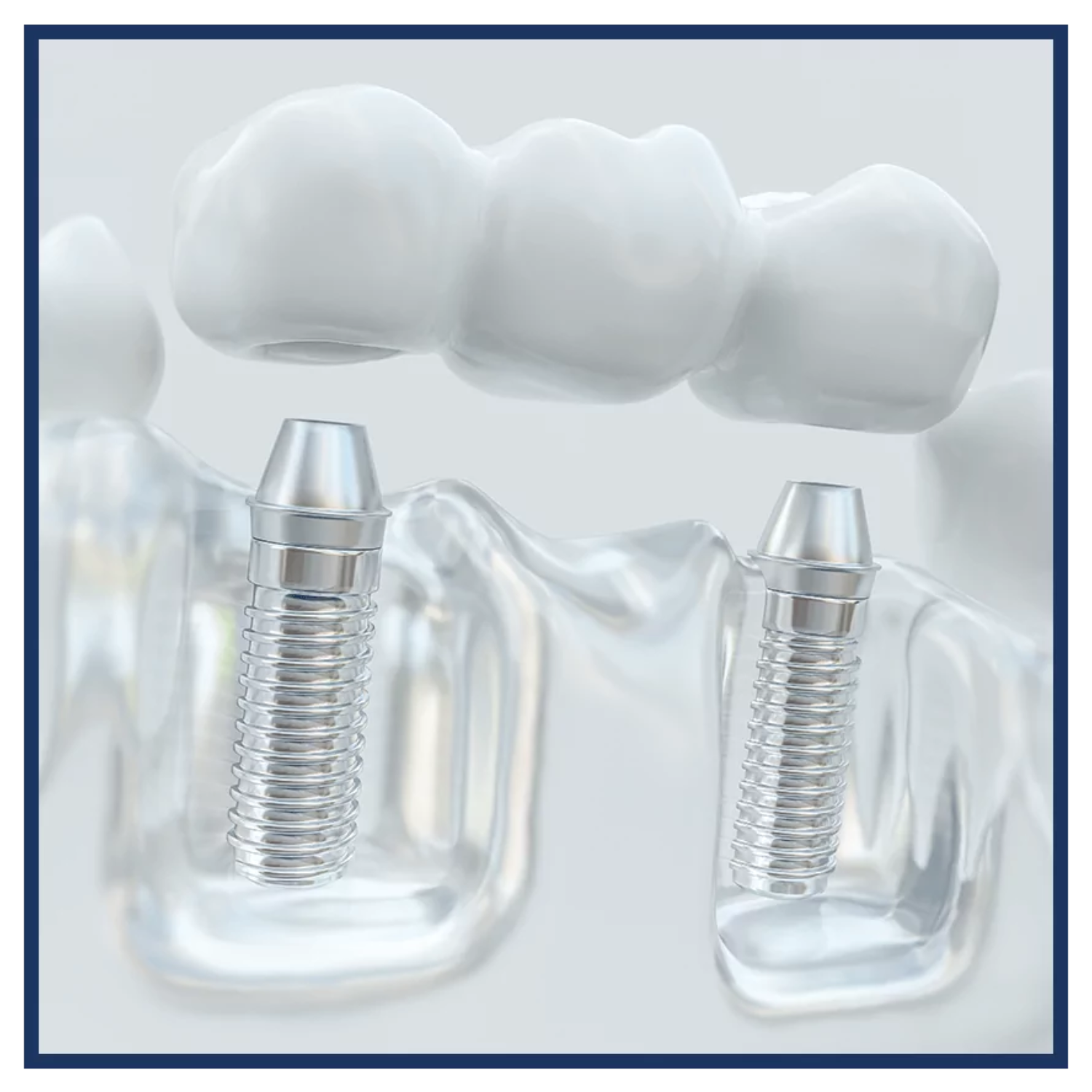
A dental bridge is a custom prosthetic used to replace one or more missing teeth by anchoring to the natural teeth (or implants) adjacent to the gap. The bridge spans the space, “bridging” the missing area with lifelike artificial teeth called pontics. At Elite Prosthetic Dentistry in Washington, DC, Dr. Gerald Marlin designs high-precision bridges that restore function, esthetics, and long-term oral health.
The concept behind a fixed dental bridge is straightforward yet elegant. Two anchor teeth, called abutment teeth, are prepared and fitted with crowns. These crowns are connected by a connector that spans the gap, with artificial teeth called pontics suspended between them. The entire structure is cemented in place, creating a fixed, non-removable restoration that functions like your natural teeth. Because the restoration is permanently attached, it feels completely natural and doesn’t require insertion and removal like removable partial dentures.
Understanding Bridge Types
There are several types of fixed bridges, each suited to different clinical situations. Traditional bridges are supported by natural teeth on both sides of the gap. Cantilever bridges are supported by a single abutment tooth when a tooth is missing at the end of a line of remaining teeth. Implant-supported bridges are supported by dental implants instead of natural teeth, offering the advantage of not requiring preparation of adjacent natural teeth. Dr. Marlin will recommend the most appropriate type for your specific situation based on your anatomy and the extent of tooth loss.
Why choose a fixed bridge over a removable partial?
Fixed bridges are permanently cemented into place, making them much more stable and comfortable than removable partial dentures. They don’t shift while you talk or eat, and they’re made to look indistinguishable from your natural teeth. Many patients find that within days of receiving a fixed bridge, they completely forget they have a restoration and feel as though they have their natural teeth back.
The fixed nature of a bridge means there’s no adjustment period like there is with removable dentures. You don’t need to learn how to insert and remove it, and you don’t need to soak it overnight in a denture solution. Simply maintain it like you would your natural teeth with brushing and flossing. For patients who prefer this more seamless approach to tooth replacement, fixed bridges offer significant advantages.
Additionally, fixed bridges provide superior chewing function. Because they don’t move, they allow you to generate full chewing force without concerns about shifting or breakage. This stability translates to the ability to eat a wider variety of foods and to enjoy your meals with confidence.
How do fixed bridges support long-term oral health?
When a tooth is missing, the adjacent teeth may drift or shift, leading to bite imbalance and bone loss. A fixed bridge maintains alignment and preserves facial structure by restoring full chewing function. Without a bridge or other restoration, the empty space acts as a vacuum that pulls neighboring teeth out of their ideal positions. Over time, this shifting can compromise your bite, lead to jaw joint problems, accelerate wear on remaining teeth, and create aesthetic concerns as your smile becomes unbalanced.
By restoring the missing tooth with a bridge, Dr. Marlin ensures that all your teeth remain properly aligned. The bridge distributes chewing forces appropriately, preventing excessive stress on remaining teeth. This balanced force distribution is important for long-term tooth survival and comfort. Additionally, restoring the space prevents the opposing teeth from drifting into the gap, which can cause similar problems on the opposite arch.
The American College of Prosthodontists recommends replacing missing teeth promptly to prevent future complications and maintain dental harmony. Prompt replacement not only improves your immediate appearance and function but also protects the health of your remaining teeth and jaw joints.
The Bridge Fabrication Process
Creating a custom fixed bridge involves several steps and requires significant clinical and laboratory expertise. Dr. Marlin begins with a comprehensive evaluation to determine whether you’re a good candidate for a bridge. He evaluates the health of the abutment teeth, the bone supporting them, and your overall oral health. He takes highly accurate digital scans and discusses your esthetic goals with you.
Next, the abutment teeth are carefully prepared. This preparation removes a thin layer of tooth structure to create space for the crowns that will be part of the bridge. Dr. Marlin takes a conservative approach, removing only as much tooth structure as necessary to create ideal support for the bridge while maintaining the health and longevity of the abutment teeth.
A temporary bridge is placed to protect the prepared teeth and maintain your appearance and function during fabrication. The temporary restoration also allows Dr. Marlin to assess any adjustments needed in bite or esthetics before the final restoration is made.
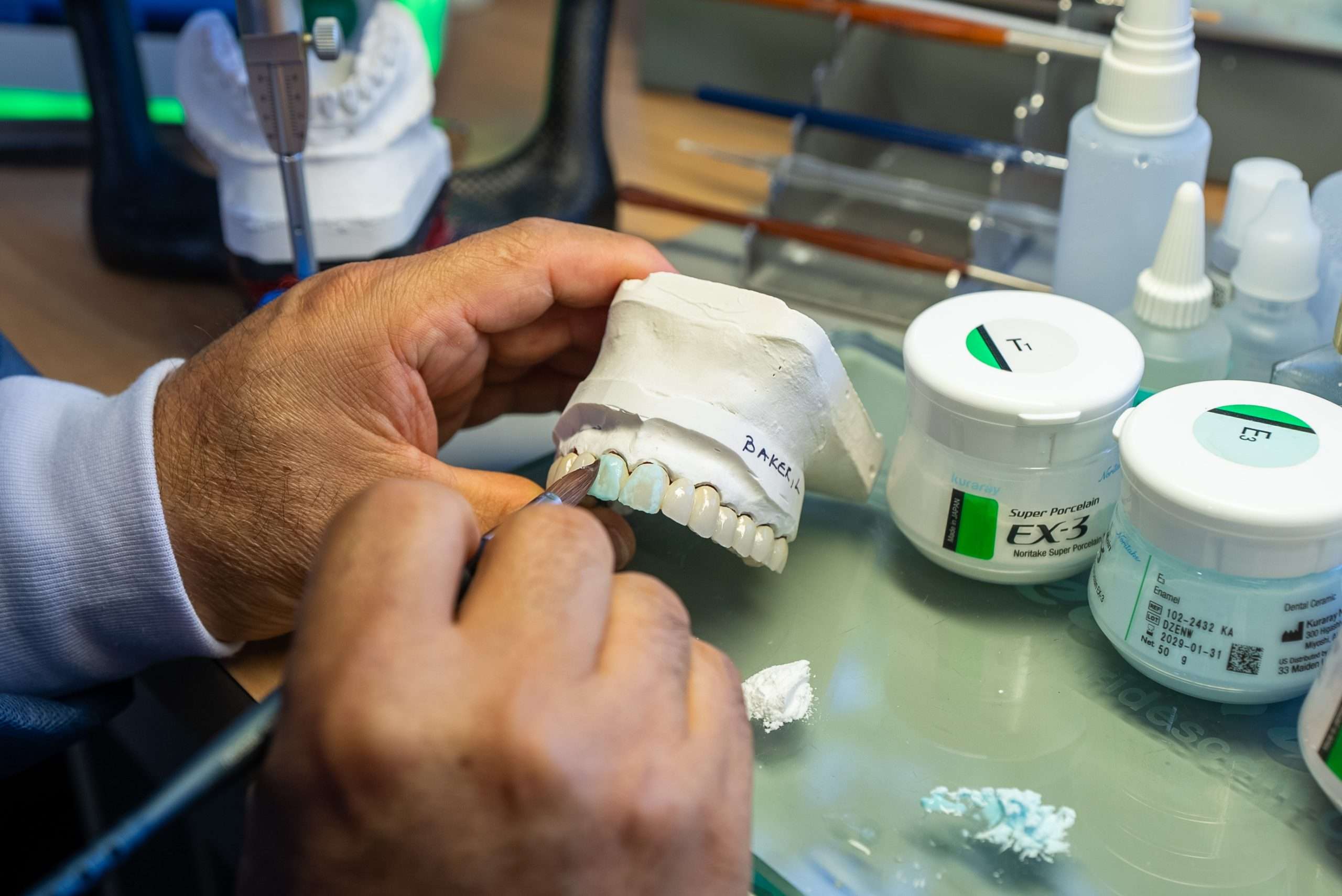
Your custom bridge is then fabricated in our in-house laboratory. The lab team works from Dr. Marlin’s design specifications to create a bridge that will fit perfectly, function optimally, and look completely natural. The artificial teeth are shaped and shaded to match your remaining natural teeth, and the entire structure is crafted with meticulous attention to detail.
Finally, your permanent bridge is seated and adjusted to ensure optimal fit, bite, and esthetics. Dr. Marlin verifies that the margins are perfect, the contacts with adjacent teeth are ideal, and that you can clean beneath the bridge effectively.
What materials are used for your custom bridges?
We offer all-ceramic, porcelain-fused-to-metal (PFM), and zirconia bridges based on your specific bite force, esthetic preferences, and durability needs. Each bridge is fabricated in our on-site laboratory with input from Dr. Marlin and his master ceramist.
All-ceramic bridges offer superior esthetics because they contain no metal, allowing light to pass through the restoration just as it does with natural teeth. These bridges are ideal for visible anterior teeth where maximum esthetic refinement is desired.
Porcelain-fused-to-metal (PFM) bridges combine a strong metal substructure with beautiful porcelain surfaces. They offer excellent strength and esthetics and are versatile enough for use anywhere in the mouth, though the metal substructure may occasionally be visible at the gumline.
Zirconia bridges provide the strength of metal with the esthetics of ceramic. Modern zirconia materials are incredibly strong yet tooth-colored, making them ideal for patients who need both durability and superior appearance.
The choice of material depends on factors including the location of the bridge, your bite force, your esthetic priorities, and your individual preferences. Dr. Marlin will discuss these options with you and recommend the material best suited to your specific situation.
How long do bridges last?
With proper oral hygiene and professional maintenance, a fixed dental bridge can last 15 to 20 years or longer. Our bridges are designed for longevity and esthetic excellence. The actual lifespan depends on several factors, including the material used, your bite force, the health of the abutment teeth, and your commitment to excellent oral hygiene.
To maximize the longevity of your bridge, brush twice daily with a soft-bristled brush and clean beneath the bridge daily using a water floss device or special floss that can navigate beneath the bridge. Regular professional cleanings and checkups allow Dr. Marlin to monitor the bridge and address any issues early before they become problematic.
Caring for Your Bridge
Daily cleaning is essential for a healthy bridge. Because you cannot floss normally around the bridge, you’ll need to use a water floss device, a special threader floss, or interdental brushes to clean beneath the artificial tooth. Dr. Marlin will provide detailed instructions on the best cleaning techniques for your specific bridge.
Regular professional cleanings help prevent decay in the abutment teeth, which could compromise the longevity of the bridge. Additionally, periodic professional evaluations allow Dr. Marlin to assess the condition of your bridge and ensure that the abutment teeth remain healthy.
If your bridge becomes loose, develops decay, or becomes damaged, contact Dr. Marlin immediately. Early intervention can often save the bridge and prevent more extensive treatment from becoming necessary.
Frequently Asked Questions
How many teeth can a dental bridge replace?
Bridges typically replace 1 to 3 teeth, but longer spans may be possible with proper support or implants.
Does a bridge require drilling down healthy teeth?
Yes, traditional bridges are supported by crowns on the neighboring teeth, which need to be reshaped for proper fit. We do this conservatively and with long-term strength in mind.
Can I chew normally with a bridge?
Absolutely. A well-designed fixed bridge allows you to chew and speak with confidence, just like natural teeth.
What's the difference between an implant and a bridge?
An implant replaces a single tooth at the root level. A bridge spans across a gap using support from surrounding teeth or implants. Dr. Marlin will help you decide which option fits best.
Is a bridge visible when I smile?
Not when it’s done right. Our custom bridges are matched perfectly in shape, shade, and translucency so they blend seamlessly into your smile.
Your Best Smile Is Within Reach
Schedule a consultation with Dr. Gerald Marlin to discuss your treatment options and take the first step toward a healthier, more confident smile.
Related Case Studies
Explore similar cases demonstrating our expertise in advanced prosthetic dentistry.
 Complex
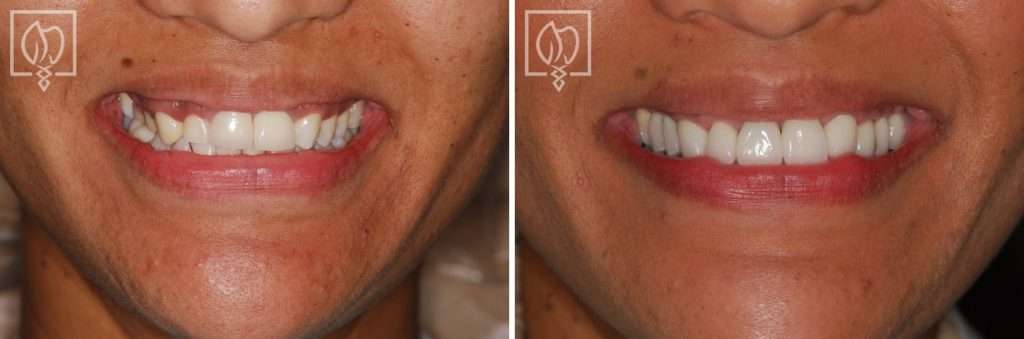
 Temporary Crowns Restore Patient's Smile in Just One Day with an Immediate Smile Makeover
Her dental implant looked artificial in her mouth and was impacting her smile. She had been very unhappy with her unsightly smile line and was beco...
 Complex
 Multi-Faceted Treatment for Patient Unhappy With Her Artificial-Looking Crowns, Teeth and Gums
Many patients come to Elite Prosthetic Dentistry unhappy with the appearance of their smile. A particular patient who sought our help was very unha...
 Standard
 Treating Kevin’s Collapsed Bite with a Complete Smile Makeover with New Dentures
Kevin came to us very dissatisfied with his existing condition. He looked much older than his age because his bite was collapsed and no one could r...
Related Articles
Deepen your knowledge with additional insights on this topic.
Why are Some Temporary Crowns More Natural Than Others?
Temporary crowns fabricated in our in-house laboratory are made to blend with each individual’s lip line, facial pattern, and adjacent teeth in Washington, DC.
What Makes a Natural-Looking Crown?
A natural-looking crown blends with your gum tissue, matches your smile line, and has proper translucency and coloration. Washington, DC prosthodontist.
How is an Immediate Smile Makeover Performed?
An immediate smile makeover uses personalized temporary crowns crafted to match your facial pattern and smile line while final restorations are made.
Ready to Transform Your Smile?
With 40+ years of experience and 3,900+ dental implants placed, Dr. Gerald Marlin delivers results that last. Schedule your consultation today.