
A More Natural Look
The Challenge
When porcelain is milky or opaque looking, the crowns do not look real. With protrusive teeth that can not be brought in, this becomes magnified. P...
Treatment(s)
Challenge
When porcelain is milky or opaque looking, the crowns do not look real. With protrusive teeth that can not be brought in, this becomes magnified. P...
Complexity Level
Outcome
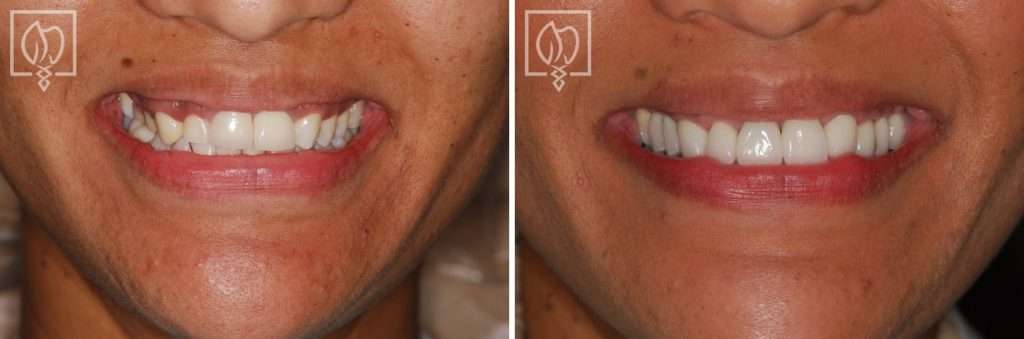
Custom-crafted porcelain crowns delivering a natural, rejuvenated smile
The Critical Importance of Translucency in Crown Esthetics
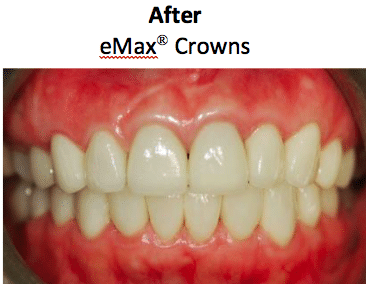
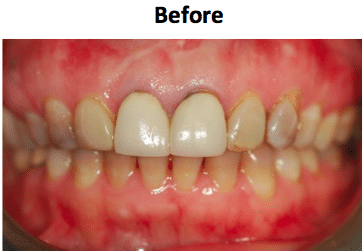
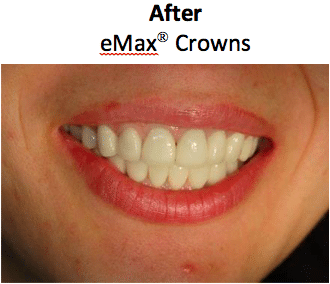
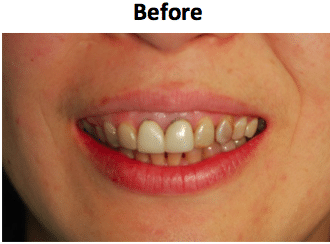
One of the most common cosmetic complaints about crowns is that they “do not look real.” This statement typically indicates that the crowns appear too opaque, too white, too flat, or too artificial compared to natural teeth. The reality is that creating naturally appearing crowns requires understanding the optical properties of natural teeth and deliberately engineering crowns to replicate these properties. This case demonstrates how proper translucency, color depth, and optical engineering can transform crowns from obviously restored appearance to naturally beautiful results.
The Challenge: Opacity and Esthetic Limitations
This patient was very self-conscious about her appearance and sought a significant cosmetic makeover. She came to us specifically for help with her front two teeth, which had been restored with previous crowns that did not look natural.
The problems with her existing crowns were multifaceted. First, the crowns were too opaque and milky in appearance, lacking the translucency that characterizes natural teeth. When light hits a natural tooth, it transmits through the enamel and reflects internally from the dentin, creating a subtle, 3-dimensional appearance. When light hits an opaque, milky crown, it reflects superficially without this depth, creating an artificial, plastic appearance.
Second, her teeth were protrusive (extended too far forward), and the existing tooth structure did not allow them to be brought back to a more ideal position. This created a magnification of the esthetic problem, as overly prominent teeth draw attention to any esthetic deficiencies.
Third, her smile had a very high gum line (gummy smile appearance) and very dark underlying teeth, which further complicated the esthetic situation.
The challenge was to create crowns with sufficient translucency and optical properties to appear natural despite the underlying dark tooth structure and the less-than-ideal tooth position.
Treatment Approach: Strategic Material and Technique Selection
Dr. Gerald Marlin recommended replacement of the existing crowns with eMax crowns, which are all-ceramic restorations known for their superior esthetic properties and ability to provide optimal translucency and color control.
The key to success in this case was not simply choosing an esthetic material, but rather employing advanced prosthodontic techniques to maximize the optical and esthetic potential of that material.
Our in-house laboratory fabricated individual wax patterns to precisely control the anatomy and form of the crowns. These patterns were then converted to porcelain (eMax) crowns with meticulous attention to optical properties.
The crowns were engineered with multiple layers of porcelain at varying translucency levels. A more opaque porcelain layer was placed over the dark abutment (the tooth preparation) to mask the underlying darkness, while more translucent porcelain layers were used on the external surface to provide the natural light transmission and color depth of natural teeth.
Dr. Marlin worked directly with the patient at the dental chair during crown insertion to establish the optimal anatomic form, internal color, and translucency. This direct patient input ensured that the final result matched the patient’s aesthetic vision and goals.
Results
The transformation in this patient’s smile was dramatic. The new eMax crowns with optimal translucency provide a vibrant, natural appearance that is virtually indistinguishable from healthy natural teeth. The crowns do not appear milky or artificial because they possess the proper optical properties of natural teeth.
The patient’s appearance was rejuvenated and her confidence restored. She can now smile freely without self-consciousness about her front teeth. More importantly, she was inspired to maintain her dental health, knowing that her smile was beautiful and worth protecting.
This case also demonstrates the value of the prosthodontic approach. Rather than simply choosing a material and fabricating a crown, this case required sophisticated understanding of dental optics, material properties, and esthetic design principles.
The Science Behind Natural-Looking Crowns
Natural teeth have specific optical properties including translucency, internal color variation, and light reflection characteristics that make them appear alive and youthful. Many crowns appear artificial because they lack these properties. Creating naturally appearing crowns requires selecting materials and techniques that will replicate natural tooth optics.
If you have crowns that appear too opaque, too white, too artificial, or that do not match your natural teeth, contact Elite Prosthetic Dentistry. Dr. Marlin specializes in cosmetic crown design and can help you achieve the natural, beautiful smile you deserve. Our in-house laboratory provides the advanced capabilities necessary to engineer crowns with optimal esthetic properties.
Schedule your consultation today with Dr. Gerald Marlin and experience the difference that prosthodontic expertise can make in your smile.
Related Services
Related Case Studies
Explore similar cases demonstrating our expertise in advanced prosthetic dentistry.
 Complex
 Temporary Crowns Restore Patient's Smile in Just One Day with an Immediate Smile Makeover
Her dental implant looked artificial in her mouth and was impacting her smile. She had been very unhappy with her unsightly smile line and was beco...
 Complex
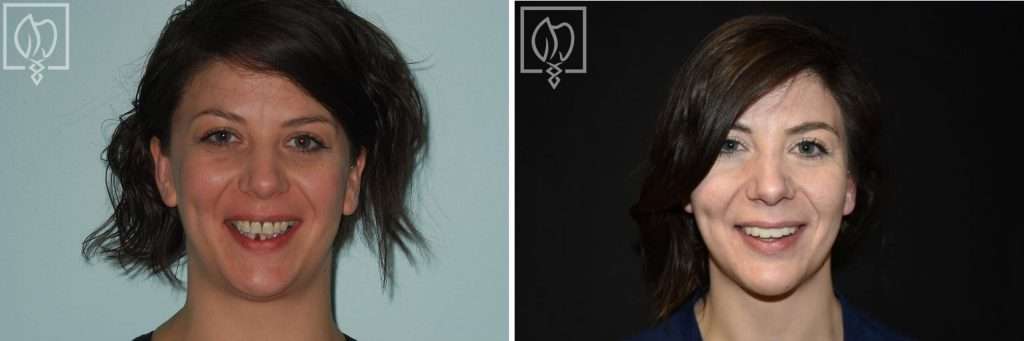
 Multi-Faceted Treatment for Patient Unhappy With Her Artificial-Looking Crowns, Teeth and Gums
Many patients come to Elite Prosthetic Dentistry unhappy with the appearance of their smile. A particular patient who sought our help was very unha...
 Complex
 Salvaging Ms. N’s Severely Broken-Down Upper and Lower Teeth from Gum and Bone Disease
Ms. N presented to us in complete distress with two lower anterior teeth that were about to fall out and wide gaps opening between her upper and lo...